

| Total recognized vitamins | 13 (National Institutes of Health, Office of Dietary Supplements) |
| Fat-soluble vitamins | A, D, E, K |
| Water-soluble vitamins | C and 8 B vitamins |
| Most under-consumed mineral in U.S. diets | Magnesium and potassium (Dietary Guidelines for Americans, 2020–2025) |
| Vitamins with few dietary sources (animal-only) | B12 (National Institutes of Health, Office of Dietary Supplements) |
| Primary dietary source of iodine in the U.S. | Iodized salt and seafood |
Why Vitamins and Minerals Matter
Vitamins and minerals are micronutrients — compounds your body needs in relatively small amounts but cannot function without. Unlike carbohydrates, protein, and fat, most micronutrients cannot be manufactured by the body in sufficient quantities, making regular dietary intake essential. To understand what distinguishes vitamins from minerals at a biological level, see what makes each one essential.
This guide is designed as a practical lookup reference — not an exhaustive scientific text. It covers the micronutrients most relevant to everyday American diets, their primary roles, and the foods most likely to supply them.
| Total recognized vitamins | 13 (National Institutes of Health, Office of Dietary Supplements) |
| Fat-soluble vitamins | A, D, E, K |
| Water-soluble vitamins | C and 8 B vitamins |
| Most under-consumed mineral in U.S. diets | Magnesium and potassium (Dietary Guidelines for Americans, 2020–2025) |
| Vitamins with few dietary sources (animal-only) | B12 (National Institutes of Health, Office of Dietary Supplements) |
| Primary dietary source of iodine in the U.S. | Iodized salt and seafood |
This article is for general informational purposes only and is not a substitute for advice from a qualified healthcare professional.
Key Vitamins: Roles and Food Sources
The thirteen recognized vitamins fall into two categories: fat-soluble (A, D, E, K) and water-soluble (C and the eight B vitamins). Fat-soluble vitamins are stored in body tissue; water-soluble vitamins are used quickly and must be replenished more regularly.
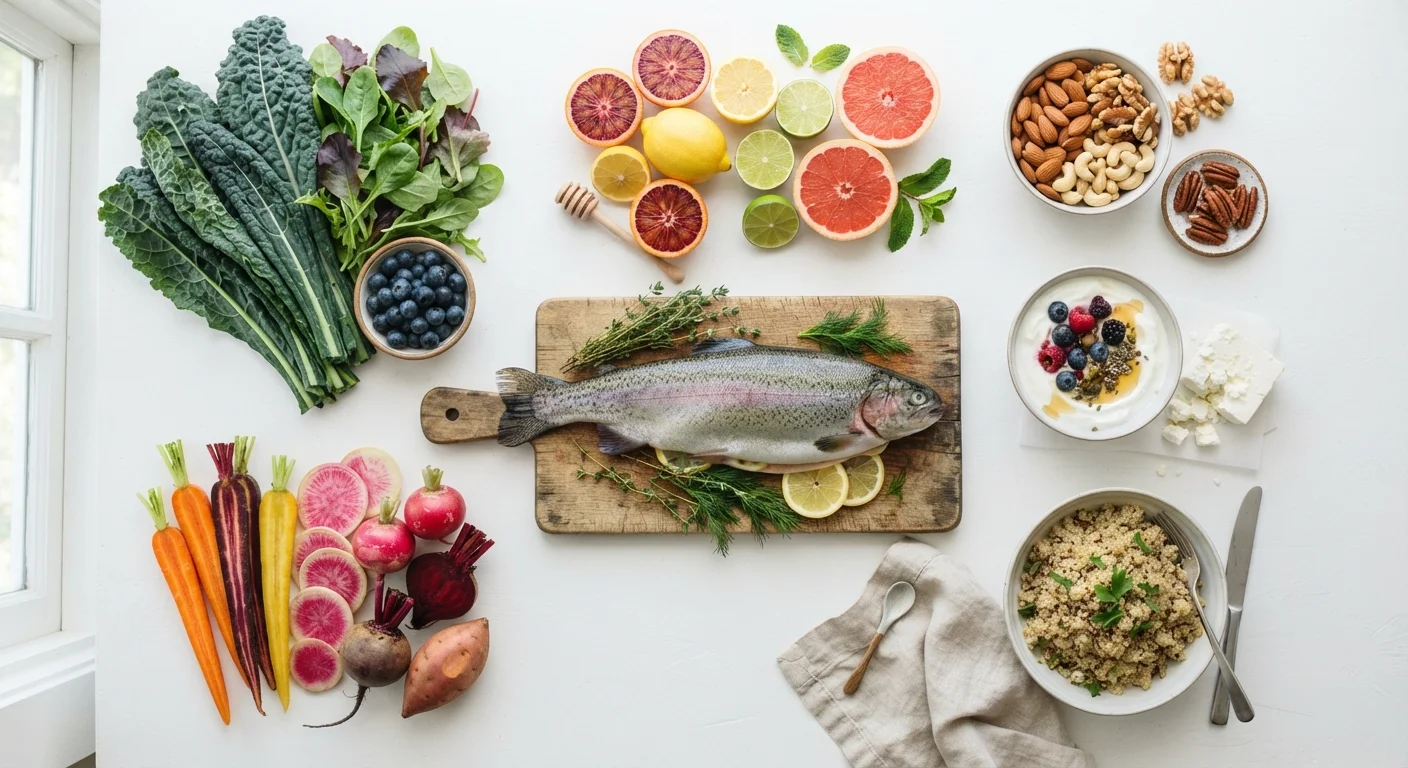
- Vitamin A — Supports vision, immune defense, and cell growth. Found in liver, dairy, eggs, and orange-yellow produce such as sweet potatoes and carrots.
- B Vitamins (B1, B2, B3, B5, B6, B7, B9, B12) — Collectively support energy metabolism, red blood cell formation, and nervous system function. Whole grains, legumes, meat, dairy, and leafy greens cover most of the B spectrum; B12 is found almost exclusively in animal products.
- Vitamin C — Essential for collagen synthesis, immune function, and iron absorption. Citrus fruits, bell peppers, broccoli, and strawberries are rich sources.
- Vitamin D — Regulates calcium absorption and supports bone density and immune health. Synthesized by skin in sunlight; dietary sources include fatty fish, fortified dairy, and egg yolks.
- Vitamin E — Acts as an antioxidant protecting cell membranes. Nuts, seeds, and vegetable oils are the primary sources.
- Vitamin K — Critical for blood clotting and bone metabolism. Leafy green vegetables (kale, spinach, collards) are the standout sources.
Research consistently shows that many Americans fall short on vitamins D and B12 in particular. For a broader look at these gaps, see the micronutrient gap in American diets.
Essential Minerals: Roles and Food Sources
Minerals are inorganic elements absorbed from food and water. Macrominerals are needed in larger amounts; trace minerals are required in much smaller quantities but are no less important.
- Calcium — Builds and maintains bones and teeth; supports muscle and nerve function. Dairy products, fortified plant milks, tofu, and leafy greens supply it.
- Magnesium — Involved in more than 300 enzymatic reactions, including energy production and muscle contraction. Found in nuts, seeds, legumes, and whole grains.
- Potassium — Helps regulate blood pressure, fluid balance, and heart rhythm. Bananas, potatoes, beans, and yogurt are reliable sources.
- Iron — Carries oxygen in red blood cells. Heme iron (from meat and seafood) is absorbed more efficiently than non-heme iron (from legumes, tofu, and fortified cereals). Pairing non-heme iron with vitamin C improves uptake — a concept explored further in nutrients that work better together.
- Zinc — Supports immune response, wound healing, and protein synthesis. Meat, shellfish, legumes, and seeds are top sources.
- Iodine — Required for thyroid hormone production. Iodized salt and seafood are the main U.S. dietary sources.
- Selenium — Antioxidant mineral supporting thyroid function. Brazil nuts, fish, and eggs provide it.
Understanding how to read a nutrition label can help you track daily mineral intake more accurately — reading a nutrition label for vitamins and minerals walks through the process step by step.
Putting It Into Practice
No single food covers every micronutrient need. A practical strategy is to eat across food groups — emphasizing vegetables, fruits, whole grains, legumes, and lean proteins — so that gaps in one area are filled by variety elsewhere. This approach aligns with the dietary patterns most consistently associated with adequate micronutrient intake in population research.
Supplementation may be appropriate in specific circumstances (such as confirmed deficiencies, pregnancy, or restricted diets), but supplementing without assessed need can lead to excess intake of fat-soluble vitamins or certain minerals. Always consult a healthcare provider before beginning any supplement regimen.
Micronutrient nutrition does not exist in isolation from macronutrients. For a complementary reference on how carbohydrates, protein, and fat fit into the picture, see the macronutrient quick-reference guide.
This article is for general informational purposes only and does not constitute medical or dietary advice. Consult a registered dietitian or qualified healthcare professional for personalized guidance.