

Key Takeaways
Getting More From Every Bite
Most of us think about nutrition in terms of individual nutrients — get enough iron, take your vitamin D, eat more calcium. But nutrition science tells a more nuanced story: what you eat alongside a nutrient often determines how much of it your body can actually use.
This concept, sometimes called nutrient synergy, means that strategic food combinations can meaningfully improve absorption without any dramatic dietary overhaul. As our guide on nutrient absorption explains, eating a nutrient is not the same as absorbing it — and the gap between the two can be significant. The pairings below represent some of the most well-established and practically useful combinations for everyday American diets.
Vitamin C + Non-Heme Iron
Iron comes in two forms: heme iron (from animal sources like meat and poultry) and non-heme iron (from plant sources like beans, lentils, spinach, and fortified cereals). Non-heme iron is considerably harder for the body to absorb on its own — but vitamin C can dramatically change that.
Vitamin C converts iron into a form the intestines absorb more readily. Eating a vitamin C-rich food — such as bell peppers, citrus, tomatoes, or strawberries — in the same meal as a plant-based iron source is one of the simplest and most impactful dietary strategies for people who rely heavily on plant foods. This pairing is particularly relevant for vegetarians and vegans, as well as menstruating women who may have higher iron needs.
Vitamin C can significantly boost the body's absorption of plant-based iron at a single meal.
Vitamin D + Calcium
Calcium is essential for bone density, muscle function, and nerve signaling — but without adequate vitamin D, the intestines absorb very little of it. Vitamin D acts as a regulatory signal that tells the gut to ramp up calcium uptake.
This is why dairy products are commonly fortified with vitamin D: not just to address separate deficiencies, but because both nutrients together are more effective than either alone. Food sources of vitamin D include fatty fish (salmon, sardines, mackerel), egg yolks, and fortified foods. Sunlight exposure also contributes to vitamin D status, though the amount varies based on skin tone, latitude, and season.
Without enough vitamin D, the intestines absorb only a fraction of available dietary calcium.
Vitamin K2 + Vitamin D + Calcium
This three-way relationship extends the D-calcium story further. Vitamin D helps the body absorb calcium, but vitamin K2 helps direct that calcium into bones and teeth rather than allowing it to accumulate in soft tissues like arteries. The two vitamins work at different points in the same process.
Vitamin K2 is found in fermented foods (such as natto and certain aged cheeses) and some animal products. Vitamin K1, the more common dietary form found in leafy greens, can be partially converted to K2, though the efficiency varies. While research on K2 supplementation is still developing, the general principle — that vitamins D and K work together in calcium metabolism — is well established.
Vitamin K2 helps steer calcium toward bones rather than soft tissues, complementing vitamin D's role.
Fat + Fat-Soluble Vitamins (A, D, E, K)
Vitamins A, D, E, and K are fat-soluble, meaning the body needs dietary fat present in the digestive tract to absorb them properly. Eating these vitamins without fat — such as consuming a fat-free salad dressing with a spinach salad — can significantly reduce how much your body actually takes in.
Adding a moderate amount of healthy fat to meals containing fat-soluble vitamins can improve their bioavailability substantially. Practical examples include drizzling olive oil on roasted vegetables, adding avocado to a salad with leafy greens, or eating eggs (a source of vitamins A and D) with their natural fat content intact. This doesn't require large amounts — even small additions make a measurable difference.
Fat-soluble vitamins require dietary fat at the same meal to be properly absorbed by the gut.
Magnesium + Vitamin D
Vitamin D cannot be fully activated in the body without magnesium. Several enzymes involved in converting vitamin D into its active hormonal form depend on magnesium as a cofactor. This means that even adequate vitamin D intake may yield limited benefit in people who are low in magnesium.
Magnesium is found in foods like dark leafy greens, nuts, seeds, legumes, whole grains, and dark chocolate. Many Americans fall short of the recommended intake for magnesium, making this pairing more relevant than it might initially seem. Ensuring variety in plant-based foods is one of the most reliable ways to maintain healthy magnesium levels across the population.
Magnesium is required to activate vitamin D in the body — low magnesium can limit vitamin D's effectiveness.
Zinc + Protein
Zinc absorption is influenced by the composition of the meal in which it appears. Phytates — compounds found naturally in whole grains and legumes — can bind to zinc and inhibit its absorption. Animal proteins, on the other hand, appear to enhance zinc uptake and help counteract this inhibitory effect.
For those who eat meat, poultry, or seafood, zinc absorption from these sources tends to be more reliable. For those following plant-based diets, techniques like soaking, sprouting, or fermenting legumes and grains can reduce phytate content and improve zinc availability. Pairing plant-based zinc sources with some protein and an acidic component (such as a vinegar-based dressing) may also help.
Animal proteins help counteract phytates that block zinc absorption from plant-based foods.
Putting These Pairings Into Practice
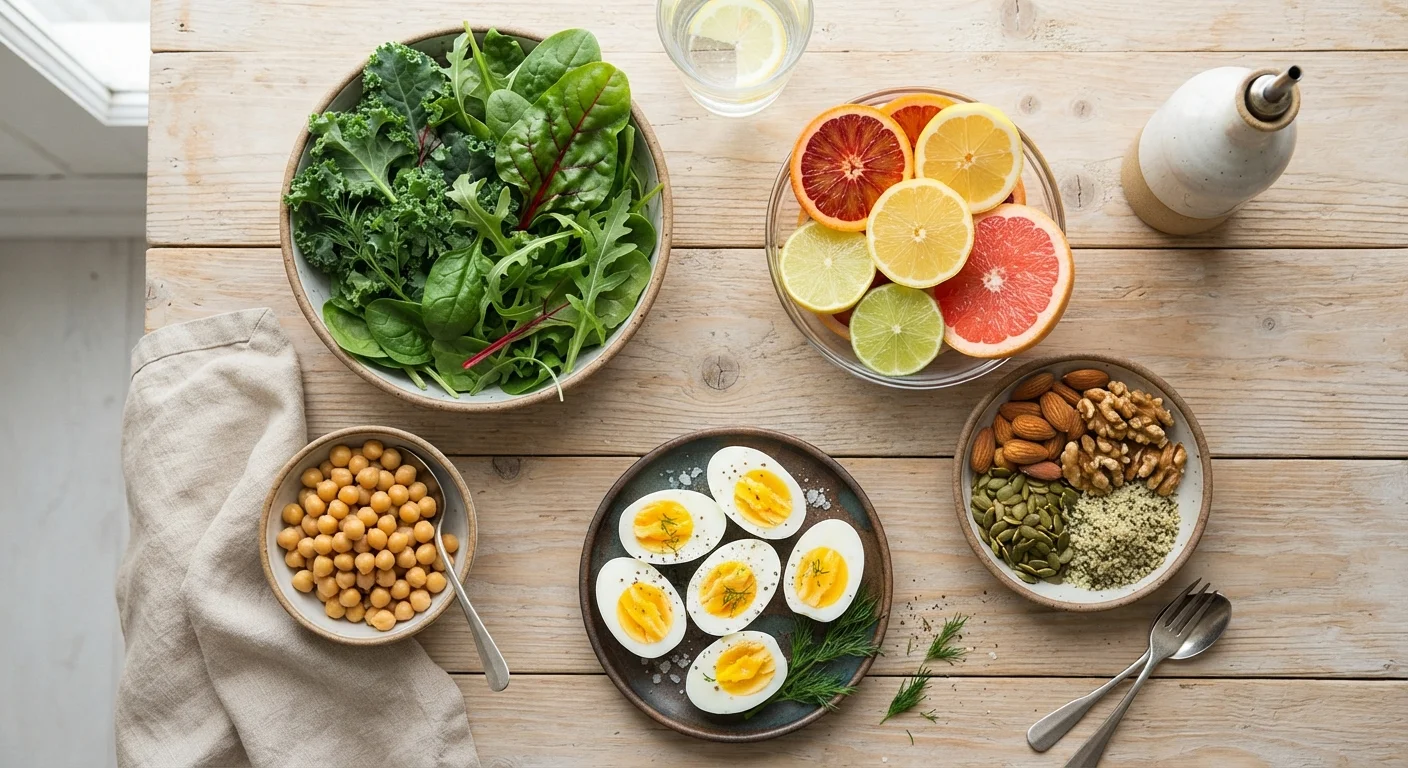
You don't need to restructure your entire diet to benefit from nutrient synergy. Most of these combinations fit naturally into common meals — a spinach salad with orange segments, salmon and broccoli on the same plate, or a glass of milk alongside a vitamin D-rich egg yolk. The goal is consistent attention to how foods are grouped, not perfection at every sitting.
Small Combinations, Meaningful Results
You don't need to memorize every nutrient pairing. Start with two or three that match your current eating pattern — for example, squeezing lemon over lentil soup or adding a drizzle of olive oil to your salad. Over time, these small habits compound into consistently better nutrient absorption. Consistency matters more than any single perfect meal.
For a broader approach to building meals that cover your micronutrient bases, see our practical everyday strategies for a micronutrient-rich plate. And if you want to make sense of how these nutrients appear on packaged foods, our guide to reading a nutrition label can help you interpret the numbers with confidence.
This article is for general informational and educational purposes only and is not a substitute for personalized medical or dietary advice. Consult a qualified healthcare professional before making significant changes to your diet, especially if you have a medical condition or take medications.