

| HIV screening recommended for | All adults ages 15–65 at least once (USPSTF recommendation) |
| Colorectal cancer screening starts at | Age 45 for average-risk adults (USPSTF, updated 2021) |
| Mammography recommendation | Every 2 years starting at age 40 (USPSTF, 2024 update) |
| Lung cancer CT screening eligibility | Ages 50–80 with 20 pack-year smoking history (USPSTF recommendation) |
| Bone density screening for women | Starting at age 65 (or earlier if at increased risk) (USPSTF recommendation) |
| Blood pressure monitoring frequency | Every 2 years if normal; annually if elevated (General clinical guidance) |
Why a Screening Schedule Matters
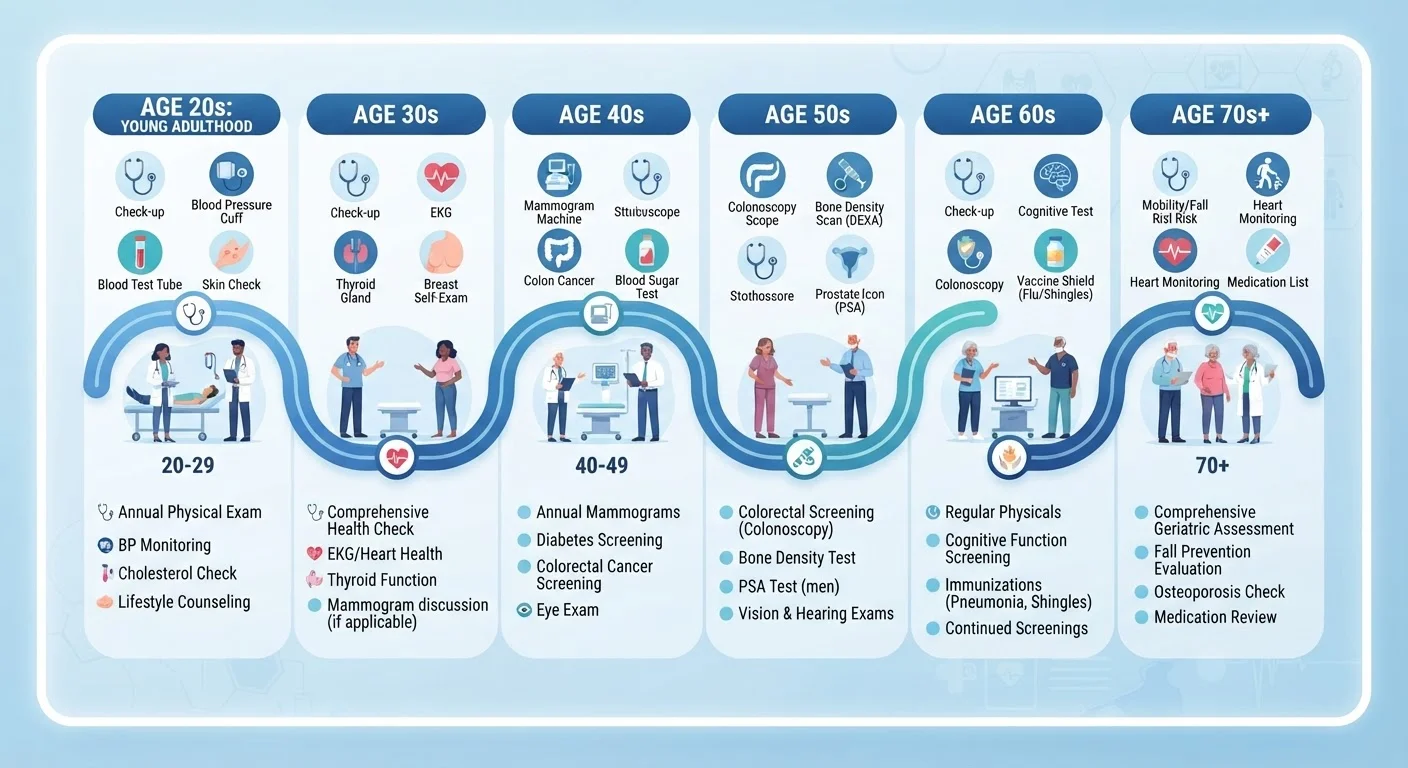
Preventive screenings are designed to detect health problems before symptoms appear — when treatment is generally most effective. Yet many adults are unsure which tests apply to them at which age. This reference guide organizes the major screenings recommended by leading clinical bodies, including the U.S. Preventive Services Task Force (USPSTF) and the Centers for Disease Control and Prevention (CDC), by decade of adult life.
Keep in mind that these are population-level guidelines. Your personal history, family background, and risk factors may shift the timing or type of tests your clinician recommends. Always discuss your specific screening needs with a qualified healthcare provider. If routine checkups are new to you, this starter guide explains what to expect and how to get started.
| HIV screening recommended for | All adults ages 15–65 at least once (USPSTF recommendation) |
| Colorectal cancer screening starts at | Age 45 for average-risk adults (USPSTF, updated 2021) |
| Mammography recommendation | Every 2 years starting at age 40 (USPSTF, 2024 update) |
| Lung cancer CT screening eligibility | Ages 50–80 with 20 pack-year smoking history (USPSTF recommendation) |
| Bone density screening for women | Starting at age 65 (or earlier if at increased risk) (USPSTF recommendation) |
| Blood pressure monitoring frequency | Every 2 years if normal; annually if elevated (General clinical guidance) |
Your 20s and 30s: Building a Baseline
Young adults often feel invincible, but early screenings establish a health baseline that makes future changes easier to detect.
- Blood pressure: Checked at least every 2 years if readings are normal; annually if borderline elevated.
- Cholesterol (lipid panel): A baseline screening is recommended for adults by their mid-20s, or earlier with family history of heart disease.
- Blood glucose / Type 2 diabetes: USPSTF recommends screening for adults with overweight or obesity beginning at age 35, but clinicians may screen earlier based on risk.
- STI screenings: Chlamydia and gonorrhea screening is recommended annually for sexually active women under 25, and for older adults at increased risk. HIV screening is recommended for all adults ages 15–65 at least once.
- Cervical cancer (Pap smear): For women, every 3 years starting at age 21, or every 5 years with combined Pap and HPV co-testing starting at age 30.
- Skin self-exams and dental visits: Regular habits formed now pay dividends later.
For a comprehensive look at sex-specific recommendations, see our guides on women's preventive screenings and men's preventive screenings.
Your 40s: A Pivotal Decade
The 40s are when several significant screenings become newly applicable for average-risk adults.
- Breast cancer mammography: The USPSTF recommends biennial mammograms for women starting at age 40. Some medical organizations suggest discussing individual risk and starting earlier.
- Colorectal cancer: Screening now starts at age 45 per USPSTF guidance. Options include colonoscopy every 10 years, annual stool-based tests, or other approved methods.
- Diabetes (Type 2): Screening is recommended for all adults ages 35–70 with overweight or obesity.
- Blood pressure and cholesterol: Continue regular monitoring, with frequency guided by your provider.
- Eye exams: Increasing importance as presbyopia and glaucoma risk rise with age.
For a deeper dive into this decade's priorities, see our article on screenings you shouldn't skip in your 40s.
Your 50s Through 70s: Expanding the Net
As you move through midlife and beyond, the range and frequency of recommended screenings increases substantially.
- Colorectal cancer: Continue based on method chosen; colonoscopy typically every 10 years if results are normal.
- Lung cancer: Annual low-dose CT scan recommended by USPSTF for adults ages 50–80 who have a 20 pack-year smoking history and currently smoke or quit within the past 15 years.
- Osteoporosis (bone density): USPSTF recommends screening for women at age 65; earlier if postmenopausal women are at increased risk. Discuss with your provider whether screening applies to you.
- Abdominal aortic aneurysm (AAA): One-time ultrasound screening for men ages 65–75 who have ever smoked.
- Hearing and vision: Routine checks become increasingly important as age-related changes accelerate.
- Cognitive health: While no universal cognitive screening is mandated, regular provider visits allow for early observation of any changes.
Vaccines remain an important part of preventive care at every stage. The adult immunization schedule outlines which vaccines are recommended by age and health status.
This article provides general health information for educational purposes only and is not a substitute for personalized medical advice. Consult a qualified healthcare professional to determine which screenings are appropriate for your individual health needs.