

Key Takeaways
Option A
Vitamins
The organic, carbon-based regulators of body function.
Best for: Supporting energy metabolism, immune defense, and cellular repair through biochemically active organic compounds.
Option B
Minerals
The inorganic structural and electrochemical workhorses.
Best for: Building bones and teeth, regulating fluid balance, and enabling electrical signals in nerves and muscles.
If you want to understand why cooking affects nutrient content
Vitamins
Vitamins, especially water-soluble ones like vitamin C and B vitamins, degrade with heat, light, and prolonged storage. Minerals are far more stable through cooking.
If you are concerned about bone and muscle function
Minerals
Calcium, phosphorus, and magnesium are structural building blocks for bone, while potassium and sodium govern muscle contraction and nerve signaling.
If your focus is immune support and energy metabolism
Vitamins
Vitamins C, D, and the B-complex family are heavily involved in immune defense, energy conversion, and red blood cell production.
If you follow a plant-based or restricted diet
Minerals
Iron, zinc, and calcium from plant sources are less bioavailable, making mineral adequacy a priority concern for those avoiding animal products.
If you want to optimize how your body absorbs nutrients
Vitamins
Certain vitamins directly enhance mineral absorption — vitamin D improves calcium uptake, and vitamin C boosts non-heme iron absorption from plant foods.
The Core Difference: Organic vs. Inorganic
The most fundamental distinction between vitamins and minerals comes down to chemistry. Vitamins are organic compounds — they contain carbon and are produced by living organisms such as plants and animals. Minerals are inorganic elements — they originate in soil and water and cannot be synthesized by living organisms. Your body acquires minerals entirely through food and drink.
Both categories are classified as essential micronutrients: the body either cannot produce them at all, or cannot produce them in sufficient quantities, so dietary intake is required. Despite being needed in small amounts compared to macronutrients like protein or carbohydrates, their impact on health is outsized.
There are 13 recognized essential vitamins (A, C, D, E, K, and eight B vitamins) and approximately 16 essential minerals, including calcium, iron, magnesium, potassium, and zinc. For a closer look at each one's role and food sources, see our quick-reference guide to essential vitamins and minerals.
| Criterion | Vitamins | Minerals |
|---|---|---|
| Chemical nature | Organic (contain carbon) | Inorganic (no carbon) |
| Origin | Produced by plants and animals | Derived from soil and water |
| Number of essentials | 13 essential vitamins | ~16 essential minerals |
| Heat/light stability | Can degrade with heat and light | Stable; not destroyed by cooking |
| Storage in the body | Fat-soluble stored; water-soluble excreted | Stored in bone, tissue, and organs |
| Primary functions | Coenzymes, antioxidants, cell regulation | Bone structure, fluid balance, nerve signals |
| Toxicity risk | High with fat-soluble excess | Possible with certain minerals in excess |
| Commonly under-consumed | Vitamin D, vitamin C | Calcium, potassium, magnesium |
How Your Body Handles Each Type Differently
One practical difference involves stability and storage. Minerals are indestructible in the culinary sense — boiling spinach won't break down the magnesium, though it may leach into cooking water. Vitamins are more fragile. Heat, light, and oxygen can degrade water-soluble vitamins like vitamin C and folate, which is why fresh or lightly cooked produce tends to preserve more of these nutrients.
Storage is another divergence. Fat-soluble vitamins (A, D, E, and K) accumulate in body fat and the liver, meaning they can build to potentially harmful levels if over-supplemented. Water-soluble vitamins (C and the B vitamins) are excreted more readily in urine, though this doesn't make excessive intake without risk. Our article on fat-soluble vs. water-soluble vitamins explores this distinction in depth.
Minerals follow their own absorption rules. Bioavailability — how much of a nutrient your body actually absorbs — varies considerably. For example, heme iron from meat is absorbed more efficiently than non-heme iron from plant foods. Calcium absorption depends significantly on vitamin D status. These interactions mean that vitamins and minerals often function as a team rather than independently.
Key Roles in Everyday Health
Though both are essential, vitamins and minerals tend to take on distinct functional roles:
- Vitamins primarily act as coenzymes and antioxidants — they help enzymes catalyze reactions that convert food into energy, build DNA, and protect cells from oxidative damage. Vitamin C, for instance, is critical for collagen synthesis and immune function. The B vitamins are central to energy metabolism at the cellular level.
- Minerals serve structural and electrochemical functions. Calcium and phosphorus provide the rigidity of bone and teeth. Sodium, potassium, and chloride regulate fluid balance and enable the electrical impulses that make your heart beat and muscles contract. Iron is embedded in hemoglobin, the protein that carries oxygen through the blood.
Many Americans fall short on several of these nutrients simultaneously. Research consistently identifies calcium, vitamin D, potassium, and vitamin C as commonly under-consumed. The micronutrient gap in American diets examines this pattern and what it means for everyday health. It's also worth noting that certain vitamins and minerals enhance each other's absorption — a concept explored further in our article on nutrients that work better together.
Getting Enough Through Food
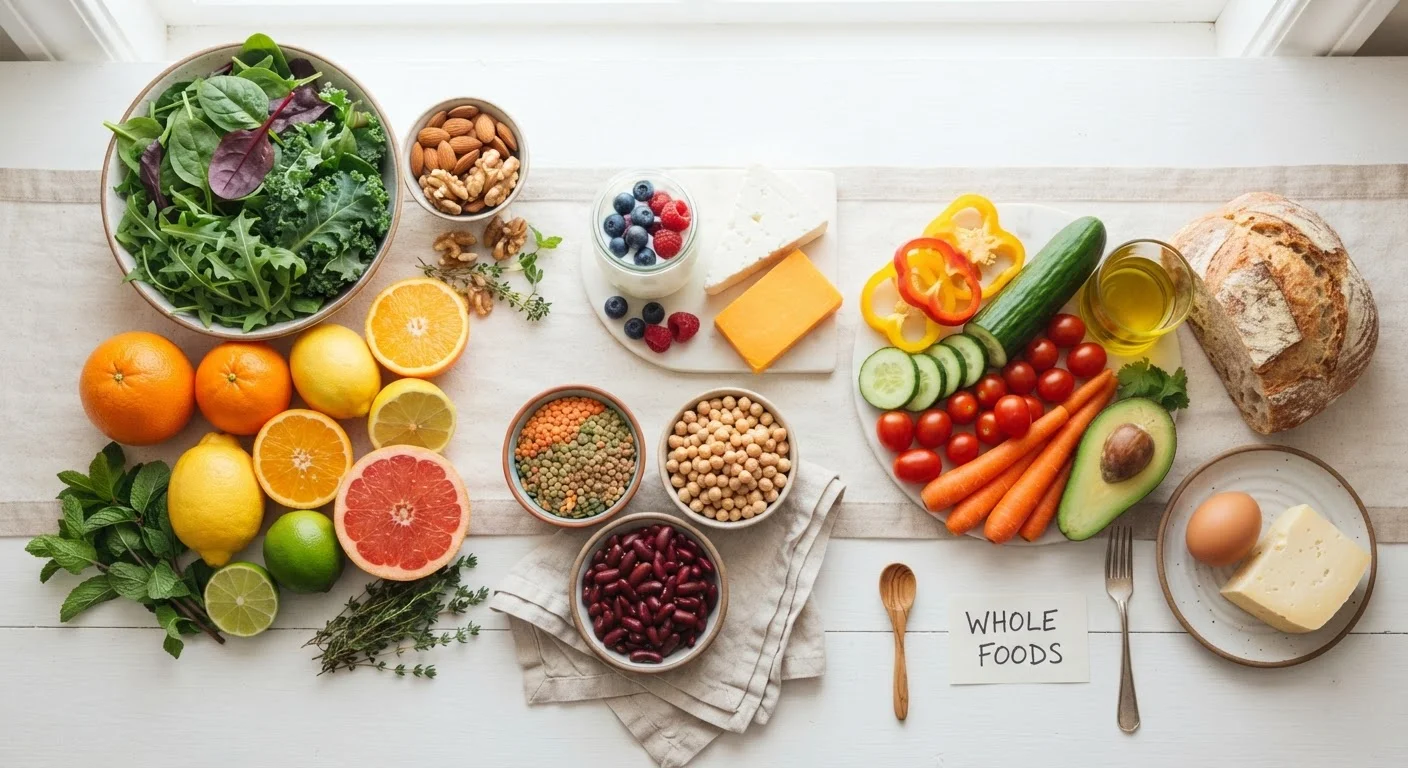
For most healthy adults, a varied diet built around whole foods — vegetables, fruits, whole grains, legumes, lean proteins, and dairy or fortified alternatives — provides adequate amounts of both vitamins and minerals without requiring supplementation. Supplements can play a role when dietary gaps exist or clinical deficiency is confirmed, but this is a decision best made in consultation with a healthcare provider.
A few practical guidelines for maximizing intake through food:
- Eat a wide variety of colorful produce — different pigments signal different phytonutrients and vitamins.
- Don't discard cooking water if you can use it in soups or sauces — water-soluble vitamins and some minerals leach into it.
- Pair vitamin C-rich foods with plant-based iron sources to improve iron absorption.
- Ensure adequate vitamin D status to support calcium absorption, particularly if sun exposure is limited.
This article is for general informational and educational purposes only and does not constitute medical advice. For personalized guidance on your nutrient needs, consult a qualified healthcare professional or registered dietitian.