

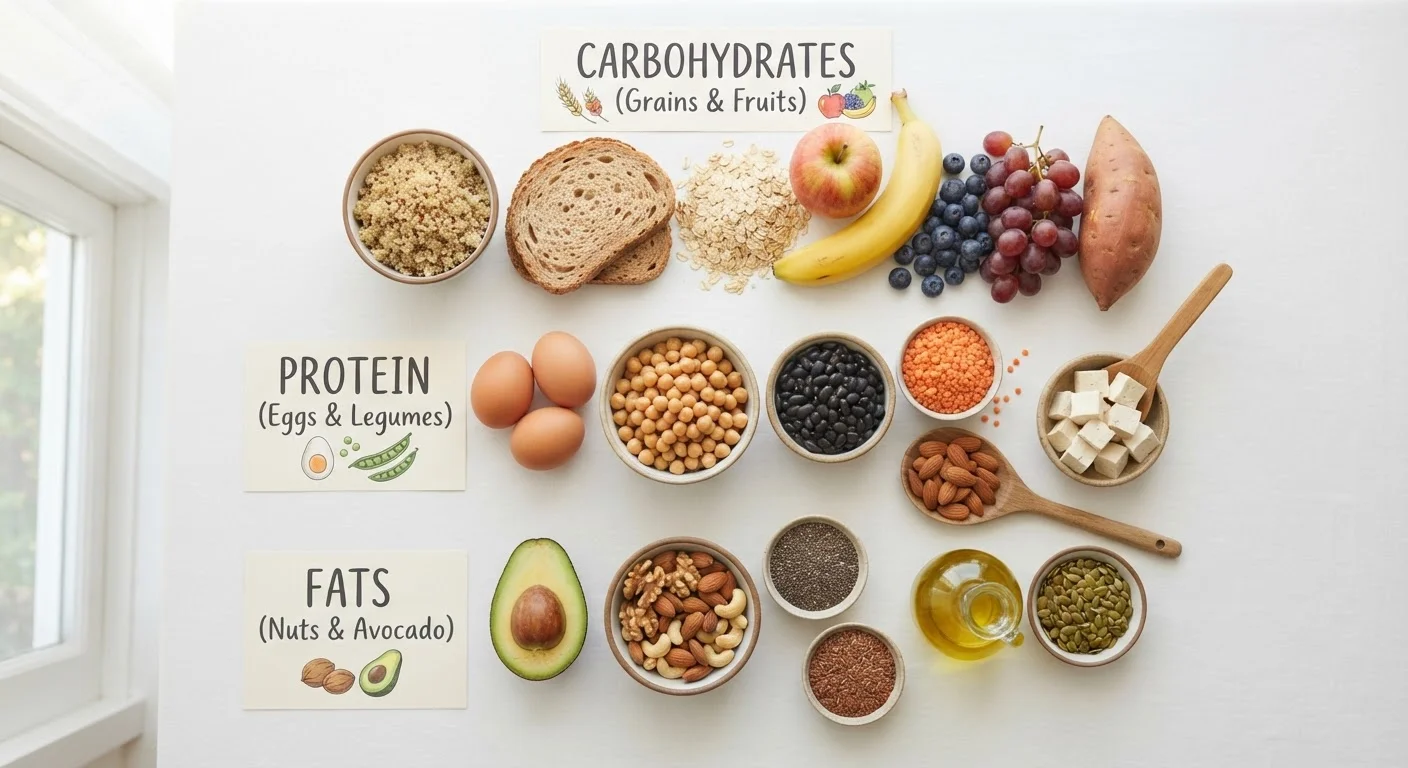
The Big Three at a Glance
Every calorie you consume comes from one of three macronutrients — carbohydrates, protein, or fat. Understanding what each one delivers, and where to find it, is the foundation of practical nutrition literacy. For a deeper plain-language overview, see Macronutrients Explained.
This reference is organized by macronutrient so you can quickly look up the facts most relevant to your everyday food decisions. Keep in mind that this is general educational information — not personalized dietary advice. A registered dietitian can help you apply these principles to your individual needs.
Carbohydrates: Primary Fuel Source
Calories per gram: 4 kcal
Carbohydrates are the body's preferred and most efficient energy source, especially for the brain and working muscles. They break down into glucose, which cells use directly for fuel or store as glycogen in the liver and muscle tissue. For a detailed look at this process, see Your Body on Carbohydrates.
Key functions:
- Supplying rapid, readily available energy
- Sparing protein from being used as fuel
- Supporting digestive health via dietary fiber
- Regulating blood sugar when fiber-rich, whole-food sources are chosen
Common food sources: Whole grains (oats, brown rice, whole wheat bread), legumes (lentils, chickpeas), starchy vegetables (potatoes, corn), fruit, and dairy. Ultra-processed options like white bread, pastries, and sugary beverages also supply carbohydrates but with fewer accompanying nutrients. Active adults may have higher carbohydrate needs — see Carbohydrates and Exercise for context.
Protein: Building and Repair
Calories per gram: 4 kcal
Protein is composed of amino acids — the structural units the body uses to build and repair virtually every tissue, including muscle, skin, enzymes, and immune proteins. Nine of the twenty amino acids are considered essential, meaning the body cannot synthesize them and must obtain them through food.
Key functions:
- Building and maintaining muscle mass
- Producing hormones, enzymes, and antibodies
- Supporting wound healing and immune response
- Contributing to satiety (feelings of fullness)
Common food sources: Animal sources — chicken, fish, eggs, dairy, and beef — supply all essential amino acids and are called complete proteins. Plant sources such as tofu, tempeh, edamame, lentils, and quinoa are excellent options as well; pairing a variety of plant proteins across the day helps ensure adequate amino acid intake.
Fat: Concentrated Energy and Essential Functions
Calories per gram: 9 kcal
Fat provides more than twice the energy per gram compared to carbohydrates or protein, making it the body's primary long-term energy reserve. It is also essential — meaning dietary fat must come from food — for absorbing fat-soluble vitamins (A, D, E, and K) and for maintaining cell membrane integrity. You can compare how macronutrients appear on food packaging in Reading a Nutrition Label.
Key functions:
- Storing and releasing long-term energy
- Absorbing fat-soluble vitamins
- Supporting brain health and hormone production
- Insulating organs and regulating body temperature
Common food sources: Unsaturated fats are found in olive oil, avocados, nuts, and fatty fish like salmon. Saturated fats appear in butter, whole-milk dairy, and red meat. Dietary guidelines generally emphasize unsaturated fat sources, though all fats can fit within a balanced diet. Macronutrients interact with body weight in important ways — the Weight Basics hub provides useful context.
This article is for informational purposes only and is not a substitute for professional medical or dietary advice. Consult a qualified healthcare provider or registered dietitian before making significant changes to your diet.