

Key Takeaways
Carbohydrates
Carbohydrates are one of the three main macronutrients and your body's preferred source of energy. They are made up of sugar molecules and are found in foods ranging from fruits and vegetables to grains and legumes. Once digested, most carbohydrates are broken down into glucose, which cells use to perform virtually every function.
Chemically, carbohydrates are classified as monosaccharides, disaccharides, or polysaccharides based on how many sugar units are linked together; this structure determines how quickly they are digested and absorbed.
How Your Body Digests Carbohydrates
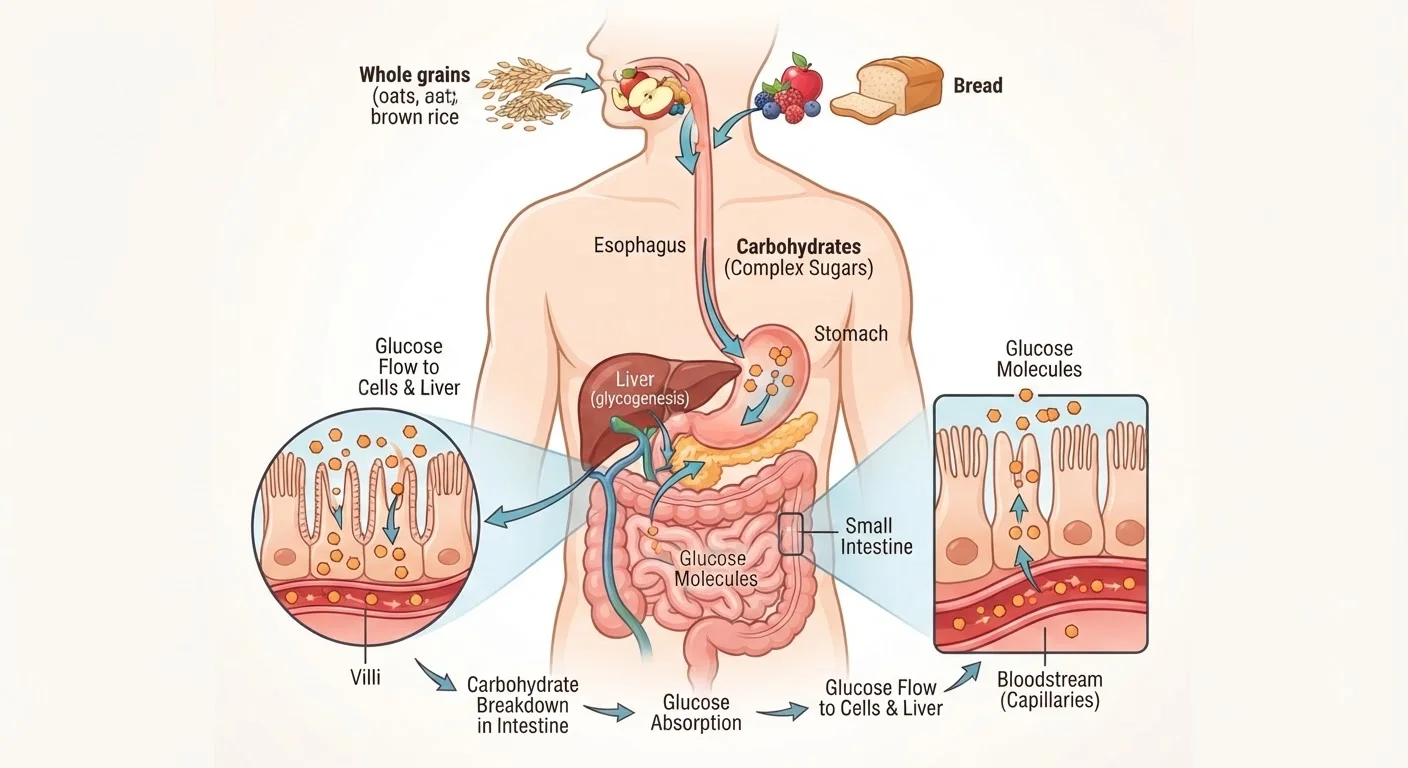
Digestion of carbohydrates begins the moment food enters your mouth. Salivary amylase, an enzyme in saliva, starts breaking starch molecules apart. The process continues in the small intestine, where enzymes from the pancreas and intestinal lining break carbohydrates down into their simplest form: single sugar molecules, primarily glucose.
Glucose is absorbed through the intestinal wall into the bloodstream. The pancreas responds by releasing insulin, a hormone that helps cells take up glucose for immediate energy use. This well-coordinated system runs continuously, adjusting to whatever you eat and how active you are.
For a broader look at how carbohydrates fit alongside protein and fat, see Macronutrients Explained.
Glucose Is the Brain's Primary Fuel
The brain is especially dependent on a steady supply of glucose — it consumes roughly 20% of the body's total energy despite accounting for only about 2% of body weight. While the brain can adapt to use ketones (derived from fat) during prolonged low-carbohydrate intake, glucose remains its preferred and most efficient fuel source under normal dietary conditions.
Blood Sugar, Insulin, and Energy Storage
After glucose enters the bloodstream, cells throughout the body — including muscle, organ, and brain cells — use it as fuel. Any glucose not immediately needed is converted to glycogen and stored in the liver and muscles. These glycogen reserves act as a short-term energy bank, available when blood sugar dips between meals or during exercise.
When glycogen stores are full, the body can convert excess glucose into fat for longer-term storage. This is a normal metabolic process, not a flaw — it reflects the body's efficiency at managing fuel availability across varying conditions.
Blood sugar management is one reason carbohydrate quality matters. Core concepts around metabolism and body weight are closely tied to how efficiently the body processes and stores energy from food.
Simple vs. Complex: Why Carbohydrate Type Matters
Carbohydrates are commonly grouped into two broad categories based on their chemical structure:
- Simple carbohydrates include single and double sugar molecules (monosaccharides and disaccharides). Found in table sugar, fruit juice, and refined grains, they digest quickly and can produce a rapid rise in blood glucose.
- Complex carbohydrates are longer chains of sugar molecules (polysaccharides), found in whole grains, legumes, starchy vegetables, and oats. They take longer to break down, supporting steadier blood sugar levels.
This structural difference has real-world implications for energy and satiety. Meals built around complex carbohydrates tend to sustain energy longer and keep hunger at bay more effectively. You can find a concise reference for carbohydrate calorie density and food sources in the Macronutrient Quick-Reference guide.
Fiber: The Carbohydrate That Works Differently
Dietary fiber is a category of carbohydrate that the human body cannot fully digest. Rather than being broken down into glucose, most fiber passes through the digestive tract largely intact. This makes it unique among carbohydrates and highly valuable nutritionally.
Soluble fiber — found in oats, beans, and apples — dissolves in water to form a gel that slows digestion and helps moderate blood sugar responses. Insoluble fiber — found in whole wheat, nuts, and many vegetables — adds bulk to stool and supports regular bowel movements.
Beyond digestion, fiber feeds beneficial gut bacteria, contributes to feelings of fullness, and is associated with a range of positive health outcomes in population research. Most Americans consume less fiber than current dietary guidelines recommend.
If you're physically active, carbohydrate timing and type become even more relevant — explore Carbohydrates and Exercise for guidance on fueling activity.
This article is for general informational and educational purposes only and is not a substitute for professional medical or dietary advice. Consult a qualified healthcare provider before making significant changes to your diet, especially if you have a health condition.