

Key Takeaways
The Glymphatic System
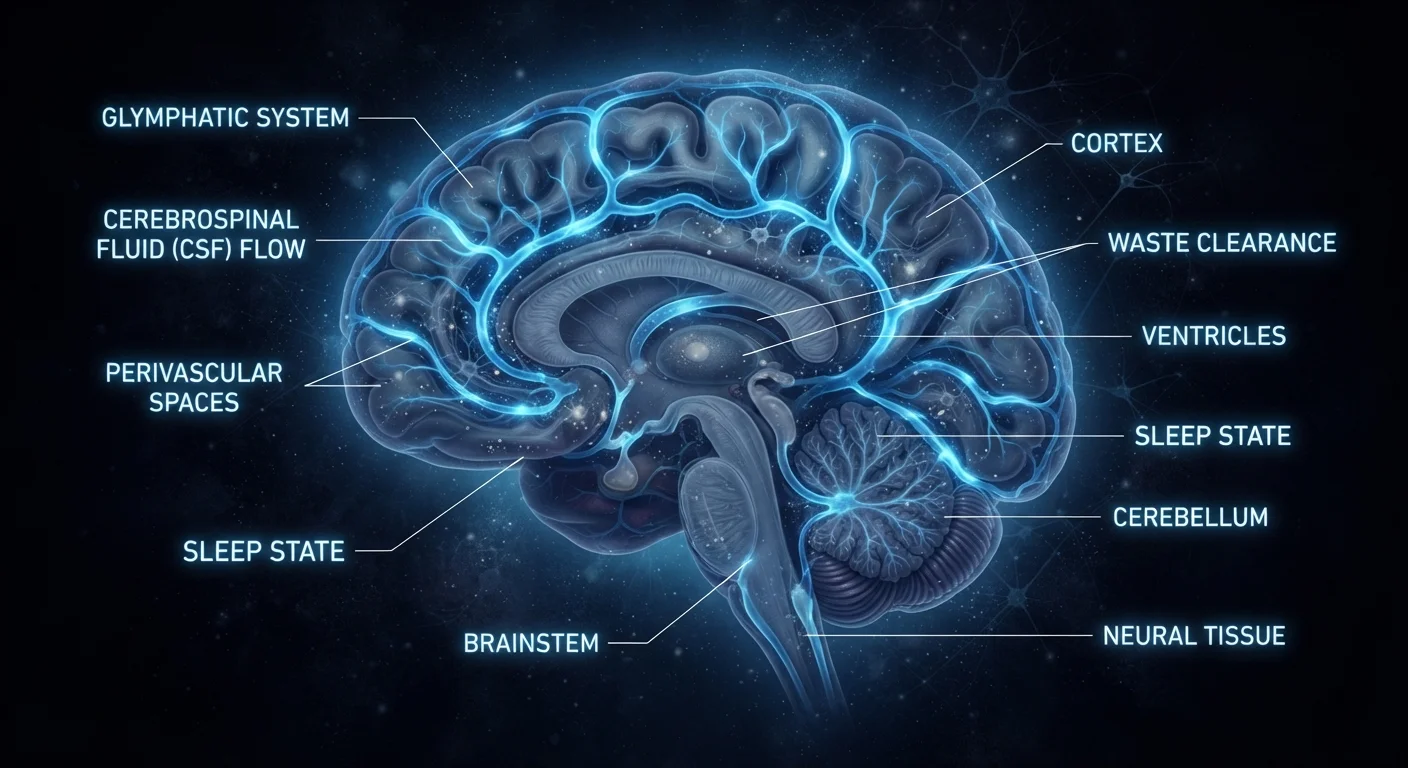
The glymphatic system is a fluid-clearance network in the brain that operates primarily during sleep. It uses channels surrounding blood vessels to circulate cerebrospinal fluid (CSF) through brain tissue, flushing out metabolic waste products that accumulate during waking hours. Think of it as the brain's overnight sanitation crew.
The term combines 'glial' (referring to astrocyte cells that form the channels) and 'lymphatic' (reflecting its functional similarity to the body's lymphatic waste-removal system). It was first formally described by neuroscientist Maiken Nedergaard and colleagues in a 2013 paper published in Science.
What the Glymphatic System Is and Where It Came From
For most of history, the brain was considered to lack a lymphatic drainage system — the network the rest of the body uses to remove waste and excess fluid. That understanding shifted significantly in 2013, when Dr. Maiken Nedergaard's research team at the University of Rochester published findings describing a previously unrecognized fluid-clearance mechanism in the brains of mice.
The system works through a network of channels that surround blood vessels in the brain. Cerebrospinal fluid (CSF) is pumped through these spaces, entering brain tissue and sweeping out metabolic byproducts before draining into the body's broader lymphatic vessels. Glial cells — specifically astrocytes — control and facilitate this flow, which is why the researchers coined the portmanteau 'glymphatic.'
Understanding this system has opened an entirely new window into why sleep, particularly deep sleep, appears so critical to brain health. For more on how sleep stages are structured each night, see the architecture of a night's sleep.
Why Sleep Is When the Brain Cleans House
The glymphatic system is not equally active around the clock. Research in animal models found it operates at dramatically higher levels during sleep — particularly during slow-wave, or deep, sleep — compared to wakefulness. During waking hours, brain cells appear to be slightly more compact, which restricts fluid flow. During sleep, those cells shrink somewhat, opening up the interstitial spaces and allowing CSF to circulate more freely.
Among the waste products cleared during this process is amyloid-beta, a protein fragment that can aggregate into plaques associated with Alzheimer's disease in research settings. Tau protein, another marker of neurodegeneration, is also believed to be cleared through this pathway. This has made the glymphatic system a prominent area of focus in dementia research, though it is important to note that a direct causal relationship in humans has not yet been confirmed.
~10x
Glymphatic activity increase during sleep vs. wakefulness
Rodent studies published in Science (Xie et al., 2013) found cerebrospinal fluid flow increased nearly tenfold during sleep compared to the awake state.
7–9 hrs
Recommended nightly sleep for adults
The American Academy of Sleep Medicine and Sleep Research Society recommend 7 or more hours of sleep per night for adults to support overall health.
~20%
Proportion of sleep spent in slow-wave (deep) sleep
Healthy young adults typically spend roughly 15–25% of total sleep time in slow-wave sleep, the stage most linked to glymphatic activity, though this decreases with age.
To understand which specific sleep stages matter most, sleep stages decoded provides a plain-language breakdown of how deep sleep, REM, and light sleep each contribute to overnight recovery.
What Happens When Sleep Is Cut Short
If glymphatic clearance depends on adequate sleep — and specifically on reaching and sustaining deep sleep — then consistently poor or short sleep could allow metabolic waste to accumulate over time. Animal studies support this concern: sleep-deprived rodents showed higher levels of amyloid-beta in the brain compared to well-rested controls.
Human research is still developing, but neuroimaging studies have found associations between self-reported short sleep and greater amyloid burden in the brain over time. These are associations, not proof of direct causation, and researchers are working to better understand the mechanisms involved.
The broader consequences of sleep deprivation extend well beyond the glymphatic system. How sleep deprivation affects the body covers the system-by-system impact of chronic insufficient sleep, from immune function to cardiovascular health.
This article is for informational purposes only and is not a substitute for professional medical advice. If you have concerns about your sleep or brain health, please consult a qualified healthcare provider.
Practical Implications: Supporting Your Brain's Overnight Maintenance
The glymphatic system cannot be directly controlled or measured at home. What can be influenced are the conditions that allow it to function — primarily, the quality and duration of sleep itself.
Slow-wave sleep, the phase most associated with glymphatic activity, is most abundant in the earlier part of the night and decreases with age, alcohol consumption, and irregular sleep schedules. Habits that support consistent, uninterrupted sleep therefore indirectly support the conditions under which glymphatic clearance occurs.
Protect Your Deep Sleep Window
Alcohol, late-night screen exposure, and inconsistent bedtimes are among the most common disruptors of slow-wave sleep. Going to bed at a consistent time each night and limiting alcohol close to bedtime are simple steps that may help preserve the deeper sleep stages thought to be most important for glymphatic function. If you consistently struggle to reach or maintain deep sleep, discussing this with a healthcare provider is a reasonable next step.
One area of emerging interest is sleep position. A study in rodents suggested that lateral (side) sleeping may optimize CSF flow through glymphatic channels compared to sleeping on the back or stomach. This finding has attracted significant attention, but human studies are limited, and it would be premature to make firm positional recommendations based on current evidence alone.
For evidence-backed strategies to improve overall sleep quality, sleep hygiene: what the term means and why it matters offers a grounded overview of which habits have the strongest support behind them. Similarly, REM sleep decoded explores the other critical overnight stage and its distinct role in brain health.