

| Recommended adult sleep | 7–9 hours per night (American Academy of Sleep Medicine & Sleep Research Society) |
| Chronic short sleep definition | Fewer than 7 hours regularly (AASM consensus statement) |
| Immune impact | ~4x higher cold susceptibility under 6 hrs (Carnegie Mellon University sleep and infection research) |
| Metabolic effect | Reduced insulin sensitivity within days (Peer-reviewed metabolic sleep studies) |
| Cardiovascular link | Higher hypertension rates in short sleepers (Population-level epidemiological studies) |
| Brain clearance | Glymphatic system most active during deep sleep (University of Rochester glymphatic research) |
Why Sleep Deprivation Is a Whole-Body Issue
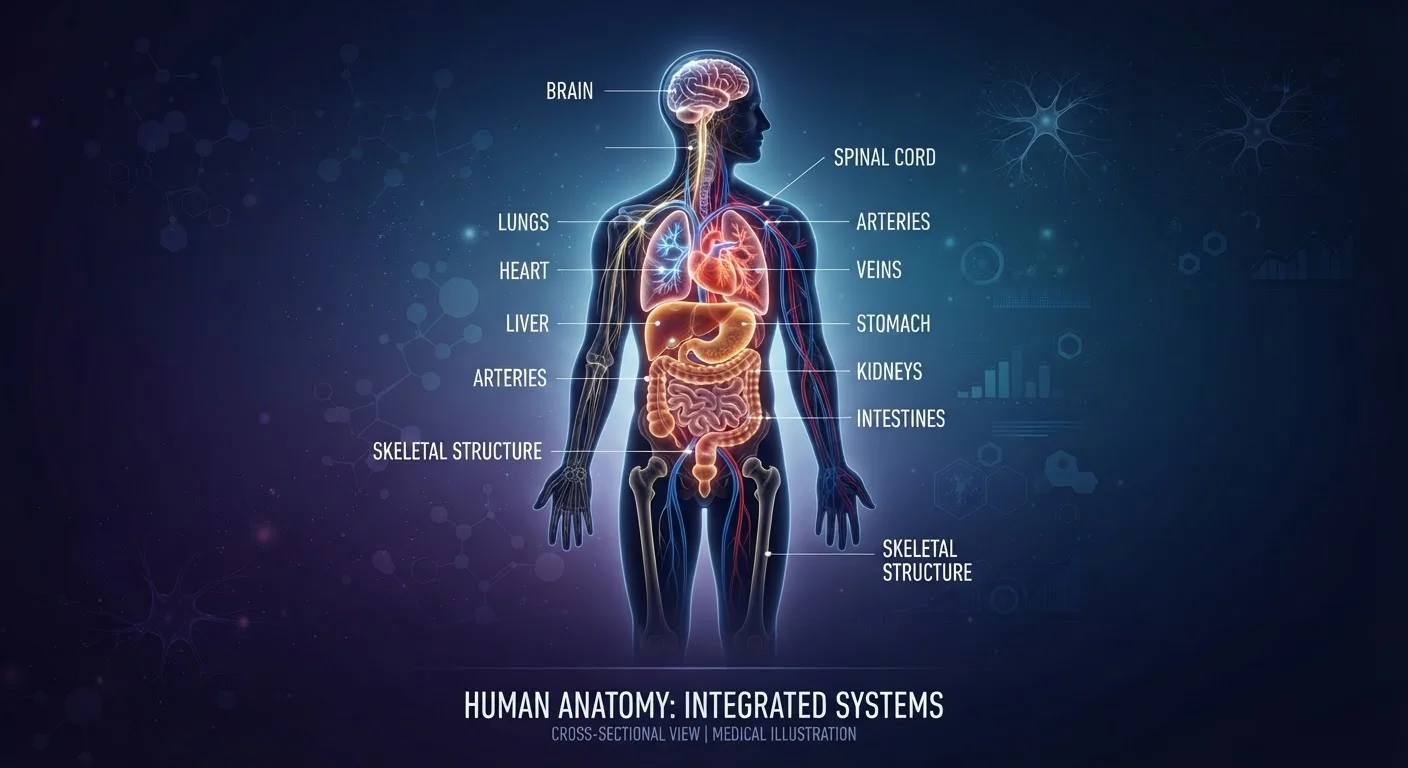
Most people think of insufficient sleep as a brain problem — you feel groggy, you struggle to concentrate, and you reach for extra coffee. But research from institutions including the AASM and the National Institutes of Health makes clear that chronic short sleep — generally defined as fewer than 7 hours per night for adults — affects nearly every major organ system. Understanding those effects is the first step toward treating adequate sleep as a non-negotiable health priority rather than a lifestyle luxury.
This reference is designed as a system-by-system lookup. It reflects established findings from peer-reviewed sleep research; it is general health information, not a substitute for evaluation by a qualified healthcare provider.
| Recommended adult sleep | 7–9 hours per night (American Academy of Sleep Medicine & Sleep Research Society) |
| Chronic short sleep definition | Fewer than 7 hours regularly (AASM consensus statement) |
| Immune impact | ~4x higher cold susceptibility under 6 hrs (Carnegie Mellon University sleep and infection research) |
| Metabolic effect | Reduced insulin sensitivity within days (Peer-reviewed metabolic sleep studies) |
| Cardiovascular link | Higher hypertension rates in short sleepers (Population-level epidemiological studies) |
| Brain clearance | Glymphatic system most active during deep sleep (University of Rochester glymphatic research) |
Brain and Central Nervous System
The brain's need for sleep is perhaps the most immediate and well-documented. During sleep — particularly slow-wave (deep) sleep — the glymphatic system clears metabolic waste products, including proteins associated with neurodegenerative disease. Sleep loss impairs this clearance process.
- Cognition: Even a single night of short sleep measurably reduces attention, working memory, and decision-making accuracy.
- Mood regulation: Sleep-deprived individuals show heightened amygdala reactivity, meaning emotional responses are amplified and harder to regulate.
- Long-term risk: Chronic insufficient sleep has been associated in epidemiological studies with elevated risk of cognitive decline, though causality is still being studied.
For context on how sleep disorders contribute to these patterns, see the sleep disorders overview.
Immune System and Inflammation
Sleep is when the immune system performs critical maintenance. Studies have shown that people sleeping fewer than 6 hours per night are significantly more susceptible to common respiratory infections after viral exposure compared to those sleeping 7 or more hours. Research published in journals such as Sleep has linked chronic short sleep to elevated levels of inflammatory markers, including C-reactive protein and interleukin-6. Sustained low-grade inflammation is considered a pathway through which poor sleep may contribute to a range of chronic conditions over time.
Cardiovascular System
The heart and blood vessels are sensitive to sleep duration and quality. During normal sleep, blood pressure dips — a process called nocturnal dipping — that gives the cardiovascular system a recovery window. Insufficient sleep disrupts this pattern.
- Blood pressure: Habitual short sleepers have higher rates of hypertension in population studies.
- Heart disease risk: Meta-analyses have associated sleeping fewer than 6 hours with modestly elevated risk of coronary artery disease and stroke, independent of other known risk factors.
- Arrhythmia: Sleep apnea, a disorder characterized by repeated breathing interruptions, is a recognized contributor to atrial fibrillation.
Metabolism, Hormones, and Weight
Sleep has a direct and measurable effect on hormonal regulation of appetite. Short sleep elevates ghrelin (a hunger-stimulating hormone) and suppresses leptin (a satiety signal), a combination that promotes overeating — particularly of calorie-dense foods. Separately, insufficient sleep impairs glucose metabolism and insulin sensitivity, effects that can appear after just a few nights of restriction.
These mechanisms are explored in more depth in our article on sleep and weight regulation. It is also worth noting that when you sleep matters alongside how long — for more on circadian timing, see the science of sleep timing.
When to Seek Professional Guidance
Occasional short sleep is a normal part of life. Chronic deprivation — especially when paired with daytime impairment, mood changes, or symptoms like loud snoring and gasping — warrants evaluation. A primary care provider or board-certified sleep medicine specialist can help determine whether an underlying sleep disorder is contributing and recommend appropriate next steps. Conditions such as insomnia and sleep deprivation are often confused but require different approaches; see insomnia vs. sleep deprivation for a clear explanation. Building consistent sleep habits is a practical starting point for most adults.
This article is for informational purposes only and is not medical advice. Always consult a qualified healthcare professional for concerns about your sleep or overall health.