

Key Takeaways
Sleep Hygiene
Sleep hygiene refers to the collection of behaviors, routines, and environmental conditions that support consistent, restorative sleep. The term was coined by sleep researchers to describe habits that can be deliberately shaped — much like dental hygiene describes daily practices that protect oral health. It covers everything from what time you go to bed to how bright your bedroom is at night.
Clinically, sleep hygiene education is often one component of Cognitive Behavioral Therapy for Insomnia (CBT-I), the first-line treatment recommended by the American Academy of Sleep Medicine for chronic insomnia.
Where the Term Comes From
The phrase sleep hygiene was introduced in the late 1970s by sleep researcher Peter Hauri, who used it to describe a set of behavioral recommendations for people with mild insomnia. The analogy to physical hygiene was intentional: just as brushing your teeth and washing your hands are daily practices that prevent problems, sleep hygiene practices are habits designed to prevent poor sleep from taking hold.
The term has since become standard in sleep medicine and public health communication. You can find it in guidance from the AASM, the Centers for Disease Control and Prevention, and most major health systems. For a deeper look at the vocabulary used across sleep research, see key terms in sleep science.
What Sleep Hygiene Actually Covers
Many people assume sleep hygiene is mainly about keeping a dark, quiet bedroom. The environment matters — but sleep hygiene is a broader concept that spans three domains:
- Scheduling behaviors: Going to bed and waking at consistent times, limiting napping, and aligning your sleep window with your natural circadian rhythm.
- Pre-sleep behaviors: Avoiding stimulating activities close to bedtime, limiting caffeine and alcohol in the hours before sleep, and establishing a wind-down routine that signals to your body that sleep is approaching.
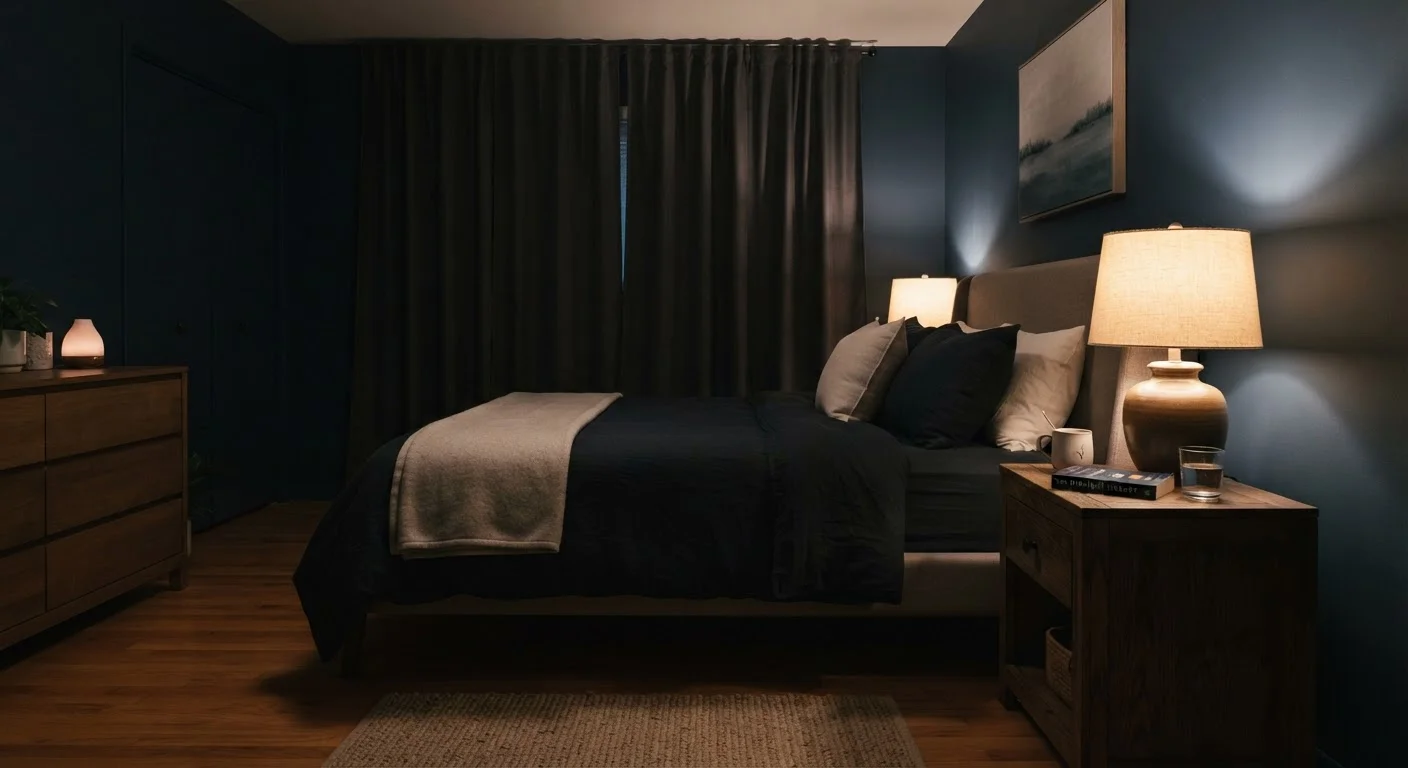
- Environmental factors: Keeping the bedroom cool, dark, and quiet; reserving the bed primarily for sleep; and managing light exposure — especially blue-spectrum light from screens — in the evening hours.
Each of these categories is connected. For example, when you sleep matters as much as how long you sleep, which is why scheduling is considered a foundational pillar rather than an afterthought.
1 in 3
U.S. adults not getting enough sleep
According to the CDC, approximately one-third of American adults regularly sleep less than the recommended seven hours per night.
5–6 hrs
Caffeine half-life in most adults
Research published in sleep pharmacology literature indicates caffeine's half-life means afternoon intake significantly affects evening alertness.
~65°F
Commonly cited optimal bedroom temperature
Sleep researchers frequently cite the mid-60s Fahrenheit range as supportive of sleep initiation, though individual preferences vary.
Which Habits Have the Strongest Evidence
Not all sleep hygiene advice carries equal scientific weight. Research most consistently supports the following practices:
- Consistent wake time: A fixed morning wake time anchors the circadian clock and builds sleep pressure — the biological drive to sleep — over the day. This is considered one of the highest-yield habits in sleep medicine.
- Limiting caffeine after early afternoon: Caffeine has a half-life of roughly five to six hours in most adults, meaning a 3 p.m. coffee still has significant effects at 9 p.m. Timing matters as much as total intake.
- Managing evening light: Bright and blue-spectrum light suppresses melatonin production, delaying the onset of sleep. Dimming lights and reducing screen brightness in the one to two hours before bed can help preserve the body's natural sleep signal.
- Cool bedroom temperature: Core body temperature drops as part of normal sleep initiation. A cooler room — generally in the mid-60s Fahrenheit range for most adults — supports this process, though comfort varies individually.
For a detailed look at bedroom environmental factors, see how temperature, sound, and light affect sleep.
What Sleep Hygiene Cannot Do
Sleep hygiene is a powerful foundation, but it has limits. For people with clinical insomnia, sleep apnea, restless legs syndrome, or other diagnosable sleep disorders, behavioral habits alone are generally insufficient to resolve the underlying problem.
The American Academy of Sleep Medicine recommends CBT-I as the first-line treatment for chronic insomnia — a structured program that goes well beyond hygiene tips to address the thoughts and patterns that perpetuate sleeplessness. Sleep hygiene education is typically one component within CBT-I, not a standalone cure.
If you have consistently poor sleep despite making sustained habit changes, speaking with a healthcare provider is the appropriate next step. Sleep problems can sometimes signal underlying medical or psychological conditions that warrant evaluation.
For a closer look at which pre-bed behaviors the evidence actually supports, see sleep hygiene unpacked: the nightly behaviors that matter. And to understand why sleep quality supports broader brain health, the glymphatic system and how the brain cleans itself during sleep is worth exploring.
This article is for general informational and educational purposes only and is not a substitute for professional medical advice, diagnosis, or treatment. Always consult a qualified healthcare provider with any questions about a medical condition or sleep disorder.