

Key Takeaways
Why Your Sleep Environment Matters
Most sleep advice focuses on habits: consistent bedtimes, reduced caffeine, limiting screens. But the physical environment where you sleep plays a surprisingly powerful role in how quickly you fall asleep, how long you stay asleep, and how much time you spend in restorative sleep stages. Understanding how sleep cycles work helps clarify why sensory disruptions matter — even small interruptions can push the brain out of deeper, more restorative stages and back into lighter sleep.
The good news is that temperature, sound, and light are all modifiable. You don't need an expensive renovation to make meaningful improvements. The evidence points to a handful of targeted adjustments that can have an outsized effect on sleep quality.
Temperature: The Most Underrated Sleep Variable
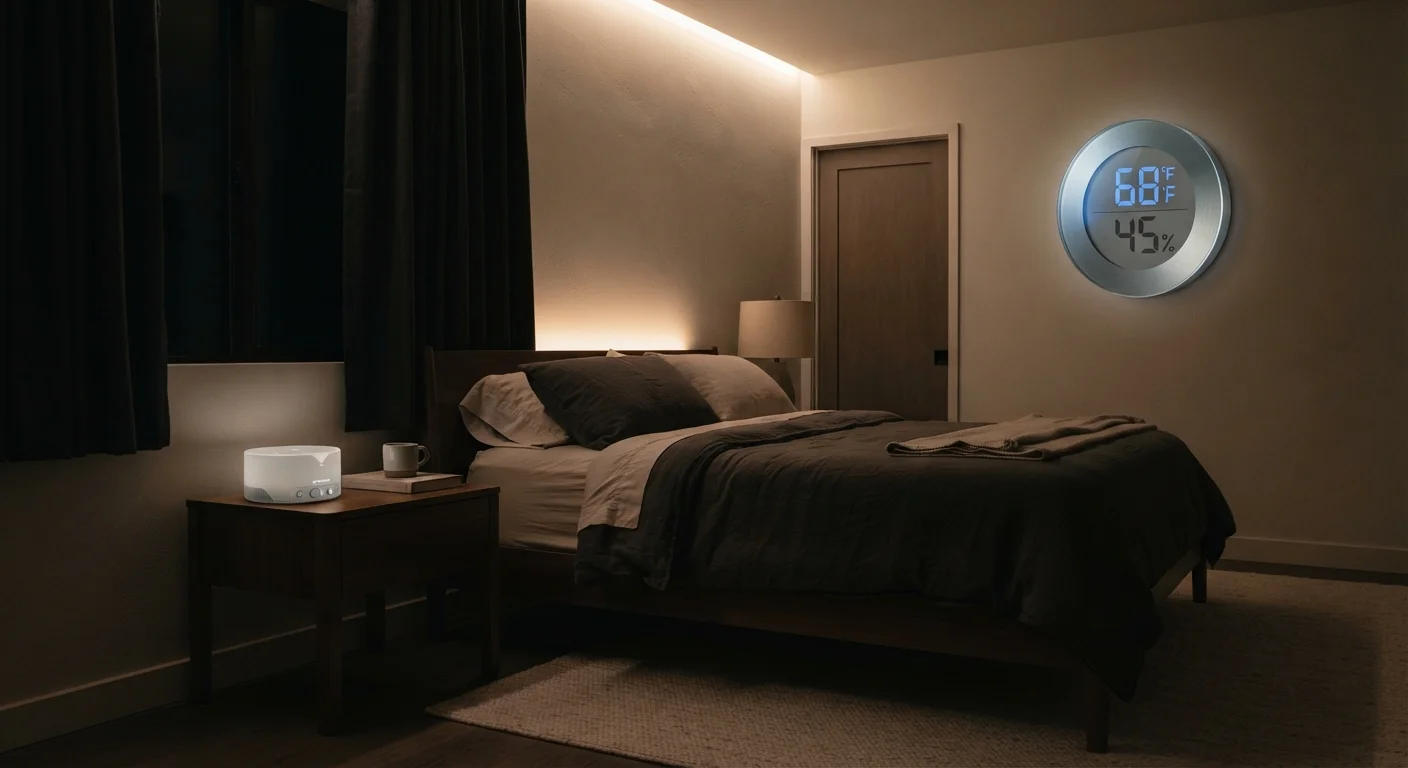
Core body temperature naturally drops as part of the sleep initiation process. Research from sleep medicine consistently shows that a bedroom that is too warm interferes with this cooling cascade, making it harder to fall asleep and more likely that you'll wake during the night.
Most sleep researchers point to a range of approximately 65–68°F (18–20°C) as conducive to sleep for most adults, though individual preferences vary. If precise thermostat control isn't possible, lightweight, breathable bedding and moisture-wicking sleepwear can help manage heat. For hot sleepers, a small bedside fan provides both airflow and a useful masking sound.
Set your thermostat to a cool range before bed, typically between 65–68°F.
Core body temperature must drop slightly to initiate sleep. A cooler room supports this physiological process, helping you fall asleep faster and reducing night waking. Research consistently identifies ambient bedroom temperature as one of the most influential physical sleep factors.
Use a white noise machine or fan to create a consistent sound floor in your bedroom.
Unpredictable noise is far more disruptive than steady background sound. A consistent ambient noise source reduces the acoustic contrast that triggers the brain's alerting response, helping you stay asleep through minor disturbances.
Install blackout curtains or use a sleep mask to eliminate light during sleep hours.
Even low-level light exposure during sleep can suppress melatonin production and shift circadian timing. Blocking external light ensures the brain receives consistent darkness signals throughout the night.
Get bright natural light exposure within the first hour of waking each morning.
Morning light anchors the circadian clock and counterbalances the need for darkness at night. Without this daily reset, sleep timing tends to drift, making it harder to fall asleep at a consistent hour.
Cover or remove small electronic light sources inside the bedroom.
Standby LEDs, alarm clock displays, and charging indicator lights contribute to light exposure during sleep without most people realizing it. Eliminating these micro-sources supports a darker, more conducive sleep environment.
It's worth noting that children, older adults, and people with certain health conditions may have different thermal needs. If you fall into one of these groups, consult a healthcare provider before making significant changes to your sleep environment.
Sound: Managing What You Can't Always Control
Silence isn't always the ideal sleep environment. Intermittent, unpredictable sounds — a car alarm, a neighbor's door — are more disruptive than steady background noise because the brain's threat-detection systems respond to change, not to constant signals. This is why many people find continuous white noise, pink noise, or ambient nature sounds genuinely helpful.
White noise works by raising the ambient sound floor, narrowing the contrast between quiet and sudden noise. Multiple studies support its use in both clinical and home settings for reducing sleep-onset latency. Foam earplugs remain one of the most effective and inexpensive options when external noise is unavoidable. For those in noisy urban environments, a combination of earplugs and a sound machine often works better than either alone.
For deeper context on habits that support better sleep, see what sleep hygiene actually covers.
Light: Setting the Stage for Melatonin Release
Light is the dominant environmental cue that regulates the body's circadian clock — the roughly 24-hour internal timing system that governs sleep and wakefulness. When light-sensitive cells in the retina detect bright or blue-spectrum light in the evening, they signal the brain's suprachiasmatic nucleus to delay melatonin release, pushing back the natural sleep window.
Blackout curtains are one of the most effective investments for sleep environments, particularly for shift workers, urban dwellers with streetlight exposure, or anyone whose bedroom faces east. Even low-level light from electronic standby indicators and alarm clock displays can be meaningful. Covering or removing these small light sources is a simple, often overlooked fix.
Morning light exposure deserves equal attention. Getting bright, preferably natural light within the first hour of waking helps anchor the circadian rhythm and makes it easier to feel sleepy at the right time the following evening. This bidirectional relationship between morning light and nighttime darkness is central to why sleep timing matters — not just total sleep duration.
For a broader look at nighttime behaviors that complement a well-designed sleep environment, see nightly behaviors that actually influence sleep quality.
This article is for general informational purposes only and is not a substitute for professional medical advice. If you have ongoing sleep difficulties or a known sleep disorder, consult a qualified healthcare provider.