

Key Takeaways
The Stress Response
The stress response is your body's automatic, coordinated reaction to a perceived threat or demand. It triggers a cascade of hormonal and nervous system changes designed to help you act quickly - speeding up your heart, sharpening your focus, and redirecting energy to your muscles. This built-in system evolved to protect us from physical danger, though it activates for psychological and social stressors too.
Often called the 'fight-or-flight' response, it is primarily orchestrated by the hypothalamic-pituitary-adrenal (HPA) axis and the sympathetic branch of the autonomic nervous system.
The Alarm Starts in Your Brain
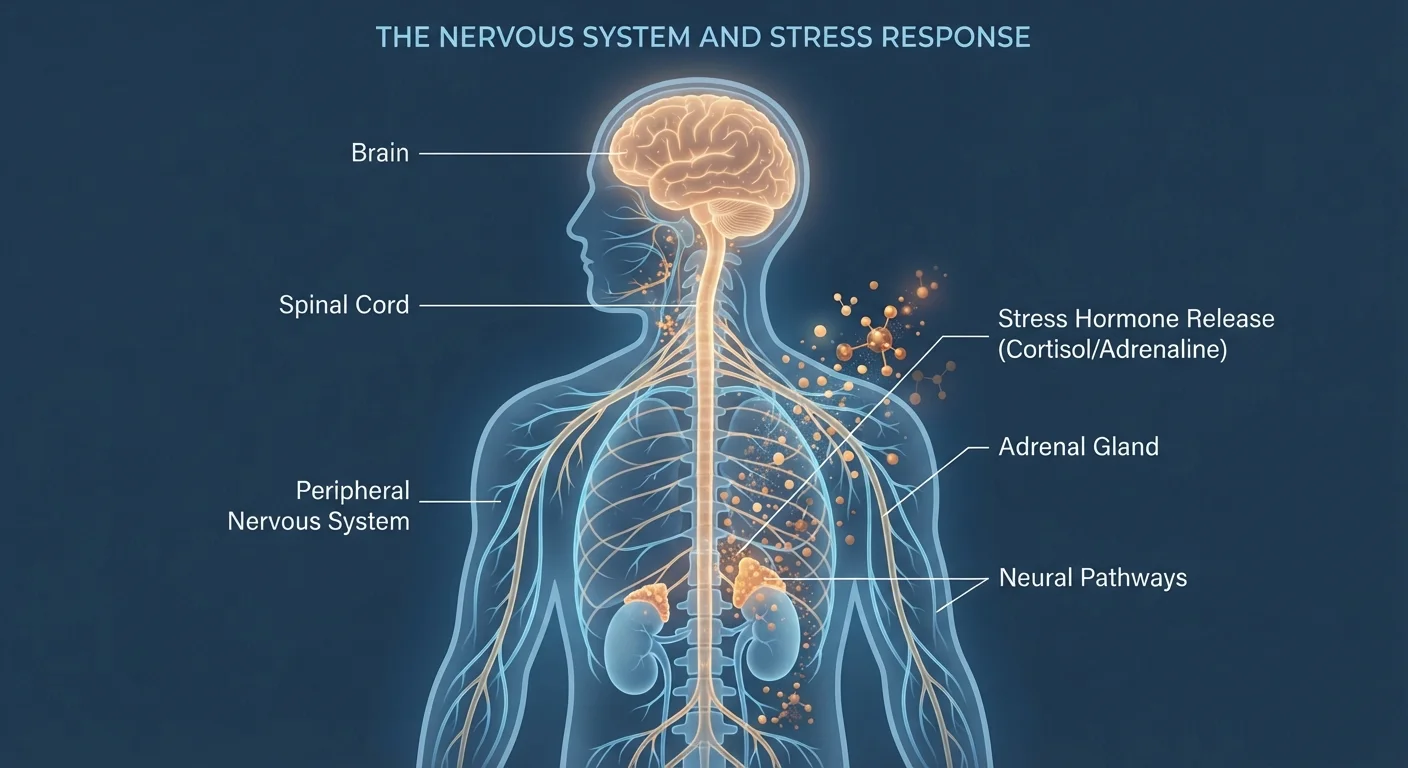
Before your heart beats faster or your palms sweat, your brain has already sounded the alarm. The process begins in the amygdala - two small, almond-shaped regions deep in your brain that constantly scan incoming sensory information for signs of threat. When the amygdala detects something that seems dangerous (whether a car swerving toward you or an urgent email from your boss), it fires a signal to the hypothalamus.
The hypothalamus functions like a command center. It immediately activates the sympathetic nervous system, which sends rapid electrical signals through your body. This happens so quickly - within milliseconds - that your body is already reacting before your conscious mind has fully registered what's going on.
For a deeper look at how the entire stress system is organized, see our overview at The Science Behind Your Stress Response.
The Hormonal Cascade: Adrenaline, Then Cortisol
Once the sympathetic nervous system fires, your adrenal glands (small organs sitting on top of your kidneys) release adrenaline, also called epinephrine. Adrenaline hits your bloodstream within seconds, triggering a familiar set of physical changes:
- Heart rate and blood pressure increase to pump more blood to muscles
- Breathing becomes faster and shallower to take in more oxygen
- Pupils dilate to sharpen vision
- Blood is redirected away from digestion toward large muscle groups
- Glucose is released into the bloodstream for quick energy
This is the acute peak of the fight-or-flight response. If the threat continues, a slower-acting but longer-lasting hormone enters the picture: cortisol. Released via the HPA axis (hypothalamic-pituitary-adrenal axis), cortisol sustains elevated energy, suppresses non-essential functions like immune activity and digestion, and keeps you in a state of heightened alertness.
Learn more about these hormones in detail, including how they relate to your body's recovery phase.
~30 sec
Time for adrenaline to peak in bloodstream
Research on the sympathoadrenal response shows adrenaline reaches measurable peak levels within roughly 30 seconds of an acute stressor.
15-30 min
Time for cortisol to peak after a stressor
The HPA axis response is slower than the adrenaline surge; cortisol typically peaks 15-30 minutes after stress onset, according to neuroendocrinology research.
77%
Americans reporting physical symptoms of stress
According to the American Psychological Association's Stress in America survey, a large majority of adults report physical symptoms they associate with stress.
What's Happening Across the Rest of Your Body
The stress response isn't localized to one system - it reorganizes your entire physiology. Muscles tense in preparation for movement. Sweating increases to help cool the body during exertion. The immune system temporarily ramps up inflammation as a precautionary measure, though with chronic activation, this same mechanism can become problematic over time.
Many people are surprised to learn that the stress response also sharpens cognition - at least initially. The surge of adrenaline and cortisol can improve focus and reaction time in the short term. However, when cortisol remains elevated, it can begin to impair memory consolidation and emotional regulation, particularly in the prefrontal cortex - the region responsible for complex thinking and decision-making.
Short-Term vs. Long-Term Effects Are Different
The stress response was designed for short, intense activation - not ongoing low-grade engagement. A single stressful event followed by recovery is very different physiologically from sustained daily stress. Research consistently shows that it's the chronicity of activation, not any single stressor, that is associated with cumulative health effects. This distinction matters when evaluating both the risks of stress and strategies for managing it.
There is also a meaningful gut connection. Because stress redirects blood away from the digestive system, it can cause nausea, cramping, or changes in appetite. This helps explain the well-established link between stress and eating behavior. For more on this, see how cortisol and stress influence eating patterns.
How the Body Switches Off the Alarm
Once a stressor passes, a counterbalancing system takes over: the parasympathetic nervous system, sometimes described as the "rest-and-digest" branch. This system slows the heart rate, lowers blood pressure, restores digestive activity, and gradually brings cortisol levels back down. The body is designed to recover - but it needs the signal that the threat is genuinely over.
This is where the stress cycle can get stuck. When stressors are constant, psychological, or ambiguous - like financial pressure or ongoing conflict - the brain doesn't always receive a clear "all-clear" signal. The result is a low-level, persistent activation of stress systems that can strain the cardiovascular, immune, and endocrine systems over time.
Certain practices can help tip the balance back toward parasympathetic recovery. Slow, deliberate breathing is one of the most well-studied methods, because it directly influences the vagus nerve - a key pathway in the parasympathetic system. See how controlled breathing calms the nervous system for an evidence-grounded explanation of why this works.
For a broader look at evidence-based approaches, the comprehensive stress and recovery overview pulls together research from nervous system science to daily habits.
This article is for general informational purposes only and is not a substitute for professional medical advice. If you are experiencing symptoms you believe are related to chronic stress or a medical condition, please consult a qualified healthcare provider.