

Key Takeaways
Option A
Core Stability
The foundation of safe, controlled movement.
Best for: Anyone looking to protect their spine, improve posture, and move more efficiently in everyday life and athletic activity.
Option B
Core Strength
The capacity to produce force through the midsection.
Best for: People aiming to lift heavier, improve athletic performance, or build visible abdominal muscle definition.
If you're new to exercise or returning after a back injury
Core Stability
Building control and spinal bracing ability first creates a safe foundation before adding external load or intense movement.
If you want to improve athletic performance or lift heavier weights
Core Strength
Force production through the midsection directly translates to power output in compound lifts and sport-specific movements.
If you sit at a desk most of the day and experience low back discomfort
Core Stability
Stability-focused work counters the postural effects of prolonged sitting and helps the deep spinal muscles relearn proper activation patterns.
If your goal is a well-rounded, injury-resistant fitness routine
Core Stability
Stability training should anchor any comprehensive core program, with strength exercises layered on top as a complement rather than a replacement.
If you already train consistently and want to add functional capacity
Core Strength
If your stability base is solid, adding loaded core strength work improves performance across compound exercises and real-world tasks.
Why the Distinction Matters
Walk into any gym and you'll hear "core training" used as a catch-all phrase. Crunches, planks, leg raises, and cable rotations all get lumped together - but they're training fundamentally different qualities. Understanding the difference between core stability and core strength changes not just what exercises you choose, but why you're doing them in the first place.
The core isn't just your abs. It's a cylinder of muscles surrounding the spine and pelvis - including the deep transverse abdominis, the multifidus along the spine, the pelvic floor, and the diaphragm, alongside the more visible rectus abdominis and obliques. Each layer plays a distinct role depending on whether your body needs to resist movement or produce it. That distinction is at the heart of this comparison. For a broader look at how strength and movement quality relate, see our guide to functional strength.
Defining Core Stability
Core stability refers to the ability of your deep trunk muscles to control the position and movement of the spine - particularly under load or during dynamic movement. Think of it as the body's built-in bracing system. When you pick up a heavy bag, the deep stabilizers fire before your limbs even move, stiffening the lumbar region to protect it from buckling.
Research in exercise science, including work associated with spine biomechanics researcher Dr. Stuart McGill, has consistently highlighted the role of stiffness and control - not just raw strength - in protecting the lower back. Exercises that train stability include:
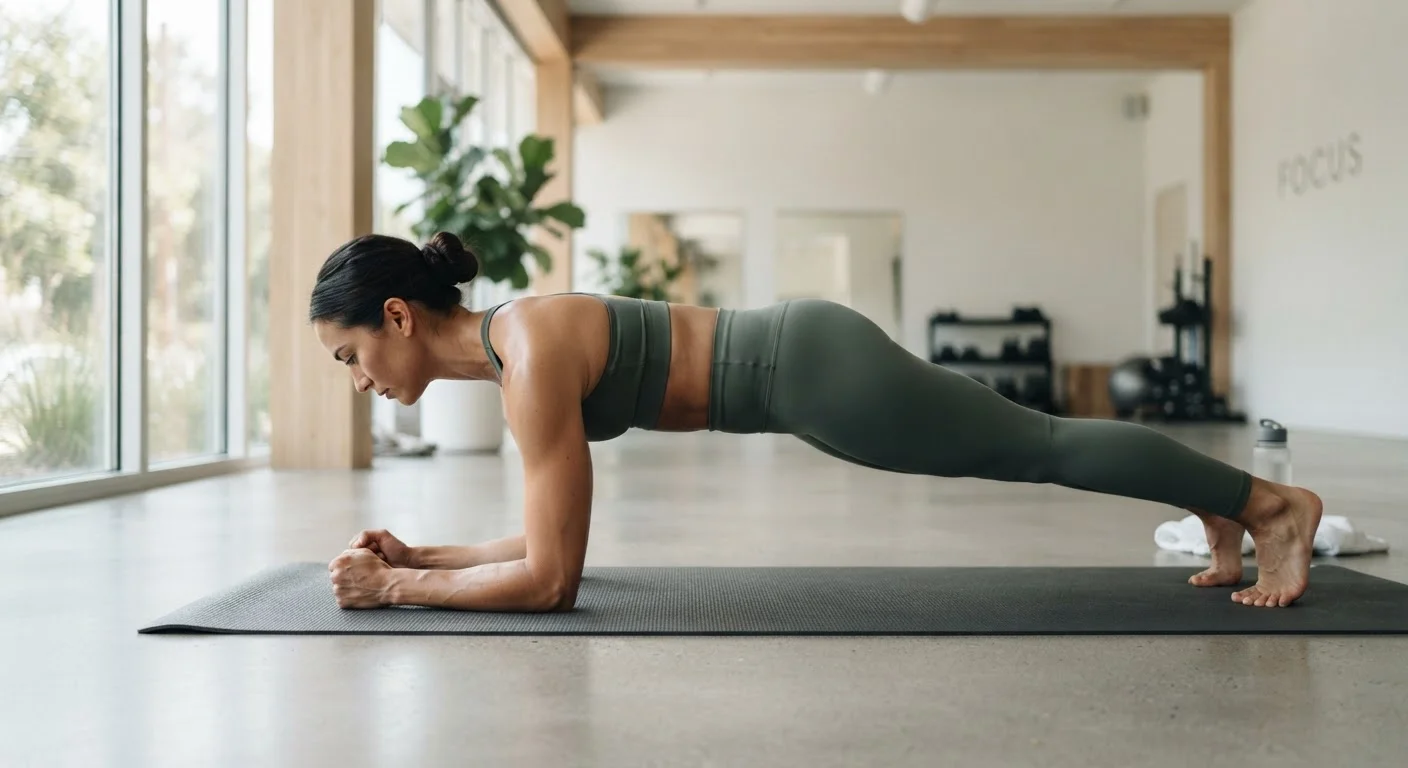
- Plank variations - resisting spinal extension under sustained load
- Dead bugs - maintaining a neutral spine while moving opposite limbs
- Pallof press - resisting rotational force from a cable or band
- Bird dog - coordinating limb extension while bracing the lumbar spine
What these movements share is an emphasis on anti-movement: anti-extension, anti-rotation, and anti-lateral flexion. You're training the core to hold a position, not to create one.
| Criterion | Core Stability | Core Strength |
|---|---|---|
| Primary goal | Resist and control spinal movement | Produce force through the trunk |
| Muscles emphasized | Deep stabilizers (transverse abdominis, multifidus) | Superficial movers (rectus abdominis, obliques) |
| Movement type | Anti-movement (isometric bracing) | Dynamic force production |
| Example exercises | Plank, dead bug, Pallof press | Cable crunch, Russian twist, leg raise |
| Injury prevention role | High - directly protects the lumbar spine | Moderate - supports load transfer when base is solid |
| Training priority order | Foundation - develop first | Layer on top once stability is established |
| Best for | Beginners, rehab, posture correction | Athletic performance, hypertrophy goals |
Defining Core Strength
Core strength is more straightforward in the traditional sense: it's the ability of the midsection muscles to generate force. When you do a weighted crunch, a cable woodchop, or a hanging leg raise, you're producing muscular torque through the trunk. This is the kind of core training most people picture when they imagine "ab workouts."
Core strength matters for performance. It transfers into compound exercises like deadlifts and squats, sprint mechanics, throwing, and virtually any movement requiring force transfer between the lower and upper body. A weak midsection limits how much power the limbs can express.
Common core strength exercises include:
- Cable crunches and weighted sit-ups - direct spinal flexion under load
- Russian twists with resistance - rotational force production
- Hanging knee or leg raises - hip flexion combined with trunk control
- Ab wheel rollouts - a hybrid that demands both strength and stability
How They Work Together
Neither quality exists in isolation during real movement - but they do have a developmental sequence. Stability typically comes first. If the deep stabilizing system isn't functioning well, loading the superficial muscles risks placing excessive shear force on the lumbar spine. This is one reason lower back pain is so common in people who jump into high-load core training without first establishing good bracing mechanics.
Think of it this way: stability is the platform; strength is what you build on top of it. Once a lifter can brace effectively, resist unwanted spinal movement, and maintain neutral alignment under moderate load, adding progressive resistance to core exercises becomes both safer and more productive.
A balanced program integrates complementary physical qualities rather than isolating them. The same principle applies here - rotating stability work and strength work across a weekly training plan produces more resilient results than specializing in one at the expense of the other. If you're newer to structured training, our beginner's look at training priorities can help frame where core work fits in.
This article is for general informational purposes only and does not constitute medical advice. If you have existing back pain, an injury, or a chronic health condition, consult a qualified healthcare professional or physical therapist before beginning or modifying a core training program.