

Key Takeaways
Our Verdict
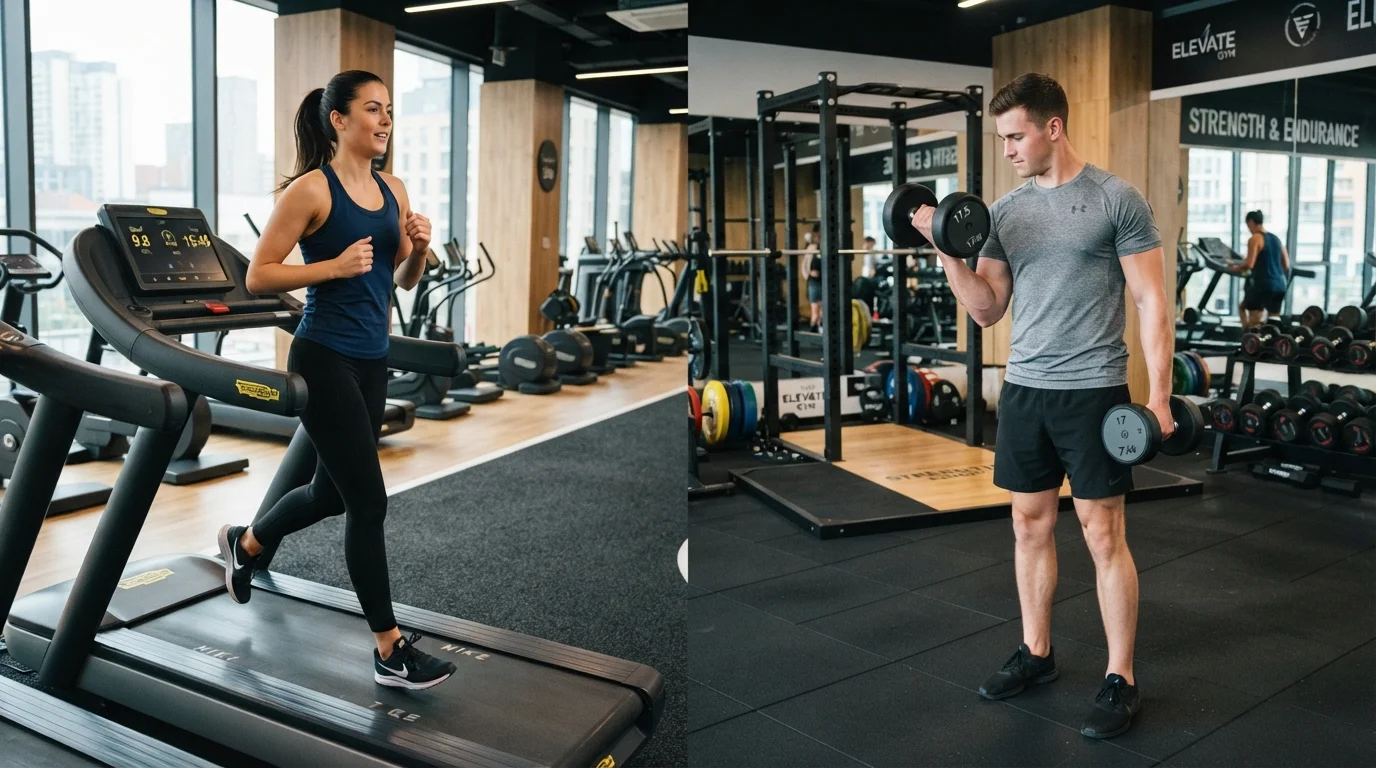
For most beginners, a modest combination of both cardio and strength training is more effective than committing exclusively to one. If you must prioritize, let your primary goal lead the decision - cardiovascular health points toward aerobic work, while improving body composition and functional strength points toward resistance training. Either way, consistency over weeks and months matters far more than which type you choose first.
| Best for | Recommended |
|---|---|
| Those whose primary goal is heart and lung health | Cardio Training |
| Those focused on building functional strength and supporting metabolism | Strength Training |
| Beginners with no strong preference and general wellness goals | Combined Approach |
| Returning exercisers rebuilding a full fitness base | Combined Approach |
Why This Question Matters More Than the Answer
Walking into any gym for the first time - or returning after a long break - often comes with an immediate fork in the road: treadmill or weight rack? The question feels consequential, and it is, but not because one path is objectively right. It matters because the answer should be grounded in your starting point, not a one-size-fits-all rule.
Both cardio (aerobic exercise) and strength training (resistance exercise) are supported by decades of research as pillars of physical health. The U.S. Department of Health and Human Services' Physical Activity Guidelines for Americans recommend adults get both each week - 150 minutes of moderate aerobic activity and two sessions of muscle-strengthening work. The real beginner question isn't which to do instead of the other; it's where to place your earliest emphasis given your goals and current condition.
If you're returning to exercise after a long break, understanding how these two modes work differently is the best place to start.
What Cardio Does for a Beginner Body
Cardio - walking, jogging, cycling, swimming, dancing - challenges your heart, lungs, and circulatory system. For beginners, the adaptations come quickly: within weeks of consistent aerobic work, resting heart rate often drops, breathing efficiency improves, and everyday tasks like climbing stairs start to feel easier.
Aerobic exercise is also well-established for supporting mood regulation, reducing blood pressure, and improving insulin sensitivity. These benefits make it particularly valuable for beginners whose primary concern is general health rather than athletic performance.
The practical barrier for most beginners is low. Walking is free, requires no equipment, and is easy to scale. Starting at a moderate pace - where you can still hold a conversation but feel your breathing increase - is entirely appropriate and effective early on.
| Cardio Training | Strength Training | |
|---|---|---|
| Primary benefit | Heart and lung efficiency | Muscle and bone strength |
| Early adaptations | Improved endurance, lower resting HR | Faster neuromuscular coordination |
| Equipment needed | Minimal (walking, cycling) | Moderate (bands, weights, machines) |
| Impact on metabolism | Burns calories during activity | Supports resting metabolic rate |
| Bone density support | Moderate (weight-bearing cardio) | Strong (progressive loading) |
| Beginner accessibility | Very high | Moderate - form learning curve |
One limitation worth knowing: cardio alone does relatively little to preserve or build muscle mass, which naturally declines with age. That's where strength training fills an important gap.
What Strength Training Does Differently
Resistance training - using free weights, machines, resistance bands, or your own bodyweight - applies mechanical stress to muscles and bones, prompting them to adapt and grow stronger. For beginners, this phase of adaptation is often surprisingly rapid; noticeable strength gains in the first several weeks are common and largely driven by improved neuromuscular coordination rather than muscle size alone.
Strength training supports bone density, improves posture, and builds the functional capacity needed for everyday movements: carrying groceries, rising from a chair, or lifting a child. It also helps maintain lean body mass, which plays a role in long-term metabolic health.
For a more complete picture of how resistance work interacts with other fitness qualities, see why strength training and flexibility work together. And if you're new to weights, avoiding common form mistakes will help you train safely from the start.
How to Decide Where to Start
A few honest questions can point you in the right direction:
- What is your primary goal? Cardiovascular endurance and heart health lean toward aerobic emphasis. Functional strength, body composition, and bone health lean toward resistance work.
- What do you actually enjoy? Enjoyment is a strong predictor of adherence. If you dread one type of exercise, starting there may undermine consistency.
- What does your schedule allow? Even two or three sessions per week produces meaningful results. See how weekly training frequency affects beginners for practical guidance.
- Do you have any health conditions or injuries? This is where a conversation with a healthcare provider becomes essential before you begin.
For most beginners, a simple combined approach - two days of light-to-moderate cardio and two days of full-body strength work per week - checks most boxes without overwhelming recovery. As fitness improves, building a more structured conditioning routine becomes the natural next step.
This article is for general informational purposes only and does not constitute medical advice. Always consult a qualified healthcare professional before beginning a new exercise program, particularly if you have an existing health condition.