

Key Takeaways
Why a Sleep Study Is Ordered
A sleep study is typically recommended when a person's symptoms suggest an underlying sleep disorder that cannot be fully evaluated through a clinical interview alone. Common reasons for referral include loud or irregular snoring, witnessed pauses in breathing, excessive daytime sleepiness, unexplained morning headaches, restless legs, or unusual behaviors during sleep such as sleepwalking. To understand how these symptoms map to specific conditions, see our overview of common sleep disorders.
Two main study formats exist. An in-laboratory polysomnography (PSG) is the comprehensive standard: it captures a broad array of physiological signals simultaneously and is required to diagnose many disorders. A home sleep apnea test (HSAT) uses a simplified portable device and is appropriate for straightforward suspected obstructive sleep apnea in adults without significant comorbidities — but it cannot measure brainwaves or detect disorders beyond breathing abnormalities. Your physician will determine which format is appropriate for your situation.
Unfamiliar with terms like polysomnography or sleep architecture? Our sleep science glossary explains the vocabulary clearly.
What you will need
What to Expect: Step-by-Step
Physician referral or sleep study order
Authorization from your healthcare provider is required to schedule a diagnostic sleep study.
Insurance or payment information
Most sleep labs require insurance details or a payment method before or on arrival.
Comfortable sleepwear
Loose-fitting pajamas or similar clothing help you sleep naturally while accommodating monitoring leads.
Toiletries and overnight bag
A toothbrush, morning medications, and a change of clothes make the overnight stay more comfortable.
List of current medications
Technologists need an accurate medication list to interpret results and flag any substances that affect sleep architecture.
Prepare in the days before your study
In the two to three days leading up to your appointment, maintain your normal sleep schedule as closely as possible. Avoid napping on the day of the study, and steer clear of caffeine after noon. Do not apply hair products such as gels, sprays, or oils on the day of the study — these can interfere with electrode adhesion. Confirm your arrival time with the lab; most in-lab studies begin check-in between 8 p.m. and 10 p.m.
Check in and complete intake paperwork
Upon arrival, a sleep technologist will greet you and review your medical history, current medications, and sleep complaints. You may complete questionnaires about your sleep patterns and daytime functioning. This is a good moment to mention any concerns — including anxiety about the study itself — so the team can support you throughout the night.
Get connected to monitoring sensors
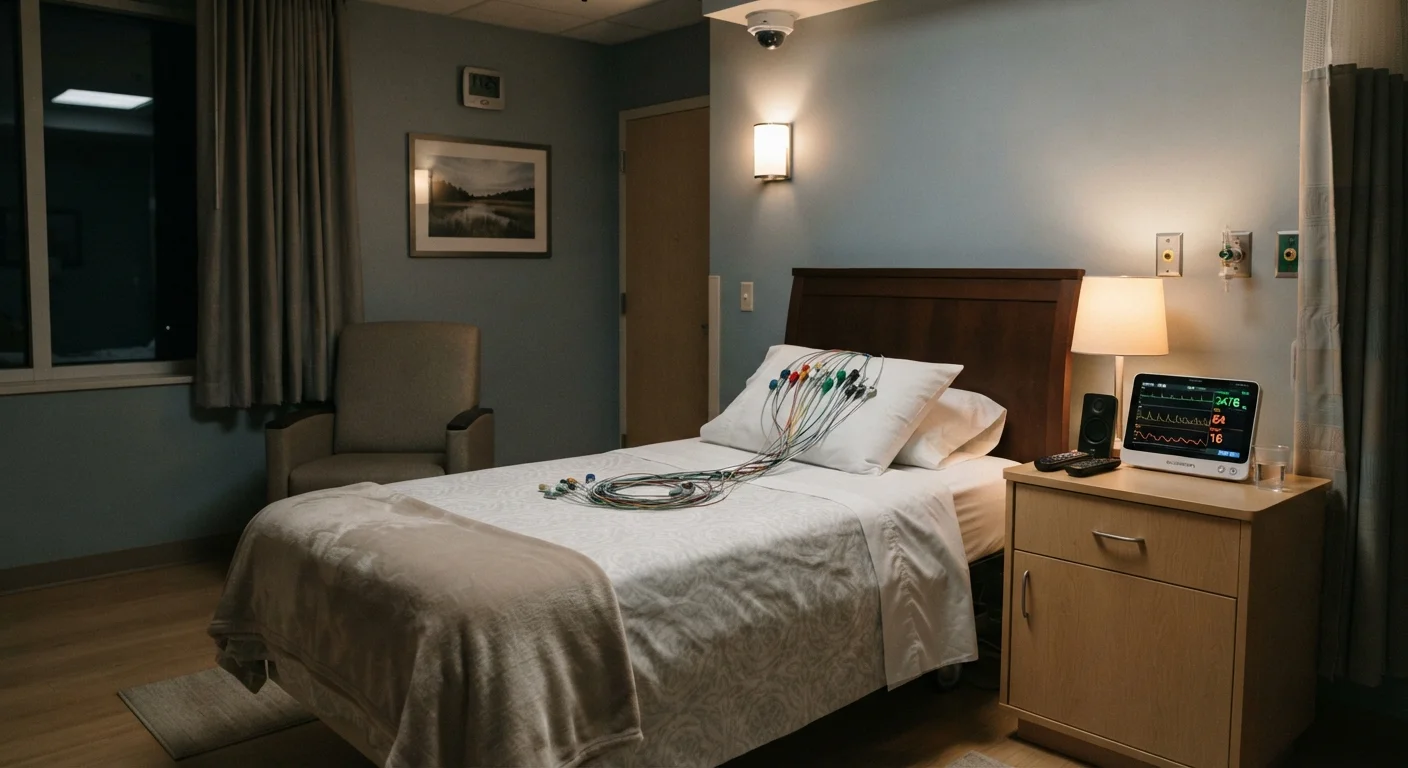
The technologist will attach a series of small sensors to your scalp, face, chest, legs, and fingertip using a water-soluble paste or medical tape. These electrodes and belts are the core of a polysomnography (PSG) — the standard in-lab sleep study. Sensors record brainwave activity (EEG), eye movements (EOG), muscle tone (EMG), heart rhythm (ECG), breathing effort, airflow, and blood oxygen levels. The process is entirely non-invasive and painless.
Sleep as normally as possible
Lights go out at your usual bedtime, or as close to it as the lab schedule allows. A camera and microphone in the room allow the technologist — stationed outside — to monitor you safely throughout the night. You can change position, use the restroom (a technologist will briefly disconnect the lead bundle), and sleep on your back, side, or stomach. Most patients sleep well enough for a valid study, even if they feel they slept less than usual.
Wake up and complete the study
Most in-lab studies conclude between 5 a.m. and 7 a.m. The technologist will remove all sensors — the paste washes out with warm water. You may be asked to complete a brief morning questionnaire rating your sleep quality. Plan to go directly to work or your daily routine; there is no sedation or recovery period required.
Wait for results and follow up with your doctor
A board-certified sleep physician will score and interpret your overnight data — a process that typically takes one to two weeks. Your referring provider will then review the findings with you during a follow-up appointment. Results may point to conditions such as obstructive sleep apnea, periodic limb movement disorder, or a parasomnias. Learn more about what the recorded data reveals in our deep dive into polysomnography measures.
After the Study: Understanding Your Results
A sleep study report distills a full night of data into several key metrics. The most clinically important is the Apnea-Hypopnea Index (AHI), which quantifies breathing disruptions per hour and is central to diagnosing obstructive sleep apnea — a condition with well-documented cardiovascular and metabolic implications when left untreated. Learn more about those mechanics in our article on what happens during obstructive sleep apnea.
Other reported values include sleep efficiency, time spent in each sleep stage, oxygen desaturation events, limb movement indices, and heart rate patterns. A sleep specialist interprets these figures in the context of your full clinical picture — not as isolated numbers. If a disorder is confirmed, your provider will discuss evidence-based treatment options ranging from positive airway pressure (PAP) therapy to behavioral interventions.
Supporting good sleep habits in the weeks surrounding your study — and beyond — can also improve baseline health. Explore practical routines in our sleep habits hub.
This article is for general informational purposes only and is not a substitute for personalized medical advice, diagnosis, or treatment. Always consult a qualified healthcare provider regarding any sleep symptoms or medical concerns.