

Key Takeaways
Our Verdict
Parasomnias vary widely in their causes, timing, and health implications. Non-REM parasomnias like sleepwalking and night terrors are most common in children and often resolve with age, while REM sleep behavior disorder more frequently signals neurological considerations in adults. Recognizing which type of parasomnia is occurring is the essential first step toward deciding whether watchful waiting or professional care is appropriate.
| Best for | Recommended |
|---|---|
| Parents of children with occasional sleepwalking or night terrors | Watchful waiting with safety measures and consistent sleep schedules |
| Adults experiencing new or frequent parasomnia episodes | Evaluation by a board-certified sleep specialist |
| Anyone with episodes involving injury risk or significant distress | Prompt medical consultation regardless of age |
What Is a Parasomnia?
The term parasomnia refers to a category of sleep disorders characterized by abnormal movements, behaviors, emotions, perceptions, or dreams that occur while falling asleep, during sleep, or while waking up. Unlike insomnia—where the central problem is difficulty sleeping—parasomnias involve the brain producing partial, mixed, or misdirected states of arousal.
Understanding where in the sleep cycle a parasomnia occurs is key to telling them apart. Sleep stages fall into two broad categories: non-REM (NREM) sleep and REM (rapid eye movement) sleep. Most parasomnias cluster in one or the other, which shapes their appearance, their causes, and their clinical significance. For a deeper look at how these cycles unfold, see the architecture of a night's sleep.
Parasomnias are more common than many people realize. The American Academy of Sleep Medicine (AASM) classifies them into NREM-related, REM-related, and other types. Each group has a distinct profile.
NREM Parasomnias: Sleepwalking, Night Terrors, and Confusional Arousals
NREM parasomnias arise from slow-wave (deep) sleep, which predominates in the first third of the night. During an episode, the brain is caught between deep sleep and wakefulness—conscious enough to generate movement or emotion, but not enough to form lasting memories of the event.
Sleepwalking (Somnambulism)
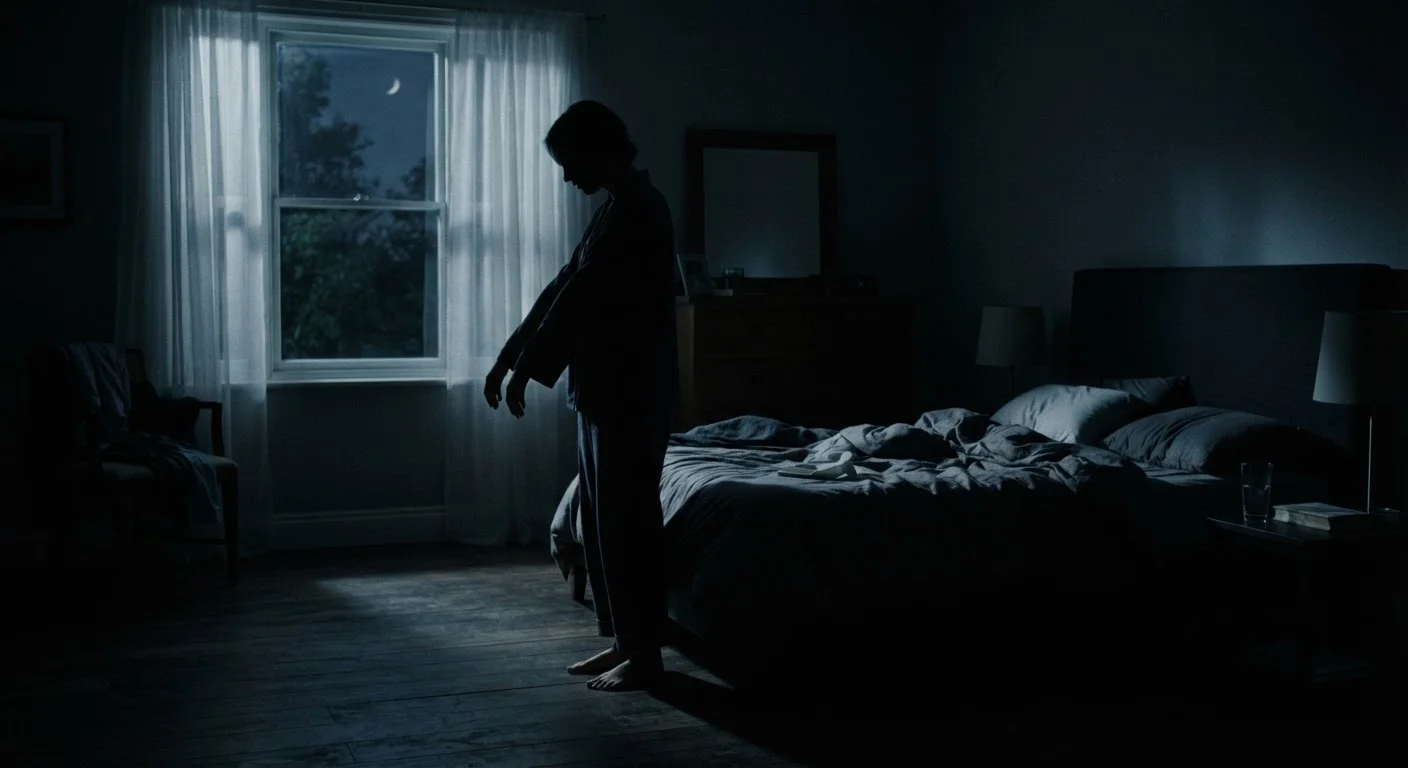
Sleepwalking involves rising from bed and moving around while remaining asleep. Episodes can be brief and benign or involve complex behaviors such as opening doors or rearranging objects. The person's eyes are typically open but glassy, and they are difficult to wake. Memory of the episode is almost always absent. Sleepwalking affects an estimated 1–7% of adults and is considerably more common in children.
Sleep Terrors (Night Terrors)
Sleep terrors are episodes of intense fear accompanied by screaming, thrashing, rapid heart rate, and sweating. Unlike nightmares, they occur in deep NREM sleep rather than REM sleep—meaning the person is not dreaming in the conventional sense and will have no recollection of the episode in the morning. An observer may find the episode alarming, but attempts to comfort or wake the person are often ineffective and can prolong it.
Confusional Arousals
These are partial awakenings from deep sleep during which a person appears disoriented, responds slowly or incoherently to questions, and may act agitated. They are especially common in young children and usually resolve without intervention.
| Sleepwalking | Night Terrors | Confusional Arousals | RBD | Nightmare Disorder | |
|---|---|---|---|---|---|
| Sleep stage | NREM (deep) | NREM (deep) | NREM (deep) | REM | REM |
| Typical timing in night | First third | First third | First third | Last third | Last third |
| Dream recall | None | None | None | Often vivid | Yes, distressing |
| Eyes open during episode | Yes, glassy | Yes, wide | Often | Usually closed | Wakes fully |
| Physical movement | Walking, complex acts | Screaming, thrashing | Confusion, agitation | Acting out dreams | Minimal or none |
| Most common age group | Children | Children | Young children | Adults 50+ | Any age |
| Injury risk | Moderate | Low–moderate | Low | Moderate–high | Low |
A consistent sleep schedule and adequate total sleep time are among the most practical ways to reduce NREM parasomnia frequency. Evidence-based sleep hygiene habits can also reduce triggers like sleep deprivation.
REM Parasomnias: REM Sleep Behavior Disorder and Nightmare Disorder
REM parasomnias occur during dreaming sleep, when the brain is highly active but the body is normally in a state of muscle paralysis called REM atonia. When that paralysis breaks down or is absent, sleepers can physically act out their dreams.
REM Sleep Behavior Disorder (RBD)
RBD is characterized by the loss of normal REM atonia, allowing individuals to vocalize, kick, punch, or leap out of bed in response to dream content. Unlike sleepwalking, the person often wakes easily and can recall a vivid dream matching their movements. RBD is more common in men over 50. Clinically, it is notable because it has been associated with certain neurodegenerative conditions; anyone experiencing RBD symptoms should seek evaluation from a sleep specialist or neurologist.
Nightmare Disorder
Frequent, distressing nightmares that cause significant impairment—such as fear of going to sleep, fatigue, or mood disruption—can qualify as nightmare disorder. Unlike sleep terrors, nightmares occur in REM sleep and the person awakens fully and remembers them. Trauma, certain medications, and psychiatric conditions are recognized contributors.
For context on how parasomnias differ from other sleep conditions, see the broader overview of common sleep disorders in American adults.
When to Seek Professional Guidance
Many childhood parasomnias are outgrown without intervention. However, certain patterns deserve prompt attention from a healthcare provider or board-certified sleep specialist:
- Episodes that begin in adulthood, especially after age 50
- Behaviors that pose a risk of injury to the sleeper or others
- Very frequent or prolonged episodes
- Significant daytime impairment, fear of sleep, or mood changes
- Suspected RBD, given its potential neurological associations
A sleep specialist may recommend an overnight sleep study (polysomnography) to confirm the parasomnia type, rule out other disorders such as sleep apnea as a trigger, or guide treatment decisions. Treatment approaches—which can range from safety modifications and improved sleep habits to medication or cognitive-behavioral strategies—vary significantly by parasomnia type and should always be determined by a qualified clinician.
Parasomnias are distinct from conditions such as insomnia and sleep deprivation or narcolepsy, which have their own separate diagnostic criteria and care paths. Correct identification matters—which is why self-diagnosis based on symptoms alone has real limitations.
This article is for general informational purposes only and does not constitute medical advice. If you are experiencing disruptive or potentially harmful sleep behaviors, please consult a qualified healthcare professional.