

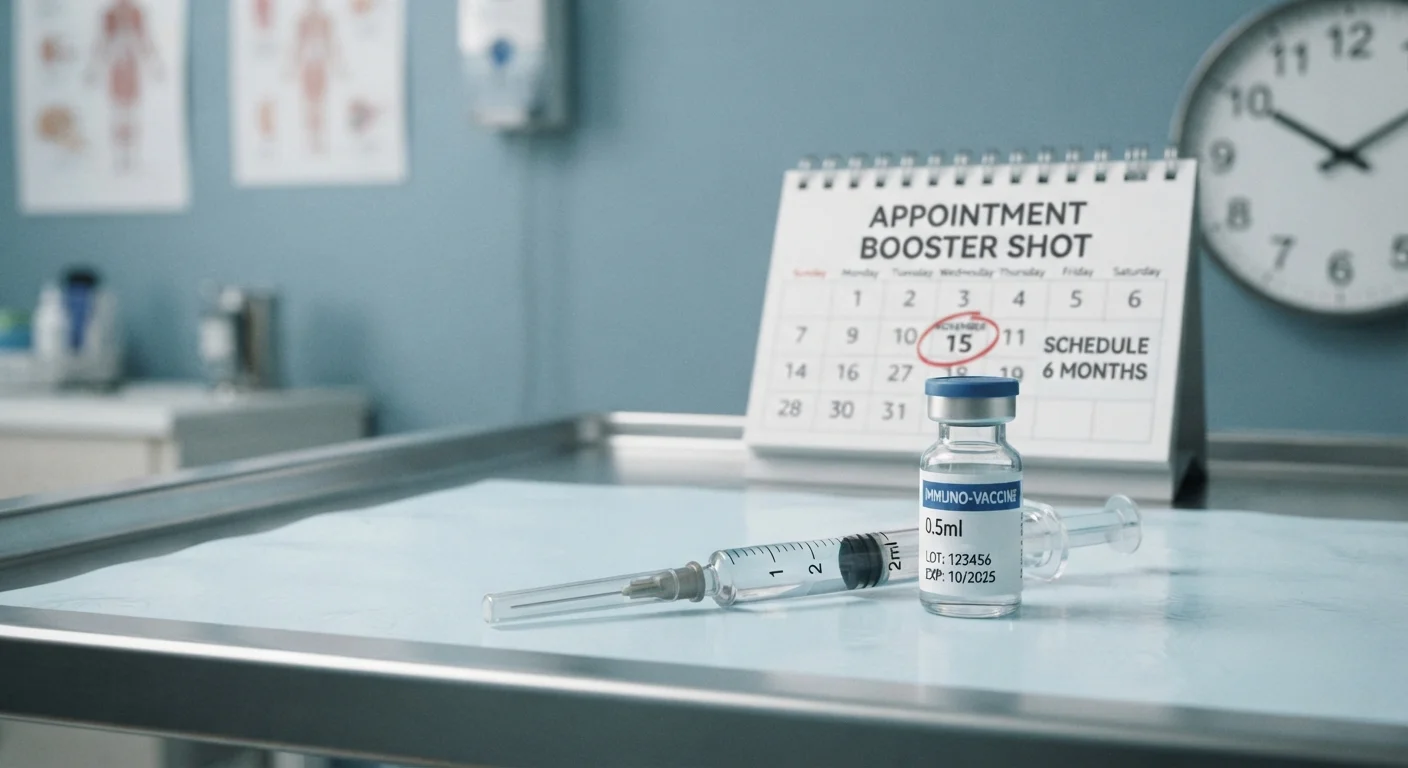
Key Takeaways
Waning Vaccine Immunity
Waning vaccine immunity refers to the gradual decline in the level of protection a vaccine provides over time. After vaccination, your immune system produces antibodies and memory cells that defend against infection — but these responses can weaken months or years later, depending on the vaccine and the pathogen. A booster dose is a follow-up shot designed to re-stimulate the immune system and restore protective levels of immunity.
The rate of waning differs by vaccine platform, adjuvant use, and individual immune factors. Antibody titers — measurable concentrations of specific antibodies — are often used as a proxy for protection, though cellular immunity also plays a critical role.
Why Immunity Doesn't Always Last a Lifetime
After vaccination, your immune system mounts a response: it produces antibodies and trains specialized memory cells to recognize the pathogen in the future. But this protection is not always permanent. To understand why, it helps to know what's happening biologically — and our guide to how the immune system responds to a vaccine explains this process in detail.
The short version: antibody levels — which are among the most measurable indicators of immune protection — naturally decline after vaccination. This is not a flaw in the vaccine; it's a normal feature of immune regulation. Your body doesn't maintain maximum alert indefinitely. Over months or years, circulating antibody concentrations can drop below the threshold needed to reliably block infection.
The pace of this decline varies considerably. Some vaccines produce memory cells that persist for decades, essentially reprogramming a subset of immune cells to respond rapidly if the pathogen is ever encountered again. Others generate responses that are shorter-lived, particularly when the vaccine targets a pathogen that mutates frequently or when the immune stimulus itself is relatively brief.
10 years
Recommended interval between Td booster doses
The CDC recommends a tetanus and diphtheria booster every 10 years for adults, with at least one dose replaced by Tdap to include pertussis protection.
~50%
Estimated drop in flu vaccine effectiveness by late season
Research published in peer-reviewed journals has found influenza vaccine effectiveness can decline substantially within a single season, supporting annual re-vaccination recommendations.
1 in 3
Adults missing at least one recommended vaccination
CDC surveillance data consistently show that a significant proportion of American adults are not up to date on all recommended vaccines, including boosters.
What Determines How Quickly Protection Wanes
Several factors influence how long vaccine-induced immunity holds up:
- Pathogen variability: Viruses like influenza and SARS-CoV-2 mutate rapidly, meaning earlier immune responses may be less effective against new variants — even if antibody levels remain relatively stable.
- Vaccine platform: Live-attenuated vaccines (which use a weakened form of the pathogen) tend to produce longer-lasting immunity than inactivated or subunit vaccines, which may require more frequent boosting.
- Individual immune response: Age, genetics, underlying health conditions, and medications all affect how robustly and durably someone responds to a vaccine.
- Route and dose: The amount of antigen delivered and how the vaccine is administered can influence both the strength and the persistence of the immune response.
Older adults face a particular challenge. The immune system changes with age — a process called immunosenescence — which can blunt both initial vaccine responses and the durability of protection. Our article on vaccines for older adults covers how these age-related shifts affect immunization recommendations after age 60.
The Role of Booster Doses
A booster shot is not a sign that a vaccine failed. It's a strategically timed re-exposure to vaccine antigens designed to re-stimulate the immune system before protection drops to inadequate levels. Think of it as refreshing a subscription rather than starting from scratch.
Boosters work by reactivating long-lived memory B cells and T cells — the immune system's durable archive of past encounters. When these cells are stimulated again, they rapidly expand and produce higher concentrations of antibodies, often surpassing the levels achieved after the primary series.
Public health agencies, including the CDC and the Advisory Committee on Immunization Practices (ACIP), set booster schedules based on population-level data tracking how quickly immunity wanes and when real-world protection against infection or severe disease begins to decline meaningfully. These are not arbitrary intervals — they reflect accumulated clinical evidence.
Common examples of vaccines requiring boosters in adults include: tetanus and diphtheria (Tdap/Td, typically every 10 years), seasonal influenza (annually, due to viral evolution), shingles (a two-dose series for adults 50 and over), and COVID-19 (with evolving guidance based on circulating variants and population immunity data).
Booster Gaps and Why They Matter
Many American adults are unknowingly behind on recommended boosters — not due to refusal, but simply because life gets busy and schedules get lost track of. This is more common than most people realize, and it can leave real gaps in protection. Our article on gaps people leave in their vaccine protection outlines the most frequent oversights and how to address them.
It's also worth noting that individual gaps can have broader implications. When enough people in a community fall behind on immunizations, the collective immunity that helps protect vulnerable individuals — including those who cannot be vaccinated — begins to erode. For more on this dynamic, see our explainer on herd immunity and when it breaks down.
The practical takeaway: schedule a conversation with your healthcare provider to review your vaccination history. Bring any records you have, and ask specifically about adult booster recommendations for your age group and health status. This single step can identify and close gaps that might otherwise go unaddressed for years.
This article is for general informational and educational purposes only and is not a substitute for professional medical advice, diagnosis, or treatment. Always consult a qualified healthcare provider with questions about vaccines, your immune health, or any medical concerns.