

Key Takeaways
Vaccine Immune Response
A vaccine immune response is the series of biological events your body triggers after receiving a vaccine. Your immune system learns to recognize a harmless version of a pathogen — or a piece of it — so that if you encounter the real disease later, your body can fight it off quickly. This process builds immunological memory without requiring you to get sick first.
The response involves both innate immunity (rapid, non-specific) and adaptive immunity (slower but pathogen-specific), ultimately producing antigen-specific B cells, T cells, and long-lived memory cells.
The First Hours: Innate Immunity Takes Over
The moment a vaccine is injected, your body's first line of defense — the innate immune system — springs into action. Innate immunity is fast but non-specific; it responds to anything it detects as foreign. Sentinel cells called dendritic cells and macrophages at the injection site engulf the vaccine's antigen (the molecule that triggers an immune response). This initial activity causes the localized redness and swelling many people notice at the injection site.
These sentinel cells do more than clean up. They process the antigen and carry fragments of it to the nearest lymph nodes, essentially presenting a wanted poster to the rest of the immune system. Inflammatory signaling molecules called cytokines are also released, which can cause temporary systemic effects like mild fever or fatigue — normal signs that your immune system has been alerted.
Days Later: Adaptive Immunity Builds the Real Defense
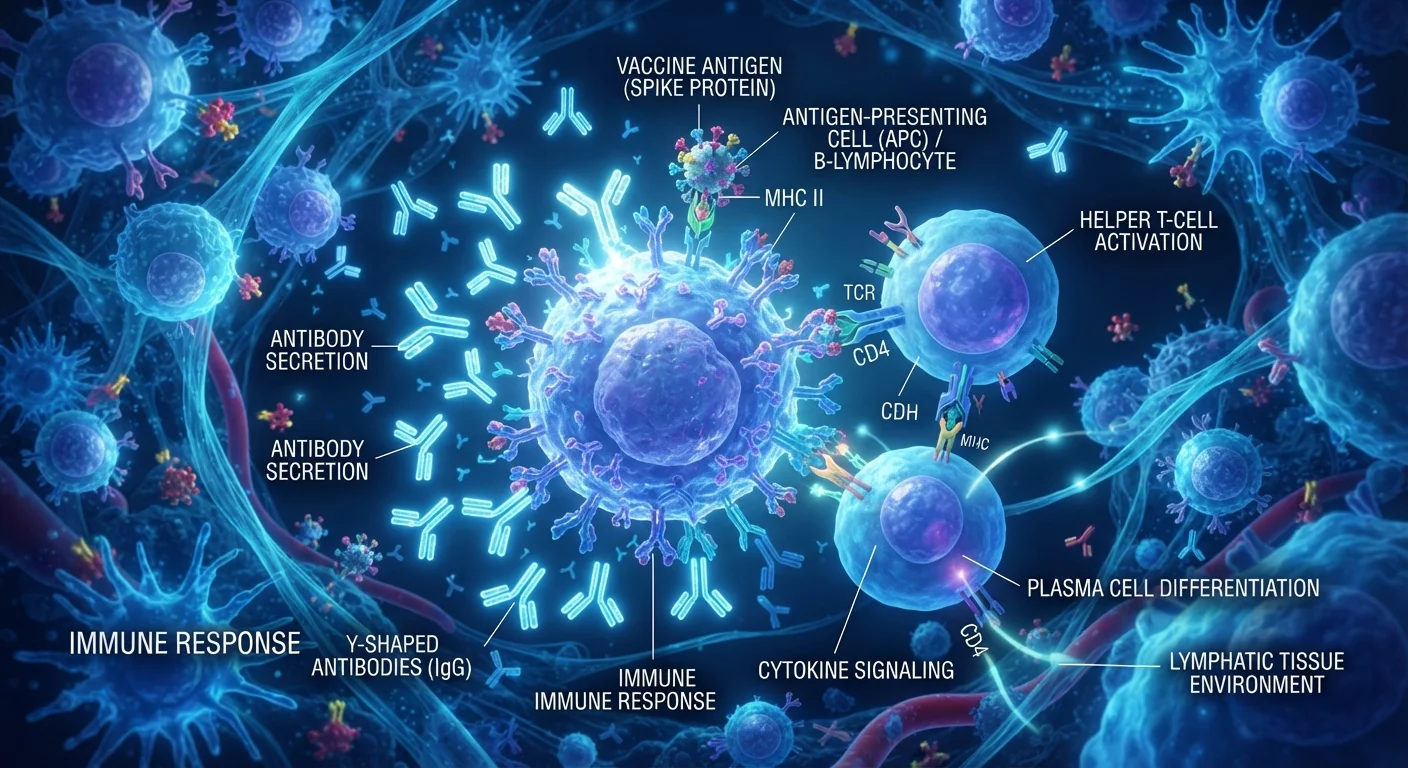
Over the following days, the adaptive immune system — the branch responsible for targeted, long-lasting protection — begins its more precise work. Inside the lymph nodes, dendritic cells present the antigen fragments to two key players: B cells and T cells.
B cells that recognize the antigen multiply rapidly and differentiate into plasma cells, which are essentially antibody factories. These antibodies are proteins shaped to bind to the specific pathogen antigen, neutralizing it or marking it for destruction if you encounter the real disease later.
T cells divide into two major functional types. Helper T cells (CD4+) coordinate the immune response, supporting B cells and amplifying the overall reaction. Cytotoxic T cells (CD8+) learn to directly destroy cells that have been infected by the pathogen.
2 weeks
Typical time for full vaccine protection to develop
The CDC notes that most vaccines require approximately two weeks after the final dose for the immune system to build adequate protection.
10+ years
Duration of memory cell protection for some vaccines
Studies published in journals such as the Journal of Immunology have documented memory B and T cells persisting for a decade or more following certain vaccinations.
~95%
Effectiveness of measles vaccine after two doses
According to the CDC, two doses of the MMR vaccine are approximately 97% effective against measles, illustrating the value of completing full immunization series.
The Key Outcome: Immunological Memory
After the acute response subsides — usually within a few weeks — most of the newly created immune cells die off. But a critical subset survives as memory B cells and memory T cells. These long-lived cells can persist for years or even decades, quietly patrolling your body.
If you later encounter the actual pathogen, these memory cells recognize it immediately and mount a response far faster and stronger than the first time. This rapid secondary response can neutralize the threat before you develop significant illness — which is the central goal of vaccination.
This is also why herd immunity depends on enough individuals building this kind of durable protection — when most people are immunized, pathogens have fewer hosts and spread slows across the entire community.
Why Vaccine Type Affects the Immune Response
Different vaccine platforms trigger this same fundamental immune cascade, but through different mechanisms:
- mRNA vaccines deliver genetic instructions that prompt your own cells to produce a harmless antigen protein, which the immune system then responds to.
- Inactivated vaccines use killed pathogens that cannot replicate but still present recognizable antigens.
- Live-attenuated vaccines use weakened versions of the pathogen, often producing a particularly robust and long-lasting immune response.
- Subunit vaccines contain only specific protein fragments of the pathogen, targeting the immune response to the most important antigens.
Because response strength varies by platform — and by individual — some vaccines are designed as multi-dose series. Each dose builds on the last, expanding memory cell populations and increasing antibody levels. Keeping your immunization history current is an important part of maintaining this protection; our guide on immunization records explains how to track and locate your vaccination history.
This article is for general health information and educational purposes only. It is not a substitute for professional medical advice, diagnosis, or treatment. Always consult a qualified healthcare provider with questions about vaccines or your personal health situation.