

Key Takeaways
Herd Immunity
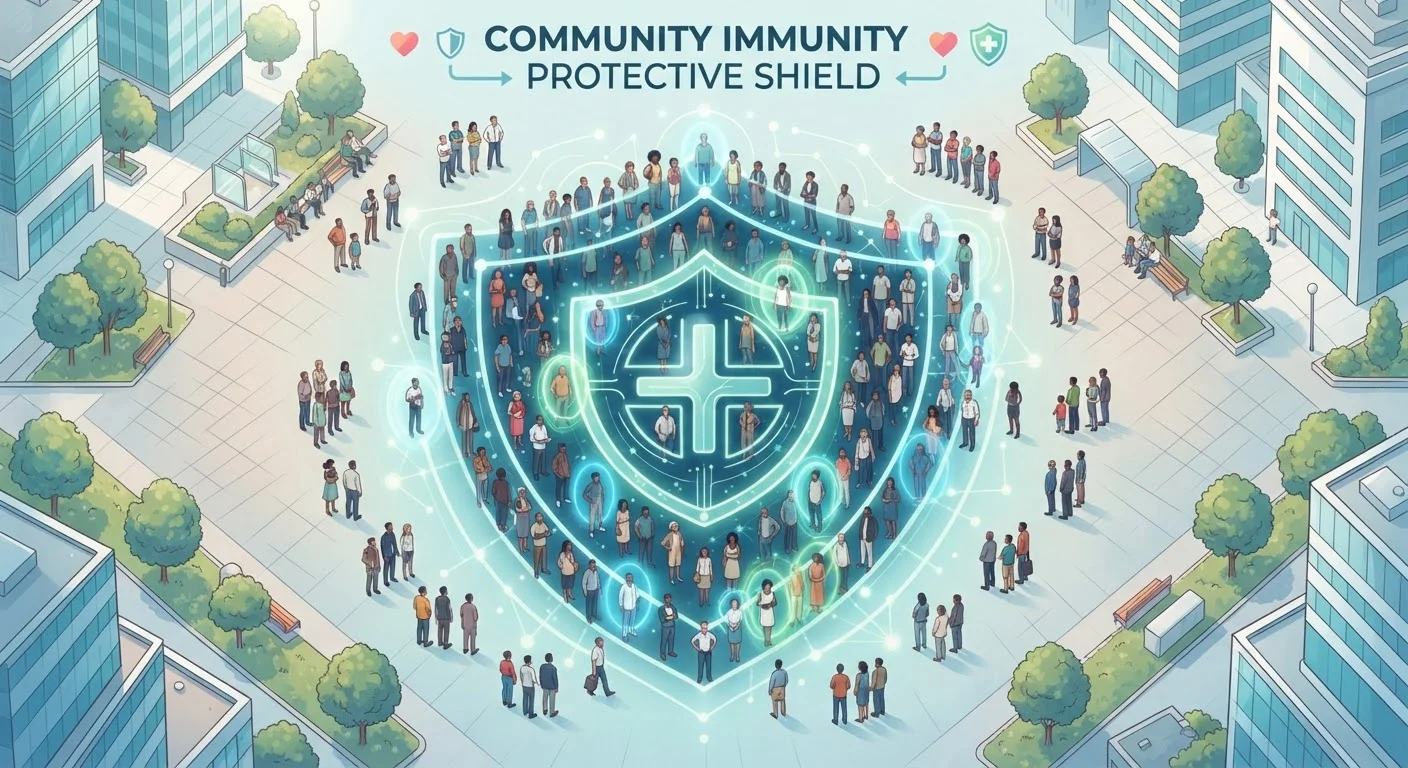
Herd immunity — also called community immunity — occurs when enough people in a population are immune to an infectious disease that it can no longer spread easily from person to person. When that threshold is reached, even individuals who cannot be vaccinated (such as newborns or people with certain medical conditions) gain indirect protection. It is a population-level phenomenon, not something that protects any one person on its own.
The proportion of the population that must be immune to halt sustained transmission is called the herd immunity threshold (HIT), which is mathematically derived from a pathogen's basic reproduction number (R₀).
The Mathematics Behind Community Protection
At the heart of herd immunity is a straightforward epidemiological concept: every infectious disease has a basic reproduction number, known as R₀ (pronounced "R-naught"). This number estimates how many new cases one infected person generates in a fully susceptible population. Measles, for example, has an R₀ of roughly 12–18, meaning one unvaccinated infected person can spread the disease to a dozen or more others.
From R₀, scientists calculate the herd immunity threshold — the percentage of the population that must be immune (through vaccination or prior infection) to reduce sustained transmission. The formula is straightforward: 1 minus the inverse of R₀. For measles, that works out to approximately 95%. For a less contagious disease like polio, it's closer to 80–85%.
Once immunity in the population exceeds this threshold, the chain of transmission tends to break down on its own. Infected individuals are statistically more likely to encounter immune people than susceptible ones, limiting spread before it can gain momentum.
~95%
Population immunity needed to stop measles spread
Measles' exceptionally high transmissibility (R₀ of 12–18) requires near-universal immunity to prevent sustained outbreaks, per CDC and WHO guidance.
80–85%
Herd immunity threshold for polio
Sustained vaccination above this level contributed to the elimination of wild poliovirus transmission in the United States, according to the CDC.
1 in 1,000
Risk of encephalitis from measles infection
The CDC estimates that roughly 1 in every 1,000 children who contract measles develops encephalitis, underscoring the stakes when herd immunity fails.
Who Herd Immunity Is Designed to Protect
Community immunity is not just a statistic — it is a direct, life-saving shield for people who have no other recourse. These include:
- Infants too young to receive certain vaccines, such as newborns not yet eligible for the measles-mumps-rubella (MMR) shot
- Immunocompromised individuals, including people receiving chemotherapy or living with HIV, who may not mount a full immune response even after vaccination
- People with certain allergies that preclude specific vaccine ingredients
- Older adults whose immune response to vaccines may be diminished
These groups depend on the vaccination decisions of those around them. When enough healthy, vaccine-eligible people choose to be vaccinated, they collectively extend a protective buffer to the most medically fragile members of the community. This is the core public health rationale for immunization schedules.
How Herd Immunity Breaks Down
Herd immunity is not a permanent or automatic state — it must be actively maintained. Several forces can erode it:
Declining Vaccination Coverage
When vaccination rates slip below the threshold, susceptible individuals cluster together, creating conditions for rapid local spread. Geographic pockets of low vaccination coverage have been linked to measles outbreaks in communities across the United States, even when national averages appeared adequate.
Vaccine Hesitancy and Misinformation
Hesitancy — driven by safety concerns, distrust of institutions, or misinformation — has contributed to declining coverage in some communities. Understanding gaps in vaccine protection is an important first step toward closing them.
Waning Immunity Without Boosters
Some vaccines require booster doses to sustain protection over time. Without them, the proportion of truly immune individuals may fall even within a technically "vaccinated" population.
Highly Mutable Pathogens
Viruses like influenza evolve rapidly enough that prior immunity — from infection or vaccination — may not reliably neutralize newer strains, making sustained community immunity difficult for such diseases.
Your Vaccination Decision and Its Ripple Effects
Immunization is often framed as a personal health choice, and individual protection is certainly part of the equation. But the evidence is clear that the decision also carries community-level consequences — particularly for those who are most vulnerable.
Staying current with recommended vaccines and boosters helps sustain the immunity thresholds that diseases like measles and polio cannot easily cross. It contributes to the collective wall of protection that shields infants, immunocompromised neighbors, and others who depend on community immunity for their safety.
If you are unsure whether your immunizations are current, a conversation with a primary care provider is the most reliable starting point. They can review your vaccination history, assess your individual health circumstances, and recommend any needed vaccines or boosters — including those that are often overlooked in adulthood.
This article is for general informational and educational purposes only and does not constitute medical advice. Always consult a qualified healthcare professional for guidance specific to your health situation.