

Key Takeaways
Why Vaccine Myths Are Worth Taking Seriously
Vaccine misinformation is not a new phenomenon, but digital platforms have accelerated its reach considerably. Even claims that have been thoroughly investigated and refuted by scientific bodies continue to circulate in communities across the country, influencing decisions that affect both individual and public health.
This article addresses the most persistent misconceptions directly, pairing each myth with what peer-reviewed research and established medical consensus actually show. For a deeper look at the biology behind vaccine protection, see our article on how the immune system responds to a vaccine.
Myth
Vaccines cause autism. This claim has been widely shared and has convinced many parents to delay or skip childhood immunizations.
Fact
There is no credible scientific evidence linking any approved vaccine to autism. The 1998 study that sparked this claim was retracted due to serious ethical violations and data manipulation.
The retracted 1998 paper by Andrew Wakefield involved only 12 children, had fundamental methodological flaws, and was found to have misrepresented data. Wakefield subsequently lost his medical license. Since then, large-scale studies involving millions of children across multiple countries have found no association between the MMR vaccine — or any vaccine ingredient — and autism spectrum disorder. Major health organizations worldwide, including the CDC, the World Health Organization, and the American Academy of Pediatrics, affirm this consensus.
Myth
Vaccines can overwhelm a child's immune system, especially when multiple vaccines are given at the same visit.
Fact
The immune system handles thousands of antigens daily. The antigens in the entire childhood vaccine schedule represent a tiny fraction of that routine immune activity.
Research published in peer-reviewed journals, including work by immunologist Paul Offit and colleagues, estimated that infants' immune systems could theoretically respond to thousands of vaccines simultaneously. Modern vaccines are also more refined than earlier versions — containing far fewer antigens per dose than vaccines from decades past. Combination vaccines are formulated and tested specifically for simultaneous use, and the recommended schedule is designed to provide protection at the ages children are most vulnerable.
Myth
It's safer to get the disease naturally than to get vaccinated, because natural immunity is stronger.
Fact
While natural infection can produce robust immunity, it comes with the risk of serious complications, hospitalization, or death — risks that vaccination avoids.
For many diseases, natural infection does produce durable immunity — but the cost can be severe. Measles infection, for example, can cause encephalitis, pneumonia, and a phenomenon called immune amnesia, where the virus erases existing immune memory to other pathogens. Chickenpox infection increases the lifetime risk of shingles. Vaccines are engineered to trigger protective immune responses while bypassing these dangers. In some cases, such as with certain HPV-related diseases, vaccine-induced immunity may actually exceed that from natural infection.
Myth
Vaccine ingredients like thimerosal, aluminum, and formaldehyde are toxic and dangerous.
Fact
These substances are present in trace amounts well below any threshold of harm, and their safety in vaccine formulations is supported by extensive toxicological and clinical data.
Toxicology operates on the principle that the dose makes the poison. Formaldehyde, for instance, is naturally produced by human metabolism and is present in higher concentrations in common foods like fruit than in a vaccine dose. Thimerosal — a mercury-based preservative — was removed from childhood vaccines in the early 2000s as a precautionary measure, and follow-up studies confirmed no associated harm. Aluminum salts used as adjuvants have been studied for decades and are present in amounts far lower than dietary intake from everyday foods. Regulatory agencies require rigorous safety data for every ingredient before approval.
Myth
If enough people around me are vaccinated, I don't need to be — I'm protected by herd immunity.
Fact
Free-riding on community immunity undermines the very protection it provides. As more individuals opt out, the threshold for herd immunity erodes and outbreaks become possible.
Herd immunity thresholds vary by disease. For measles — one of the most contagious viruses known — approximately 95% of a population needs to be immune to prevent community spread. When vaccination rates dip below that threshold, even in localized clusters, outbreaks can occur. This was observed in several U.S. communities between 2018 and 2019. Beyond self-interest, vaccination protects people who genuinely cannot receive vaccines: newborns, immunocompromised individuals, and those with specific allergies. Individual decisions aggregate into community-level outcomes.
Myth
Vaccines are rushed through testing and we can't really know if they're safe.
Fact
Vaccine development follows a rigorous, multi-phase regulatory process, and post-market surveillance continues indefinitely after approval.
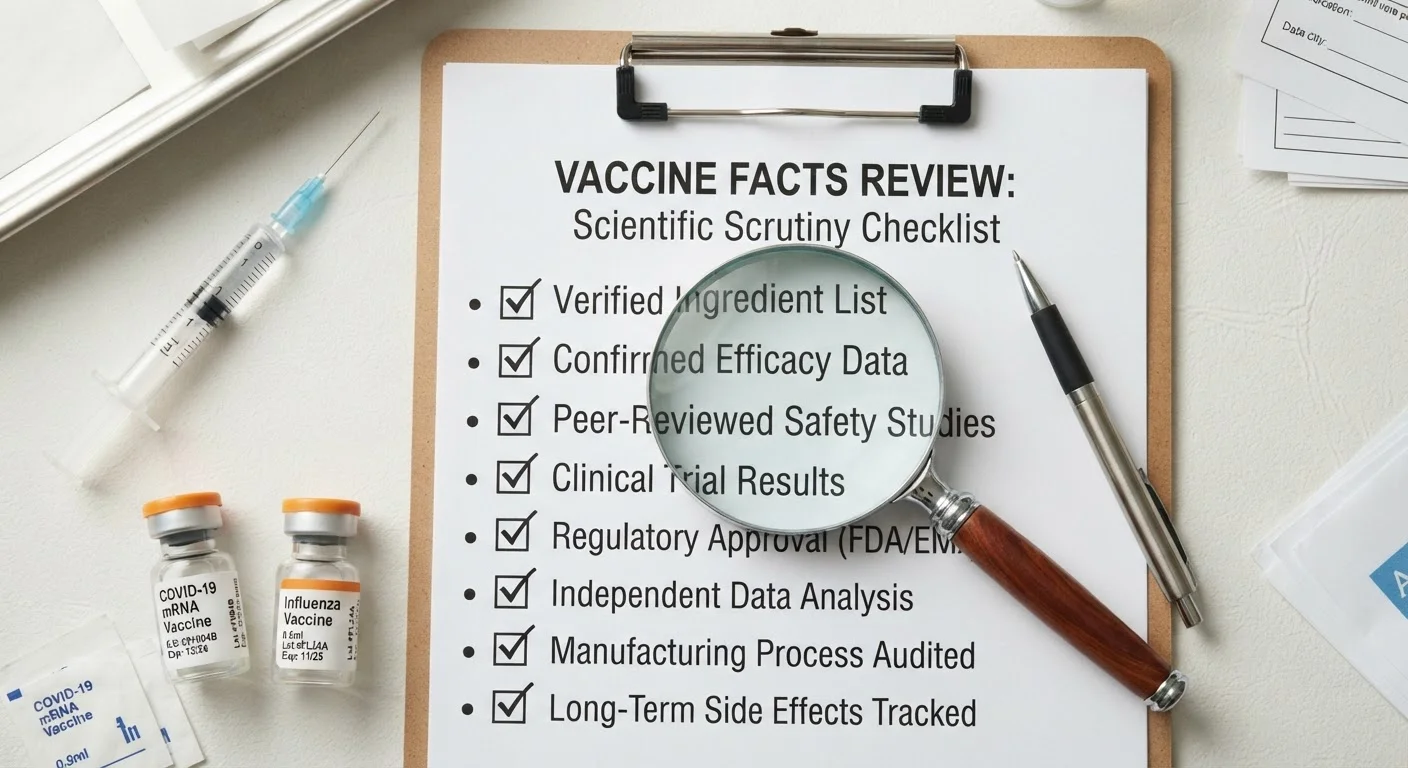
Before any vaccine reaches the public, it must pass through preclinical laboratory and animal studies, followed by Phase I (safety), Phase II (dosing and immune response), and Phase III (large-scale efficacy and safety) clinical trials involving thousands to tens of thousands of participants. Regulatory agencies such as the FDA conduct independent reviews of all data before granting authorization or approval. Technologies like mRNA had been under active research for over a decade before their use in COVID-19 vaccines. Accelerated timelines during health emergencies reflect parallel processes and enormous resource investments — not skipped steps.
Understanding the Bigger Picture: Herd Immunity and Vaccine Safety Monitoring
Individual vaccination decisions have a collective dimension. When enough people in a community are immune — either through vaccination or prior infection — the pathogen has fewer opportunities to spread, protecting people who cannot be vaccinated due to age, allergy, or compromised immune status. This is the principle of community immunity, sometimes called herd immunity.
95%
Vaccination rate needed for measles herd immunity
According to the CDC, measles requires approximately 95% community immunity to prevent sustained transmission.
~1 in 1,000,000
Estimated rate of severe allergic reaction to vaccines
Anaphylaxis following vaccination is estimated to occur in roughly one per million doses, based on U.S. surveillance data.
21+
Countries conducting post-market vaccine safety monitoring
The WHO's Global Advisory Committee on Vaccine Safety coordinates surveillance across member nations to detect rare adverse events.
Vaccine safety does not end at clinical trials. The U.S. runs multiple post-market surveillance systems — including the Vaccine Adverse Event Reporting System (VAERS) and the Vaccine Safety Datalink (VSD) — to continuously monitor for rare signals in millions of recipients. This ongoing vigilance is precisely why very rare side effects, when they do occur, can be identified and communicated publicly.
For a complementary look at how immunity from infection compares to vaccine-induced immunity, the evidence is examined in detail in our piece on natural immunity vs. vaccine-induced immunity. And if you're curious about the technologies behind today's vaccines, our overview of current vaccine types and how each works explains mRNA, protein subunit, and other platforms in plain language.
This article is for general informational purposes only and does not constitute medical advice. Talk with a qualified healthcare provider about your personal vaccination history, schedule, and any questions or concerns specific to your health situation.