

Key Takeaways
Removes barriers for underserved or time-constrained individuals
For people without easy access to a primary care provider — or who face long wait times — DTC kits can provide actionable health information that might otherwise be delayed by months.
Encourages proactive health engagement
Having a test kit at home can prompt people to check numbers they might otherwise neglect, such as cholesterol or blood glucose, potentially surfacing issues earlier.
Offers privacy for sensitive health concerns
Tests for STIs, genetic risk factors, or conditions carrying social stigma can be pursued without requiring an in-person clinical visit, reducing the anxiety barrier to screening.
Convenient sample collection on your own schedule
Most kits allow collection at any time of day without fasting restrictions or appointment logistics, making compliance easier for busy adults.
Some tests are clinically recognized and validated
Certain DTC options — such as fecal immunochemical tests for colorectal cancer — are endorsed by major clinical guidelines as legitimate screening methods when used correctly.
Results may lack clinical context or interpretation
An out-of-range value on a home test can mean many things depending on individual health history, medications, and lab methodology — context a portal summary cannot fully provide.
Risk of false positives and unnecessary anxiety
No test is perfectly accurate. A false positive can trigger significant stress and lead to costly follow-up procedures that turn out to be unnecessary.
Risk of false negatives creating false reassurance
A negative result does not guarantee the absence of a condition, particularly if sample collection was imperfect or the test has limited sensitivity for early-stage disease.
No structured follow-up pathway for abnormal results
Unlike clinical screenings embedded in a care relationship, DTC tests place the responsibility for follow-up entirely on the individual, which can lead to results being ignored or misunderstood.
Insurance coverage is inconsistent and often absent
Many DTC kits are not covered by standard health insurance plans, meaning consumers bear the full out-of-pocket cost — which can be substantial for multi-panel or genetic tests.
Genetic risk results require careful professional interpretation
Consumer genetic tests typically assess a limited set of variants and may significantly understate or overstate actual disease risk without specialist guidance.
Our Verdict
Direct-to-consumer screening kits can meaningfully lower barriers to early detection, particularly for people who lack easy access to clinical care or who face anxiety about medical settings. However, their value depends heavily on understanding what each test can and cannot tell you — and on having a clear plan for acting on results. Used thoughtfully and discussed with a clinician, they can be a useful addition to a preventive health strategy.
Best for motivated adults who want to supplement — not replace — clinical screenings, especially those with limited healthcare access or who are exploring options between scheduled provider visits.
What Direct-to-Consumer Screening Kits Actually Are
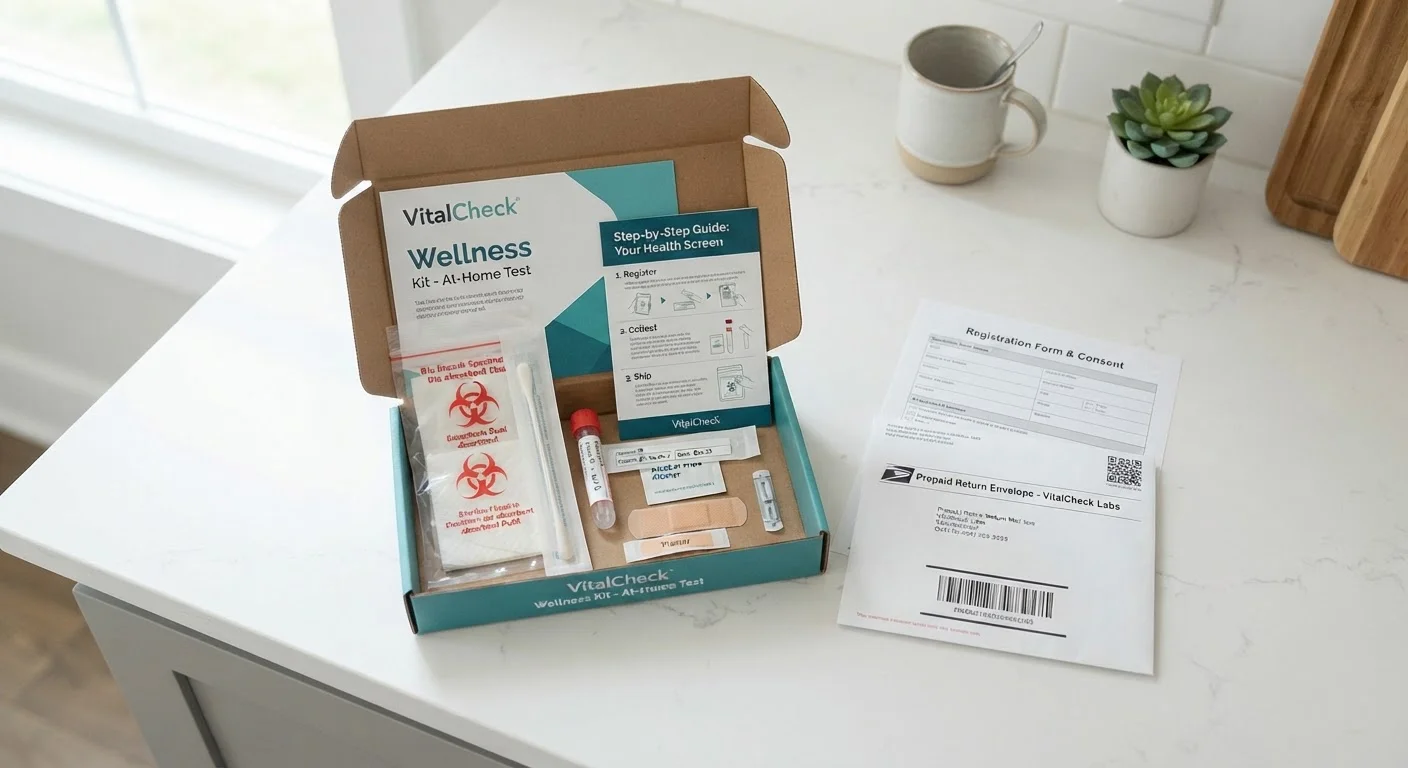
Direct-to-consumer (DTC) health screening kits are tests that individuals purchase and administer at home, then mail samples — blood, saliva, stool, or urine — to a certified laboratory for analysis. Results typically arrive via an online portal or app, sometimes accompanied by explanatory summaries. The category spans a wide range of tests, from cholesterol panels and blood glucose checks to genetic risk assessments and stool-based colorectal cancer screens.
The appeal is straightforward: no appointment, no waiting room, no time off work. But the trade-offs are real. For context on the full spectrum of screenings available through clinical settings, see our plain-language breakdown of routine screenings.
The Genuine Advantages
DTC kits offer benefits that are difficult to dismiss, especially for people navigating access barriers or time constraints.
Removes barriers for underserved or time-constrained individuals
For people without easy access to a primary care provider — or who face long wait times — DTC kits can provide actionable health information that might otherwise be delayed by months.
Encourages proactive health engagement
Having a test kit at home can prompt people to check numbers they might otherwise neglect, such as cholesterol or blood glucose, potentially surfacing issues earlier.
Offers privacy for sensitive health concerns
Tests for STIs, genetic risk factors, or conditions carrying social stigma can be pursued without requiring an in-person clinical visit, reducing the anxiety barrier to screening.
Convenient sample collection on your own schedule
Most kits allow collection at any time of day without fasting restrictions or appointment logistics, making compliance easier for busy adults.
Some tests are clinically recognized and validated
Certain DTC options — such as fecal immunochemical tests for colorectal cancer — are endorsed by major clinical guidelines as legitimate screening methods when used correctly.
1 in 3
U.S. adults lacking a regular primary care provider
According to the Kaiser Family Foundation, approximately one-third of U.S. adults do not have a regular source of primary care, highlighting access gaps that DTC kits may partially address.
~95%
Sensitivity of fecal immunochemical tests for colorectal cancer
Clinical literature indicates high-quality FIT tests can detect colorectal cancer with sensitivity around 79–95%, though performance varies by product and stage of disease.
Privacy is another real draw. Stigma around certain conditions — sexually transmitted infections, mental health markers, genetic predispositions — can deter people from pursuing in-office tests. Home kits remove that friction. For conditions where early detection meaningfully changes outcomes, even imperfect engagement is often better than none.
The Limitations You Need to Understand
The convenience of DTC testing comes bundled with limitations that can lead to confusion, false reassurance, or unnecessary alarm if not properly understood.
Results may lack clinical context or interpretation
An out-of-range value on a home test can mean many things depending on individual health history, medications, and lab methodology — context a portal summary cannot fully provide.
Risk of false positives and unnecessary anxiety
No test is perfectly accurate. A false positive can trigger significant stress and lead to costly follow-up procedures that turn out to be unnecessary.
Risk of false negatives creating false reassurance
A negative result does not guarantee the absence of a condition, particularly if sample collection was imperfect or the test has limited sensitivity for early-stage disease.
No structured follow-up pathway for abnormal results
Unlike clinical screenings embedded in a care relationship, DTC tests place the responsibility for follow-up entirely on the individual, which can lead to results being ignored or misunderstood.
Insurance coverage is inconsistent and often absent
Many DTC kits are not covered by standard health insurance plans, meaning consumers bear the full out-of-pocket cost — which can be substantial for multi-panel or genetic tests.
Genetic risk results require careful professional interpretation
Consumer genetic tests typically assess a limited set of variants and may significantly understate or overstate actual disease risk without specialist guidance.
One underappreciated concern is what happens after a result arrives. Abnormal findings from a home kit still require clinical follow-up — and without a provider already in the loop, that pathway is not automatic. Research has documented how easily screening results get missed or ignored when no structured follow-up process exists. Our article on why screening results fall through the cracks explores this problem in depth.
A Closer Look: Stool-Based Colorectal Tests
Stool-based colorectal cancer screens are among the most clinically validated DTC-adjacent options. Tests such as the fecal immunochemical test (FIT) and multitarget stool DNA tests are recognized by major clinical guidelines as legitimate screening tools — but with important caveats about frequency, follow-up, and who they're appropriate for.
A positive stool test, regardless of where it was purchased, requires a follow-up colonoscopy. Without that step, the screening is incomplete. Understanding how these options compare to one another and to colonoscopy is essential before choosing a path. Our overview of colorectal screening options covers the distinctions clearly.
When a Home Test Requires a Clinical Follow-Up
A positive result on any stool-based colorectal cancer test — whether purchased over the counter or ordered by a physician — should be followed by a diagnostic colonoscopy. This step is non-negotiable under clinical guidelines and cannot be replaced by a repeat stool test. If you've received a positive stool test result, contact your healthcare provider promptly to arrange follow-up care.
How to Use DTC Kits Responsibly
If you decide to use a DTC screening kit, a few practices can meaningfully improve how useful the results are. First, choose tests that use CLIA-certified laboratories — this indicates the lab meets federal quality standards. Second, read the test's stated sensitivity and specificity numbers if available; these tell you how often the test correctly identifies a condition and how often it avoids false alarms.
Most importantly, treat results as the beginning of a conversation with your healthcare provider, not the end of one. If you're in your 40s and building a preventive care strategy, your provider can help you prioritize which screenings — clinical or at-home — deserve priority. Our guide to screenings in your 40s is a useful starting point for that conversation.
This article provides general health information for educational purposes only and is not a substitute for professional medical advice, diagnosis, or treatment. Always consult a qualified healthcare provider with questions about your personal health or screening needs.