

Key Takeaways
Our Verdict
No single colorectal screening method is universally superior — the right choice depends on a person's health history, risk level, personal preferences, and access to care. Colonoscopy offers the most complete picture in a single procedure, while stool-based tests provide accessible, non-invasive alternatives for those at average risk. Discussing options with a healthcare provider is the most important first step.
| Best for | Recommended |
|---|---|
| Those who want a comprehensive exam with the longest interval between tests | Colonoscopy |
| Those who prefer a non-invasive, at-home option with no bowel prep | FIT or Cologuard (stool DNA test) |
| Those with elevated risk due to family history or prior polyps | Colonoscopy (discuss frequency with your doctor) |
| Those who want a middle-ground imaging option without full colonoscopy prep | CT Colonography (virtual colonoscopy) |
Why Colorectal Cancer Screening Matters
Colorectal cancer — cancer of the colon or rectum — is the third most commonly diagnosed cancer in the United States, yet it is also one of the most preventable when caught early. Screening can identify precancerous polyps (abnormal tissue growths) before they develop into cancer, or detect cancer at a stage when treatment is most effective.
Major U.S. health organizations, including the U.S. Preventive Services Task Force (USPSTF) and the American Cancer Society, recommend that adults at average risk begin colorectal screening at age 45. Those with elevated risk factors — such as a family history of colorectal cancer, a personal history of inflammatory bowel disease, or certain genetic syndromes — may need to start earlier and screen more frequently. Consult a healthcare provider to determine what applies to your situation.
For a broader look at how colorectal screening fits into your overall preventive health plan, see our guide to preventive screenings from head to toe.
The Main Screening Options Compared
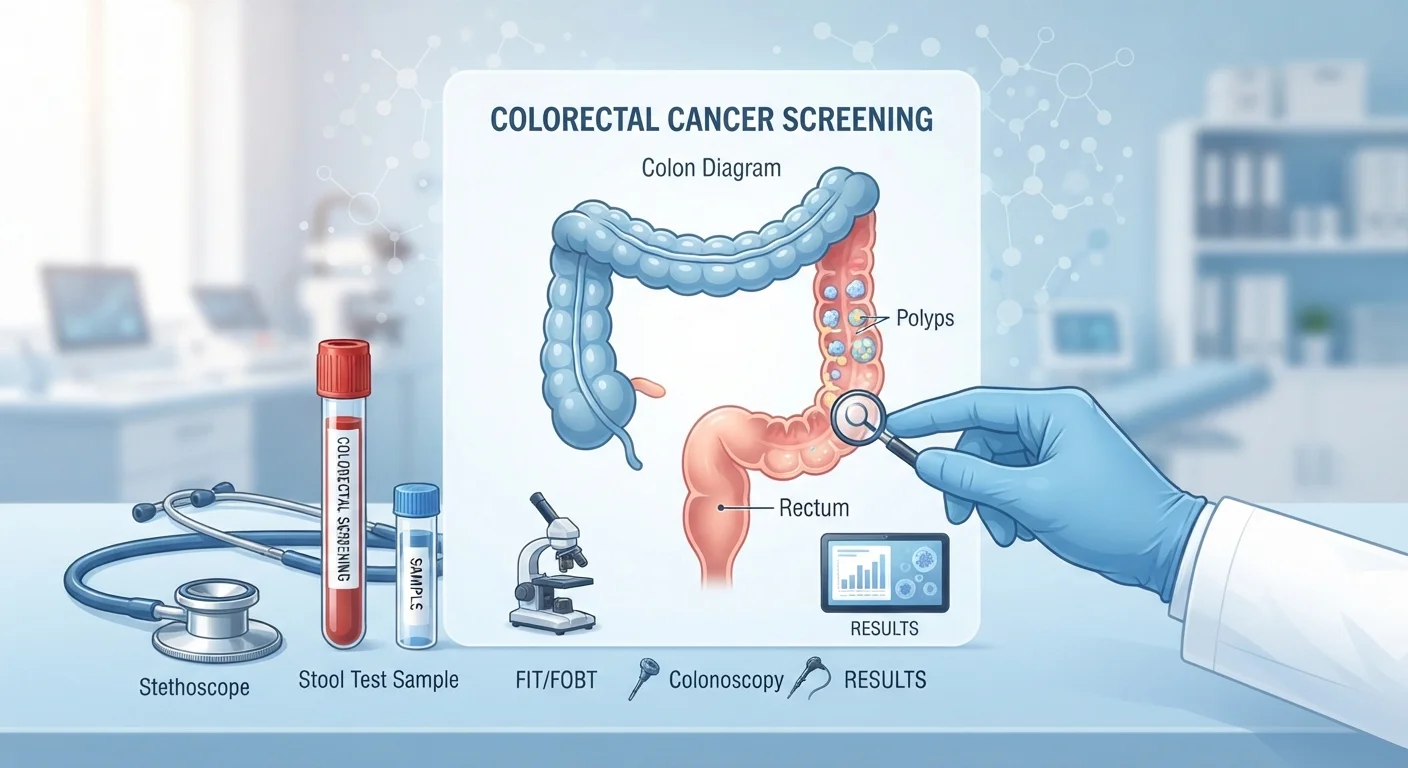
Colorectal cancer screening is not a one-size-fits-all approach. The methods fall into two broad categories: structural exams that visually inspect the colon, and stool-based tests that analyze a stool sample for signs of disease. Each carries different requirements, intervals, and trade-offs.
| Colonoscopy | FIT / gFOBT | Stool DNA Test | CT Colonography | Flexible Sigmoidoscopy | |
|---|---|---|---|---|---|
| Screening interval | Every 10 years | Every 1 year | Every 1–3 years | Every 5 years | Every 5 years |
| Bowel prep required | Yes | No | No | Yes | Partial prep only |
| Sedation required | Yes | No | No | No | No |
| Can remove polyps | Yes, during exam | No | No | No | Limited |
| Examines full colon | Yes | Indirect (stool) | Indirect (stool) | Yes | No (lower only) |
| Positive result requires follow-up colonoscopy | N/A | Yes | Yes | Yes | Yes |
| Can be done at home | No | Yes | Yes | No | No |
Understanding these differences in context helps clarify why clinical guidelines present multiple valid pathways rather than a single recommended test.
Stool-Based Tests: What You Should Know
Stool-based tests work by detecting biological markers — blood or abnormal DNA — in a stool sample collected at home. The three main types are:
- Fecal Immunochemical Test (FIT): Detects hidden blood in stool using antibodies. Recommended annually. No dietary restrictions required beforehand.
- Guaiac Fecal Occult Blood Test (gFOBT): Also detects hidden blood but uses a chemical reaction. Recommended annually. Certain foods and medications may need to be avoided before collection.
- Stool DNA Test (e.g., multitarget stool DNA): Combines FIT with detection of abnormal DNA shed by colon cells. Recommended every one to three years. Requires no bowel prep but does involve a larger sample collection.
A critical point: a positive result on any stool-based test is not a diagnosis. It means a follow-up colonoscopy is needed to investigate further. If you're curious how at-home test kits fit into this picture, read about the trade-offs of direct-to-consumer health screening kits before deciding.
Structural Exams: A Closer Look Inside
Structural exams directly visualize the colon lining to identify and sometimes remove polyps during the same procedure.
- Colonoscopy: A flexible camera (colonoscope) is guided through the entire colon. Polyps found can be removed immediately. Requires bowel preparation the day before and sedation during the procedure. Recommended every 10 years for average-risk adults with normal results.
- CT Colonography (Virtual Colonoscopy): A CT scanner creates detailed images of the colon. Bowel prep is still required, but no sedation is needed. Cannot remove polyps during the exam — a colonoscopy would be needed if abnormalities are found. Recommended every 5 years.
- Flexible Sigmoidoscopy: A shorter scope examines only the lower portion of the colon. Less prep required than full colonoscopy, no sedation needed. Recommended every 5 years, or every year if combined with FIT. Because it doesn't examine the full colon, it may miss lesions higher up.
Each structural exam has real procedural demands, but these are weighed against the significant advantage of direct visualization and the possibility of same-session polyp removal.
This article is for informational purposes only and is not a substitute for professional medical advice. Always consult a qualified healthcare provider to determine the screening approach appropriate for your individual health history and risk profile.