

Key Takeaways
What Is Progressive Muscle Relaxation and Where Did It Come From?
Progressive muscle relaxation (PMR) is a mind-body technique developed by American physician Edmund Jacobson in the 1920s and 1930s. Jacobson's foundational insight was straightforward: the body cannot be simultaneously tense and relaxed. By deliberately contracting and then releasing specific muscle groups in sequence, a person can train the body - and through it, the mind - to recognize and deepen the relaxation response.
Unlike some wellness approaches that rest on anecdote alone, PMR has accumulated substantial research support over the decades. Studies have associated regular PMR practice with reductions in self-reported anxiety, improvements in sleep quality, and decreases in physiological markers of stress such as heart rate and cortisol. It is frequently used in clinical psychology as a component of cognitive-behavioral therapy for conditions including generalized anxiety disorder and insomnia.
The core mechanism appears to involve activation of the parasympathetic nervous system - sometimes called the "rest and digest" system - which counteracts the fight-or-flight response driven by the sympathetic nervous system. When muscles release tension following deliberate contraction, physiological signals travel back to the brain that facilitate a broader calming effect. For a deeper look at how rest and recovery function at a neurological level, see our guide to active recovery and mental restoration.
It is worth noting that PMR is one of several evidence-informed relaxation strategies. If you are curious how it compares with breathwork, our article on what the research says about deep breathing for stress relief offers useful context. And if you want a direct comparison, mindfulness meditation vs. progressive muscle relaxation breaks down both approaches side by side.
What You Need Before You Start
One of PMR's genuine advantages is its accessibility. There is no specialized equipment required, and the technique can be adapted to a bed, a reclining chair, or a mat on the floor.
What you will need
Once you have your space and a few minutes set aside, you are ready to begin the sequence below.
Step-by-Step: How to Practice Progressive Muscle Relaxation
Work through the following steps in order. A full session typically takes 15 to 25 minutes. With practice, some people condense the sequence as they become more familiar with how their body responds.
Set up your environment and settle in
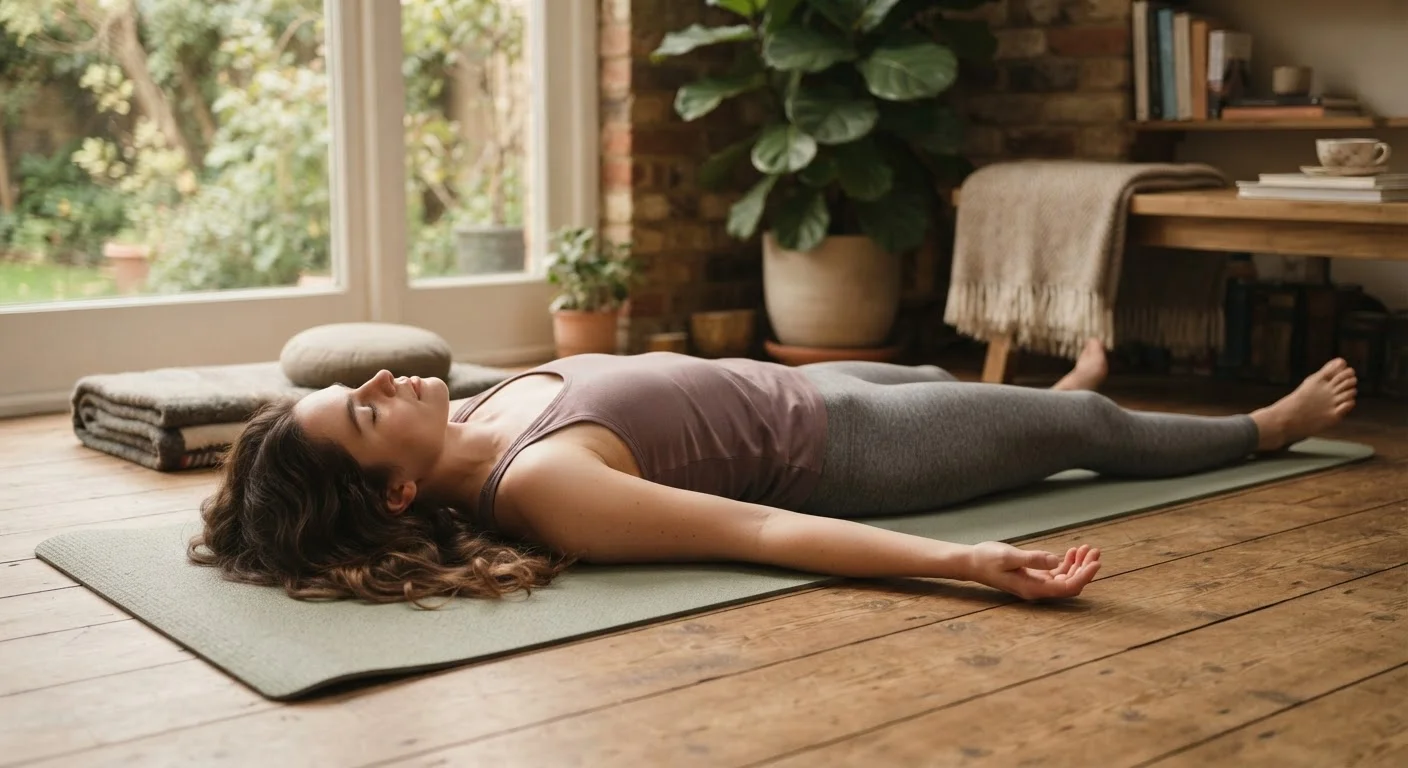
Lie on your back or sit in a reclined position. Close your eyes and take three slow, natural breaths. Let your arms rest at your sides, palms facing up. Allow your feet to fall slightly outward. Your only goal right now is to arrive - notice the support of the surface beneath you without trying to change anything yet.
Begin with your feet and lower legs
Curl your toes downward and flex your feet, creating tension through your feet and calves. Hold this contraction firmly - but not painfully - for about 5 seconds. Then release completely. Notice the contrast between the tension you just felt and the warmth or heaviness that follows. Rest for 15-20 seconds before moving on.
Move to your thighs and hips
Press your thighs together and squeeze the muscles of your upper legs for 5 seconds. Release and observe the sensation of letting go. This muscle group holds a surprising amount of chronic tension for people who sit for long periods, so you may notice a more pronounced relaxation response here.
Engage your abdomen and lower back
Gently tighten your abdominal muscles as if bracing for a light impact. Hold for 5 seconds, then release. If you have lower back pain or a core injury, use the lightest possible contraction or skip this group and move on.
Tense your hands, forearms, and upper arms
Make a firm fist with both hands and flex your forearms upward simultaneously. Hold 5 seconds, then let your hands fall open and your arms go heavy. Many people store stress in their hands and wrists without realizing it - this step often produces a noticeable sense of release.
Move to your shoulders, neck, and face
Shrug your shoulders up toward your ears and hold for 5 seconds, then drop them completely. Next, press your lips together, clench your jaw gently, and scrunch your face - hold 5 seconds, then relax every muscle in your face simultaneously. These areas carry the bulk of tension for most people and often produce the deepest sense of release in the sequence.
Rest in full-body relaxation
After working through all major muscle groups, spend 3-5 minutes simply resting. Breathe naturally and scan your body from feet to head without trying to change anything. Notice the difference between how you feel now and how you felt when you started. When you are ready to end the session, open your eyes slowly, stretch gently, and give yourself a moment before standing.
Consistency Matters More Than Duration
Research suggests that the benefits of PMR accumulate with regular practice rather than occasional long sessions. Starting with just two or three sessions per week is more sustainable than daily practice you abandon after a week. Even a shortened 10-minute version, focusing on your most tension-prone areas, is more beneficial than skipping the practice entirely on busy days.
This article is for general informational purposes only and is not a substitute for professional medical advice. If you have a medical condition - particularly cardiovascular disease, musculoskeletal injuries, or a diagnosed mental health disorder - please consult a qualified healthcare professional before beginning PMR or any new mind-body practice.