

Key Takeaways
Option A
Blood Pressure Check
A real-time measure of how hard your heart is working.
Best for: Detecting hypertension and assessing the immediate mechanical stress on arteries and the heart.
Option B
Cholesterol Check (Lipid Panel)
A blood-based snapshot of long-term arterial risk.
Best for: Identifying lipid imbalances that can silently build up in artery walls over years or decades.
If you want to monitor day-to-day cardiovascular strain
Blood Pressure Check
Blood pressure readings reflect immediate circulatory stress and can change within minutes, making them useful for ongoing monitoring between clinic visits.
If you are assessing long-term arterial plaque risk
Cholesterol Check (Lipid Panel)
Lipid panels reveal LDL, HDL, and triglyceride levels that accumulate changes over months and years, offering a longer-term risk window.
If your doctor is calculating your 10-year heart disease risk
Blood Pressure Check
Systolic blood pressure is one of the primary inputs in validated cardiovascular risk calculators used in clinical practice.
If you have a family history of high cholesterol or early heart disease
Cholesterol Check (Lipid Panel)
Genetic factors can drive elevated LDL independently of diet or weight, and a lipid panel is the only way to identify this early.
What Each Test Actually Measures
Despite both being linked to heart health, blood pressure and cholesterol tests measure entirely different physiological phenomena.
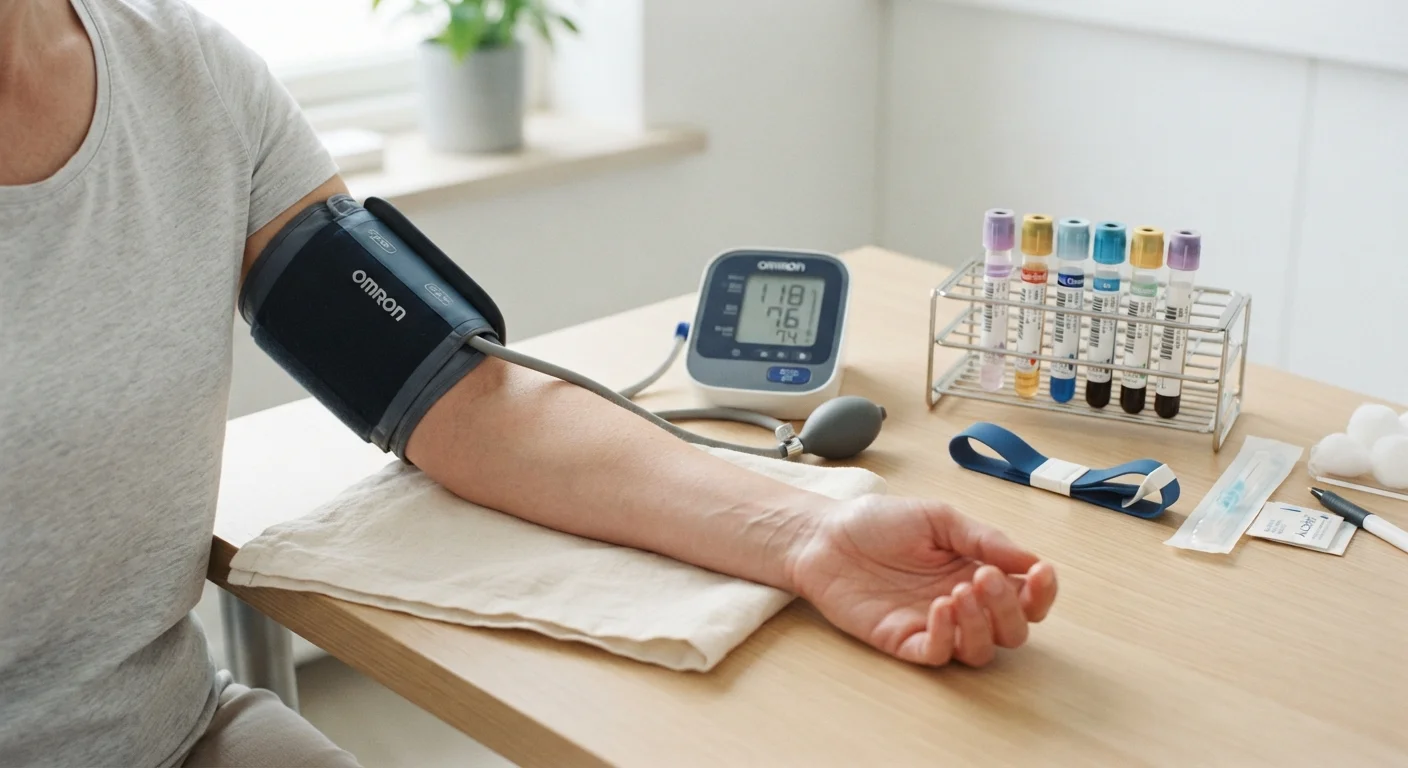
A blood pressure check records the mechanical force exerted by circulating blood against the walls of your arteries. It produces two numbers: systolic pressure (the force when your heart beats) over diastolic pressure (the force when your heart rests between beats). No blood draw is needed — a cuff around the upper arm inflates briefly, then deflates while a sensor reads the pressure. Results are immediate.
A cholesterol check, formally called a lipid panel, requires a small blood sample — typically drawn after a period of fasting. The lab measures four values: total cholesterol, low-density lipoprotein (LDL, often called "bad" cholesterol), high-density lipoprotein (HDL, often called "good" cholesterol), and triglycerides. Together these numbers indicate how much fatty material is circulating in your bloodstream and potentially accumulating in artery walls.
For a broader look at what routine screenings detect and how they work, see our full guide to preventive screenings.
| Criterion | Blood Pressure Check | Cholesterol Check (Lipid Panel) |
|---|---|---|
| What it measures | Force of blood on artery walls | Fats (lipids) circulating in blood |
| Sample required | None — uses arm cuff | Blood draw (often fasting) |
| Results timing | Immediate | Hours to days (lab processing) |
| Key numbers | Systolic / Diastolic (mmHg) | LDL, HDL, triglycerides, total cholesterol |
| Typical screening frequency | Every 1–2 years | Every 4–6 years (varies by risk) |
| Primary risk detected | Hypertension, stroke, heart failure | Atherosclerosis, coronary artery disease |
| Symptoms when abnormal | Usually none | Usually none |
How Readings Are Interpreted — and Why Context Matters
Interpreting either number without context is one of the most common sources of confusion for patients.
For blood pressure, the American Heart Association defines normal as a systolic reading below 120 mmHg and a diastolic below 80 mmHg. Elevated pressure falls between 120–129 systolic, while Stage 1 hypertension begins at 130/80. A single high reading does not automatically mean hypertension; providers typically confirm the diagnosis over multiple visits or with home monitoring.
Cholesterol interpretation is more nuanced. There is no single universal cutoff for LDL because the threshold at which treatment is considered appropriate depends on your overall cardiovascular risk profile — including age, blood pressure, smoking status, and whether you have diabetes. For some individuals, an LDL of 100 mg/dL may be acceptable; for others at higher risk, a provider may recommend aiming lower. HDL, unusually, is a case where higher is generally better, since HDL helps clear cholesterol from the bloodstream.
This complexity is exactly why understanding reference ranges requires context. Our article on what "normal" lab results actually mean can help you navigate your cholesterol report with your provider.
Screening Frequency, Risk Factors, and What Comes Next
Guidelines for how often each test should be done differ based on age, baseline results, and individual risk.
Blood pressure should be checked at least every two years for adults with consistently normal readings and annually for those with elevated readings or other risk factors. Many pharmacies and clinics offer walk-in checks, and home monitors are widely available for ongoing tracking — though any home device should be validated against an in-office reading.
For cholesterol, the U.S. Preventive Services Task Force recommends that adults aged 35 and older at increased cardiovascular risk be screened. Younger adults — and some children with family history of high cholesterol — may warrant earlier screening. After an initial normal result, retesting every four to six years is often suggested for lower-risk adults, though your provider may recommend more frequent checks if your lipid levels or overall risk profile change.
Both tests are influenced by overlapping lifestyle factors: physical inactivity, a diet high in saturated fats and sodium, excess body weight, and tobacco use all tend to push blood pressure and LDL cholesterol upward. Understanding how body composition affects cardiovascular markers is also useful — see our comparison of BMI, body fat percentage, and waist circumference for more context.
Both Tests Can Be Abnormal Simultaneously
High blood pressure and high LDL cholesterol frequently coexist, and each independently increases cardiovascular risk. When both are elevated, the combined effect on heart disease risk is greater than either factor alone. Providers typically use tools such as the Pooled Cohort Equations to combine multiple risk factors — including both blood pressure and cholesterol values — into a single 10-year risk estimate. This is why attending a comprehensive annual wellness visit, rather than treating each test in isolation, gives you the most useful picture of your cardiovascular health.
This article is for general informational purposes only and is not a substitute for professional medical advice, diagnosis, or treatment. Always consult a qualified healthcare provider about your specific test results and health needs.