

Key Takeaways
Potassium
Potassium is an essential mineral and electrolyte that your body needs to function properly. It helps regulate fluid balance, supports muscle contractions, keeps the heart beating in a normal rhythm, and helps nerves transmit signals. Because the body cannot produce potassium on its own, it must come entirely from food.
Potassium works closely with sodium in a cellular pump mechanism (the sodium-potassium pump) that governs cell membrane potential — a process critical to nerve signaling and muscle function, including cardiac muscle.
Why Potassium Deserves More Attention
When people think about nutrients their diet might be missing, potassium rarely comes to mind first. Yet it is one of the most consistently underconsumed minerals in the American diet. Federal dietary surveys have repeatedly found that the vast majority of Americans — across age groups and demographics — fall well short of recommended intake levels.
This gap matters because potassium is not a minor player in human physiology. It is involved in some of the body's most fundamental processes: regulating blood pressure, enabling muscle contractions, maintaining fluid balance, and supporting proper nerve function. For a deeper look at how potassium fits among other essential nutrients, see our Essential Vitamins and Minerals quick-reference guide.
~3%
Americans meeting potassium recommendations
According to dietary survey data compiled by the Dietary Guidelines Advisory Committee, only about 3% of Americans meet the Adequate Intake for potassium.
3,400 mg
Daily potassium AI for adult men
The National Academies of Sciences, Engineering, and Medicine set this as the Adequate Intake reference value for adult men; adult women's AI is 2,600 mg per day.
~2,300 mg
Average daily potassium intake in the U.S.
National Health and Nutrition Examination Survey (NHANES) data suggest average American adults consume roughly 2,300–2,600 mg of potassium daily — well below recommended levels for men.
What Potassium Actually Does in the Body
Potassium functions as an electrolyte — a mineral that carries an electrical charge when dissolved in bodily fluids. This charge is essential for transmitting nerve impulses and triggering muscle contractions, including the rhythmic contractions of the heart. Alongside sodium, potassium helps control how water is distributed inside and outside cells.
One of potassium's most studied roles is its relationship with blood pressure. A diet relatively higher in potassium and lower in sodium is associated with healthier blood pressure levels, according to well-established nutritional research. Potassium promotes the excretion of sodium through the kidneys, which can ease pressure on arterial walls. This dietary balance — often lacking in typical American eating patterns — is a key reason health authorities consistently highlight potassium as a nutrient of public health concern.
Potassium also supports bone health by helping neutralize dietary acids that can otherwise leach calcium from bone tissue over time.
The Best Everyday Food Sources
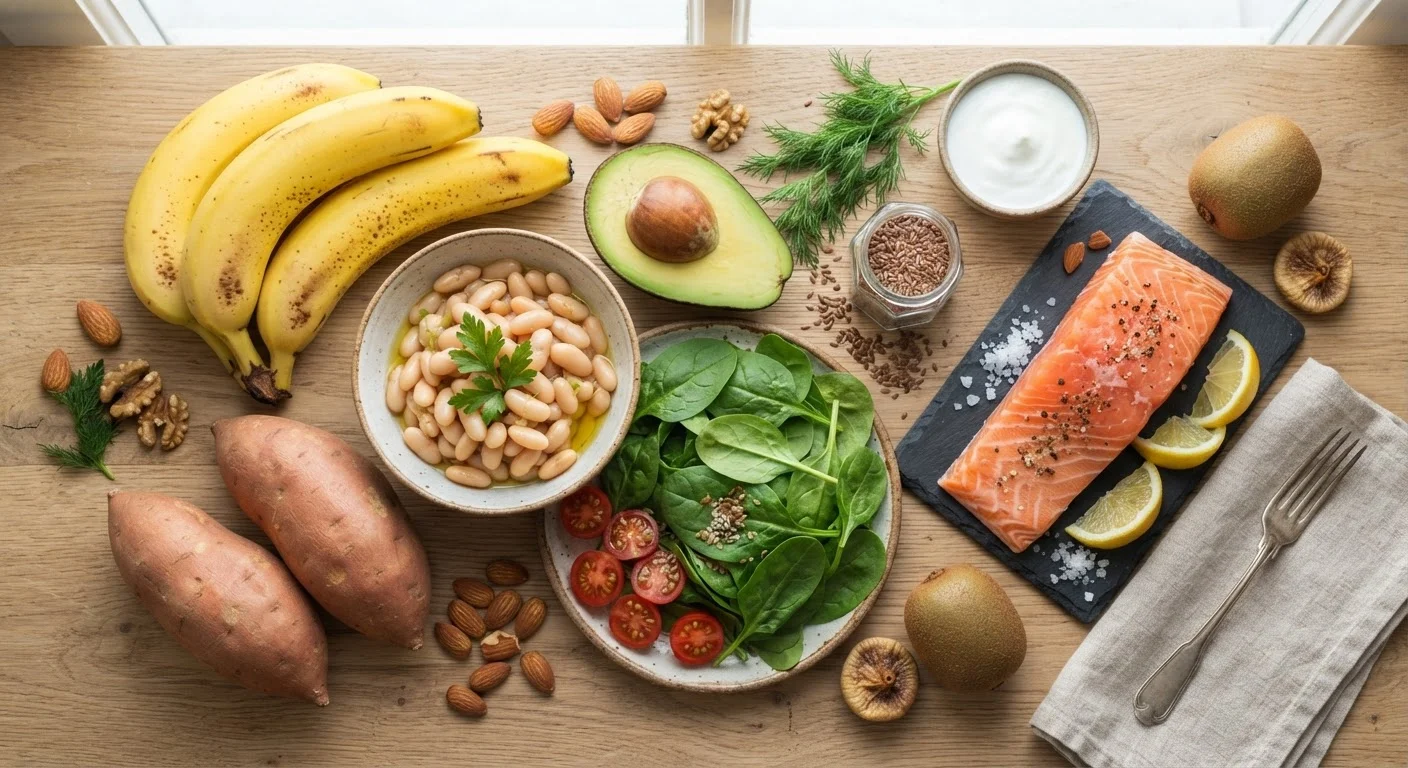
The banana association with potassium is culturally entrenched, and while bananas do provide a useful amount, they are far from the top of the list. Several common foods deliver considerably more potassium per serving:
- White beans and lentils: A half-cup of cooked white beans contains roughly 500–600 mg of potassium — more than a medium banana.
- Sweet potatoes: One medium baked sweet potato provides around 500 mg, along with fiber and beta-carotene.
- Leafy greens: Cooked spinach, Swiss chard, and beet greens are concentrated sources due to the reduction in volume during cooking.
- Avocado: Half a medium avocado delivers approximately 350–500 mg alongside heart-healthy fats.
- Tomato products: Tomato paste and tomato sauce are potassium-dense in small quantities.
- Low-fat dairy and yogurt: A cup of plain low-fat yogurt contributes around 500 mg.
- Fish: Salmon and halibut are notable animal-source options.
The common thread among these foods is that they are minimally processed whole foods — the same foods that tend to be underrepresented in typical American eating patterns. Increasing potassium naturally aligns with broader healthy eating principles. See our guide on building a micronutrient-rich plate for practical strategies.
How to Eat More Potassium Without Overhauling Your Diet
Closing the potassium gap does not require dramatic dietary changes. Small, consistent swaps can meaningfully increase intake over time:
- Add a handful of spinach to eggs, soups, or smoothies.
- Swap refined grain side dishes for a baked sweet potato or bean-based salad.
- Include a serving of low-fat yogurt as a snack or breakfast base.
- Use canned or dried beans as a regular protein source in meals.
- Choose whole fruit over juice to retain potassium alongside fiber.
Potassium also works in tandem with other commonly shortchanged minerals. If you are working to improve your overall micronutrient intake, it is worth noting that magnesium faces a similar gap in American diets — explore our article on magnesium, the mineral most Americans overlook. The role of fiber in everyday eating is also closely connected, since the whole-plant foods highest in fiber tend to be potassium-rich as well.
Rinse Canned Beans to Reduce Sodium
Canned beans are an affordable, convenient way to boost potassium intake. Rinsing them under cold water before use can remove a significant portion of added sodium, helping you improve potassium intake without simultaneously increasing sodium — a balance that matters for blood pressure and overall mineral health.
This article is for general informational and educational purposes only and does not constitute medical or nutritional advice. If you have a health condition, take medications, or have concerns about your potassium intake, consult a qualified healthcare provider before making changes to your diet.