

Key Takeaways
Option A
Complete Proteins
The all-in-one amino acid package.
Best for: Individuals who want to meet all essential amino acid needs from a single food source, particularly those eating animal-based foods.
Option B
Incomplete Proteins
Partial amino acid sources that shine in combination.
Best for: Plant-based eaters who can pair complementary foods throughout the day to cover the full spectrum of essential amino acids.
If you eat meat, poultry, fish, or dairy regularly
Complete Proteins
Animal foods provide all essential amino acids in a single serving, making it straightforward to meet protein needs without additional planning.
If you follow a vegetarian or vegan diet
Incomplete Proteins
Pairing a variety of plant proteins — such as beans with rice or hummus with whole-grain bread — across the day reliably covers all essential amino acids.
If you want plant-based convenience without combining foods
Complete Proteins
Whole soy foods like edamame and tofu, along with quinoa and buckwheat, are plant-sourced complete proteins that simplify meal planning.
What Makes a Protein 'Complete' or 'Incomplete'?
Protein is made up of smaller building blocks called amino acids. Of the roughly 20 amino acids the body uses, nine are considered essential — meaning the body cannot manufacture them on its own and must obtain them from food. The other amino acids can be synthesized internally from raw materials, so they're classified as nonessential.
A complete protein is any food that contains all nine essential amino acids in sufficient quantities. An incomplete protein lacks adequate levels of one or more of those nine. This distinction has nothing to do with protein quality in a moral sense — it's simply a structural description of the food's amino acid profile.
The nine essential amino acids are: histidine, isoleucine, leucine, lysine, methionine, phenylalanine, threonine, tryptophan, and valine. Different incomplete protein sources tend to be low in different amino acids — for example, most legumes are low in methionine, while grains tend to be low in lysine.
Real-Food Examples of Each Type
Understanding which everyday foods fall into each category makes this concept immediately practical.
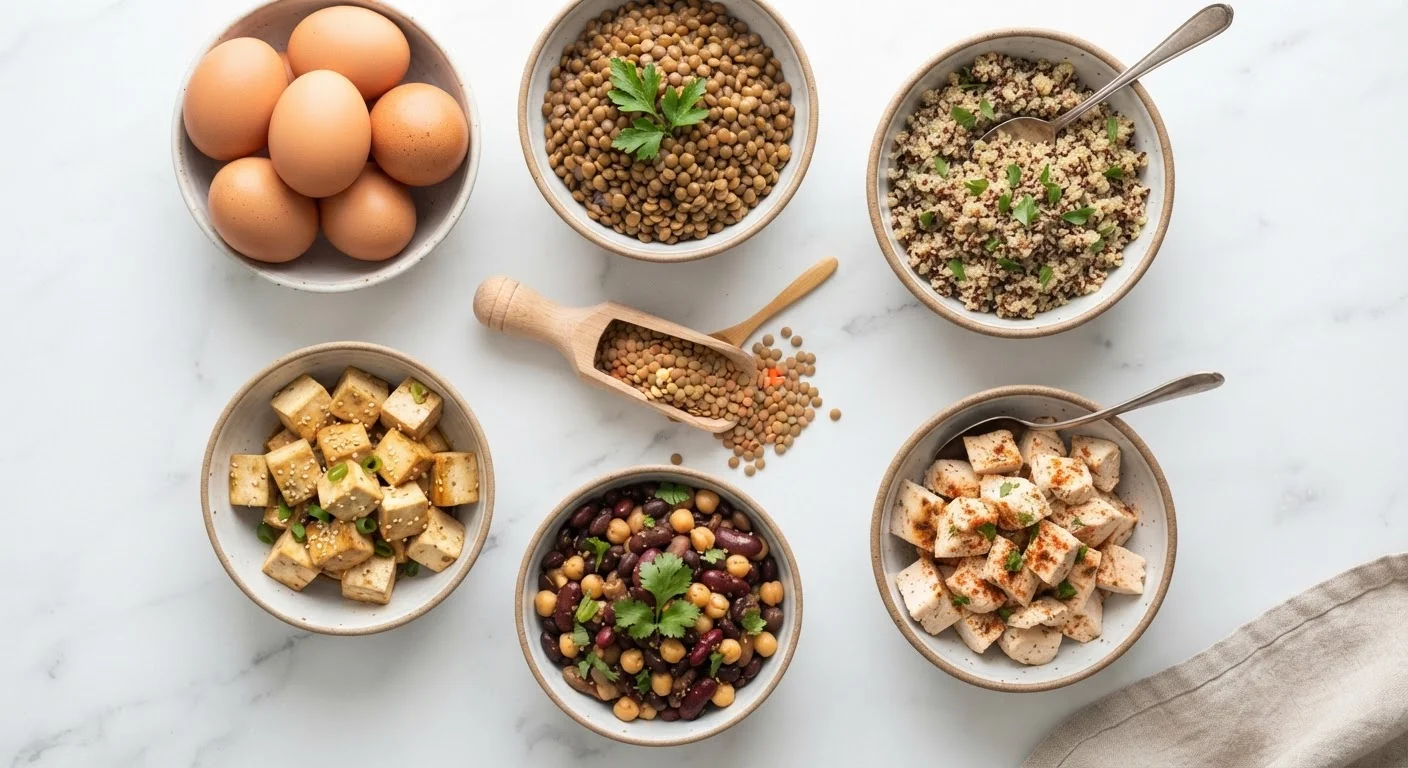
Complete protein sources include eggs, chicken, beef, pork, fish, seafood, dairy products (milk, yogurt, cheese), and whole soy foods such as edamame, tofu, and tempeh. Quinoa and buckwheat are two widely available plant foods that also qualify as complete proteins, making them especially valuable for plant-based eaters.
Incomplete protein sources include most other plant foods: lentils, chickpeas, black beans, peanuts, almonds, sunflower seeds, rice, oats, wheat, and most vegetables. These foods still deliver meaningful amounts of protein and a broad range of nutrients — they simply don't check every essential amino acid box on their own.
| Criterion | Complete Proteins | Incomplete Proteins |
|---|---|---|
| Essential amino acids | All 9 present in sufficient amounts | One or more is low or absent |
| Primary food sources | Meat, fish, dairy, eggs, soy, quinoa | Most legumes, grains, nuts, seeds |
| Meal planning complexity | Simple — single food covers all amino acids | Requires dietary variety across the day |
| Suitable for plant-based diets | Yes — soy, quinoa, buckwheat qualify | Yes — when paired with complementary foods |
| Overall diet importance | High — but total variety still matters | High — variety is the essential strategy |
Just like food labeling can be deceptively simple, the complete vs. incomplete label can oversimplify what's actually a nuanced picture of how proteins work together in a diet.
Do You Need to Combine Proteins at Every Meal?
For decades, nutrition guidance suggested that plant-based eaters needed to combine complementary proteins — like rice and beans — at every single meal to ensure complete amino acid intake. Current evidence from leading nutrition organizations, including the Academy of Nutrition and Dietetics, indicates this is not necessary.
The body maintains a pool of amino acids that it draws from throughout the day. As long as a person eats a varied diet with adequate total protein across daily meals and snacks, the full spectrum of essential amino acids is typically covered without precise meal-by-meal combining.
That said, complementary pairing is still a useful and practical habit. Classic combinations include:
- Rice and beans or lentils
- Whole-grain bread with nut butter or hummus
- Oatmeal topped with nuts and seeds
- Corn tortillas with black beans
These pairings happen naturally in many traditional cuisines around the world, reflecting centuries of intuitive nutritional wisdom.
9
Essential amino acids humans must get from food
The human body cannot synthesize these amino acids on its own, making dietary sources necessary for normal function.
~50g
General daily protein reference intake for average adults
The U.S. Dietary Reference Intakes suggest approximately 0.8 grams of protein per kilogram of body weight per day for most healthy adults.
This article is for general informational and educational purposes only and does not constitute medical or dietary advice. Speak with a registered dietitian or qualified healthcare provider for personalized nutrition guidance.