

Key Takeaways
Why Busy Schedules Push Us Toward Junk Food
When time is short, food choices are driven largely by convenience and hunger urgency. Research on decision fatigue suggests that as the day fills with demands, the mental bandwidth available for thoughtful food choices shrinks. The result is predictable: vending machines, drive-throughs, and whatever is fastest win out.
This isn't a willpower problem. It's an environment and planning problem — which means it's solvable with structure rather than self-discipline alone. Understanding this distinction is the first step. As irregular eating patterns affect energy and hunger hormones, building even a loose framework for your meals can reduce the chaos that leads to reactive, low-quality food choices.
The goal here isn't dietary perfection. It's building a realistic system that keeps you adequately nourished without requiring heroic effort on your worst days.
What you will need
Step-by-Step: Building a Busy-Day Eating System
The following steps are designed to be implemented gradually. You don't need to adopt all of them at once — start with whichever fits your schedule most naturally.
Identify Your Two or Three Most Vulnerable Time Slots
Look at your typical week and pinpoint the moments when you're most likely to grab whatever's convenient — usually mid-afternoon, late evenings, or days with back-to-back commitments. Naming these windows removes the surprise factor and lets you plan specifically for them rather than hoping for the best.
Batch a Small Number of Versatile Ingredients Weekly
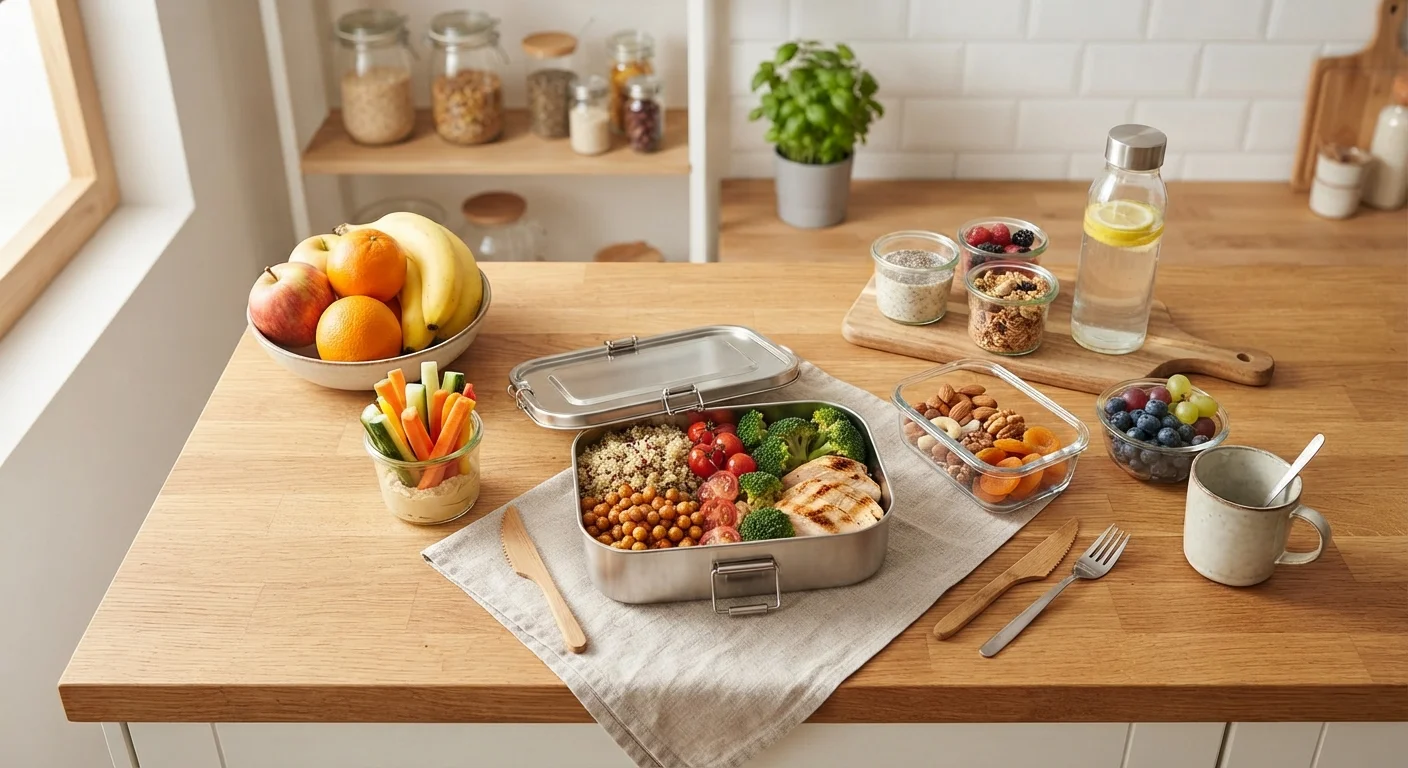
Batch cooking doesn't require elaborate meal prep. Cook a pot of grains (rice, farro, or oats), roast a sheet pan of vegetables, hard-boil some eggs, or portion out nuts and fruit. These components combine into dozens of quick meals and reduce the zero-effort temptation of ultra-processed options.
Focus on ingredients that hold well in the refrigerator for three to five days and require no reheating to eat — this widens your options even when a microwave isn't available.
Engineer Your Food Environment for Convenience
Place nutritious, ready-to-eat foods at eye level in your refrigerator and on countertops. Keep a bag of nuts, dried fruit, or whole-grain crackers in your work bag or desk drawer. The goal is to make the healthiest available option the easiest one to grab. Research consistently shows that proximity and visibility drive food choices more than intention.
Build a Short List of Reliable Fast Options
Identify five to eight meals or combinations you can assemble in under ten minutes using pantry staples or prepped ingredients. Examples: a grain bowl with precooked rice, canned beans, and a handful of greens; whole-grain toast with nut butter and a piece of fruit; yogurt with seeds and sliced vegetables on the side. Having a mental menu removes the paralysis of staring into the fridge when you're rushed and hungry.
Eat at Roughly Consistent Times Even on Hectic Days
Skipping meals to save time often backfires by intensifying hunger and cravings later, making it harder to make measured choices. Aim to eat at predictable intervals, even if the meal is small or simple. A consistent eating rhythm helps regulate hunger signals over time, making subsequent choices feel less urgent and reactive.
Give Yourself a Workable Backup Plan
On days when everything falls apart, know in advance what your acceptable fallback is. This might be a specific fast-casual restaurant with options you feel good about, a gas station that stocks whole fruit and string cheese, or a frozen meal you keep stocked for emergencies. A pre-decided backup removes the need to make a high-stakes decision under pressure.
For a broader look at how these habits play out day to day, see what a realistic week of balanced eating looks like in practice. And if you're weighing whether to eat on a fixed schedule or graze throughout the day, comparing structured eating windows and grazing can help you decide what fits your lifestyle.
Navigating Common Pitfalls
Even with a system in place, certain situations routinely derail eating habits. Long meetings that run through lunch, back-to-back commitments that eliminate cooking time, and social meals where healthier options are scarce are all common challenges.
For shared meals and eating with others, strategies for navigating meals with others can help you stay consistent without feeling isolated or rigid. And when it comes to snacking — a go-to solution on busy days — it's worth understanding when snacking helps and when it quietly undermines your goals, since context shapes whether it's a genuine bridge between meals or a habit that compounds over time.
Progress Over Perfection Always Wins
A nourishing meal assembled from imperfect ingredients on a chaotic day is a win — not a compromise. Sustainable eating habits are built from hundreds of 'good enough' choices, not a handful of perfect ones. Give yourself credit for the effort, not just the outcome.
Stress also plays a meaningful role in food choices. Chronic stress activates appetite-regulating hormones in ways that can increase cravings for high-calorie foods. Exploring practical ways to manage everyday stress can support your eating habits as much as any meal plan.
This article is for general informational and educational purposes only and is not a substitute for professional medical or dietary advice. Consult a qualified healthcare provider or registered dietitian for personalized guidance.