

Key Takeaways
Why Yoga and Chronic Pain Require a Different Conversation
Living with chronic pain means your body has its own daily vocabulary - good days, flare days, and everything in between. Yoga, at its best, is a practice designed to meet you exactly where you are. But the version of yoga most people picture - sweaty flows, deep backbends, impressive flexibility - isn't the starting point for everyone, and it certainly doesn't have to be yours.
Research suggests that adapted yoga practices may help reduce pain intensity and improve physical function in some individuals with chronic musculoskeletal conditions, though results vary and more evidence is still being gathered. What's consistently clear is that how you practice matters far more than how advanced your poses look. If you're living with a chronic pain condition, talking with your doctor, physical therapist, or pain specialist before beginning or changing a yoga practice isn't just a formality - it's a foundational step that shapes everything that follows.
This article isn't a substitute for that conversation. Think of it as a preparation guide: the principles that can help you ask better questions, make safer choices, and build a practice that supports - rather than aggravates - your wellbeing.
Core Principles for Practicing Yoga With Chronic Pain
The following practices reflect general principles widely recommended by yoga therapists, physical therapists, and pain researchers. Apply them in consultation with your own healthcare team.
Distinguish between discomfort and pain before, during, and after every session.
A mild sensation of stretch or muscle fatigue is generally expected in yoga. Sharp, shooting, burning, or worsening pain is a warning signal your body is sending - and it deserves to be heeded, not pushed through. Developing this awareness is foundational to practicing safely over time.
Use props generously and without apology.
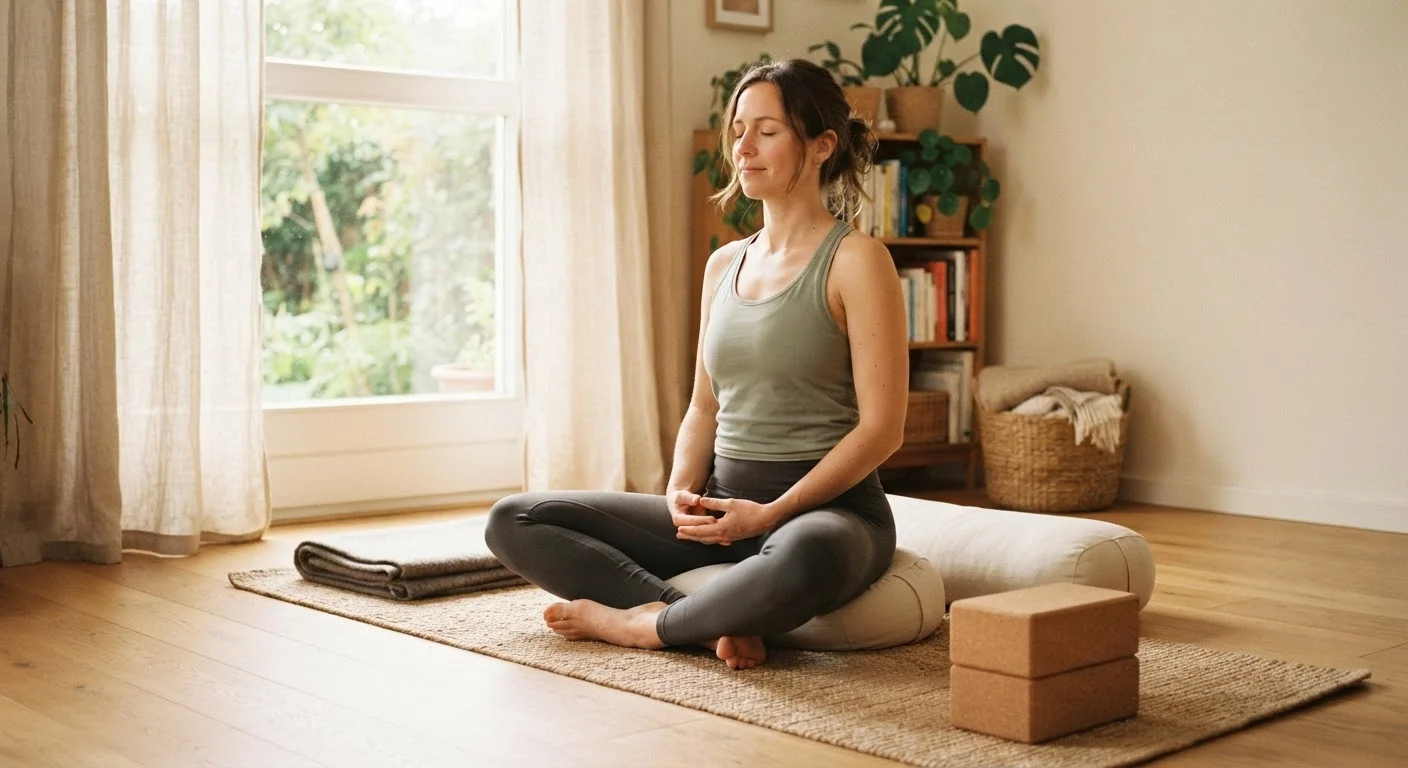
Blocks, bolsters, blankets, straps, and chairs are not signs of weakness - they are tools that make safe alignment achievable for real bodies. Props allow you to access the functional benefits of a pose (gentle opening, supported stability) without forcing range of motion your body isn't ready for.
Prioritize consistency over intensity - shorter, gentler sessions practiced regularly outperform occasional intense ones.
For people managing chronic pain, the nervous system benefits of yoga - reduced stress reactivity, improved body awareness, calmer baseline tension - build gradually with regular practice. Overdoing a session can trigger flares that set back progress.
Communicate openly with both your healthcare provider and your yoga instructor.
Your medical team understands your diagnosis, imaging findings, and treatment plan. Your yoga instructor understands movement, alignment, and adaptation. Neither can give you complete guidance without the other's context - and you are the bridge between them.
Modify or skip poses that conflict with your specific condition, not just ones that 'feel hard.'
Some poses carry structural contraindications for specific conditions - for example, deep twists may be advised against for certain spinal issues, or inversions may be inappropriate with some cardiovascular conditions. Generic difficulty is not the same as medical risk.
The Role of Breath: Your Built-In Regulation Tool
Breath is far more than a backdrop to movement - it's an active tool for working with pain. Chronic pain often activates the sympathetic nervous system (the body's stress response), creating a feedback loop of tension, guarding, and heightened sensitivity. Slow, intentional breathing - particularly extending the exhale - can help activate the parasympathetic nervous system, sometimes called the "rest and digest" state, which may reduce the intensity of that cycle.
Practices like diaphragmatic breathing (belly breathing) or a simple 4-count inhale, 6-count exhale can be practiced entirely still, lying down, or seated - making them accessible even on difficult pain days. If you're curious about combining breathwork more intentionally with movement, our article on how breathwork and yoga reinforce each other explores that relationship in depth.
Start With Breath on Flare Days
On days when pain levels are high, movement-based yoga may not be appropriate. Instead, practice breathwork alone - slow, rhythmic breathing done lying down or seated counts as valid, beneficial practice. This keeps your habit intact without risking aggravation, and the nervous system regulation effects are real regardless of whether you move at all.
Building Your Practice: Practical Starting Points
If you're new to yoga or returning after time away due to pain, structure matters. A home environment can actually offer advantages - you can go at your own pace, use your own props, and rest whenever you need to without self-consciousness. Our guide to starting a home yoga practice without a studio covers the practical basics of setting up a safe, consistent routine.
When choosing classes or instructors, look for teachers trained in yoga therapy, adaptive yoga, or working with special populations. Be upfront about your condition before class begins. A qualified instructor will offer modifications; if they dismiss your needs or push you past discomfort, that's a signal to find a better fit.
This article is for general informational and educational purposes only and does not constitute medical advice. Always consult a qualified healthcare professional before starting, modifying, or stopping any exercise or wellness practice, especially if you are managing a chronic health condition.