

Key Takeaways
Yoga Nidra
Yoga nidra, often translated as 'yogic sleep,' is a guided relaxation practice where you lie still and follow verbal instructions designed to bring your awareness to the threshold between wakefulness and sleep. Unlike sleep, you remain consciously aware throughout. Unlike seated meditation, there is no effort to concentrate or observe thoughts - you are systematically guided through layers of body, breath, and sensation.
Yoga nidra is thought to induce the hypnagogic state - the transitional zone between waking (alpha brain waves) and sleep (theta waves) - which some researchers associate with enhanced receptivity and accelerated rest.
Not Quite Sleep, Not Quite Meditation
If you have ever searched for a relaxation practice and stumbled onto yoga nidra, you have probably seen it described as 'yogic sleep' - which raises an obvious question: how is lying down and listening to a recording actually different from napping?
The distinction matters, and it is more than semantic. In ordinary sleep, consciousness recedes. You are not aware that you are sleeping; the mind wanders through dreams without a witnessing perspective. In yoga nidra, the aim is to hover at the edge of that transition - body fully relaxed, mental activity quieted - while a thin thread of awareness remains intact. You know you are practicing. That conscious presence is the whole point.
Compare this with seated meditation, and the difference shifts again. Meditation and mindfulness typically involve some active cognitive work - returning attention to the breath, observing thoughts arise and pass, or sustaining a focused state. That requires effort and an upright, alert posture for good reason. Yoga nidra, by contrast, removes the effort requirement almost entirely. A teacher or recording does the navigating; you simply follow.
What a Yoga Nidra Session Actually Involves
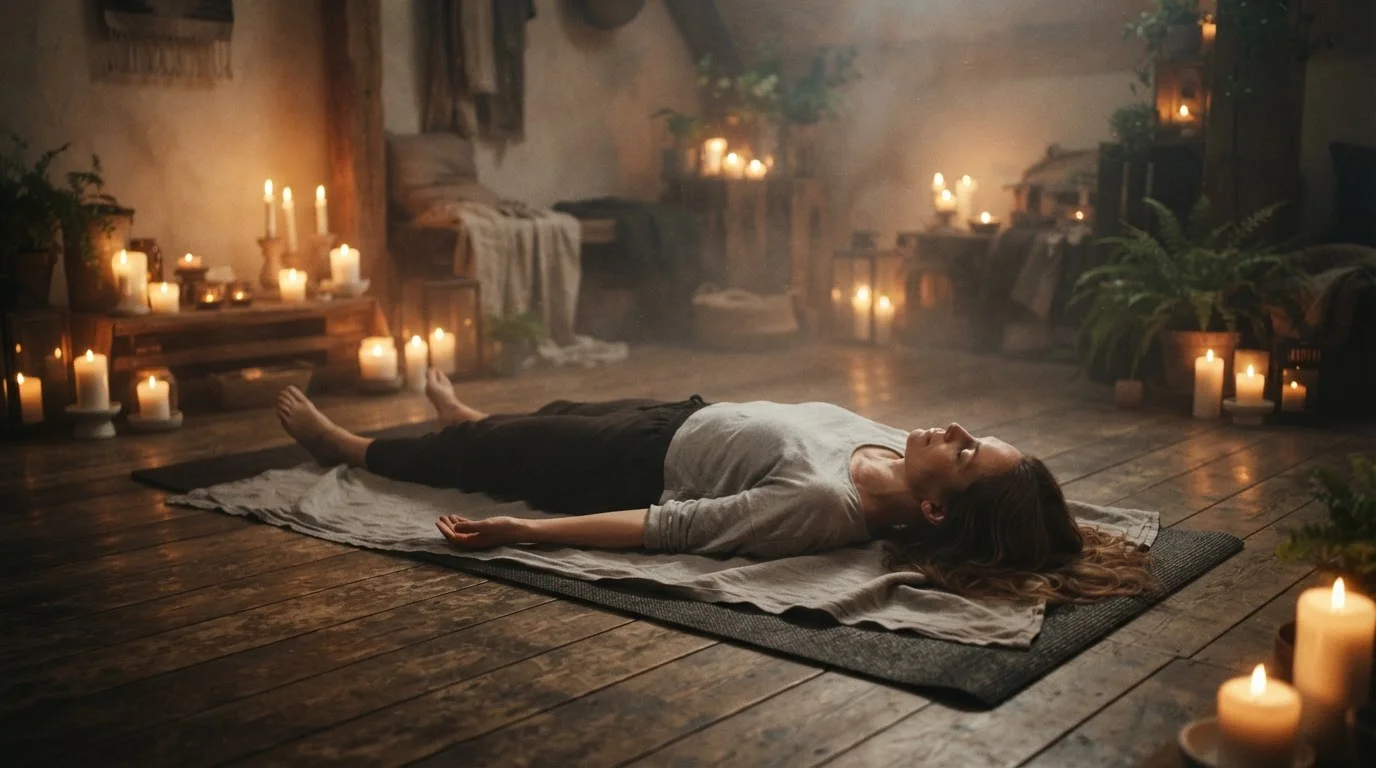
A typical session begins with settling into a comfortable lying position - savasana in yoga terminology - and setting a personal intention, called a sankalpa. From there, a guide leads you through a structured rotation of awareness: moving attention through different parts of the body in a specific sequence, noticing sensations without trying to change them.
This body scan transitions into awareness of the breath, then into pairs of opposite sensations (heaviness and lightness, warmth and cold), and often into visualization of images or symbols. The sequence is deliberate: each stage is designed to progressively disengage the nervous system from active processing while keeping consciousness present.
New to Yoga Nidra? Start With a Short Recording
If you are curious but unsure, a 15-20 minute guided yoga nidra audio is an easy, no-equipment introduction. Many yoga studios, apps, and community centers offer free or low-cost recordings. Lie on a firm, comfortable surface, use a blanket for warmth, and give yourself permission to simply follow the voice without judging how well you are 'doing' it.
This layered structure distinguishes yoga nidra from simple body-scan relaxation recordings, which tend to stop after the physical layer. Classical yoga nidra traditions, such as those developed by Swami Satyananda Saraswati, describe moving through what are called the koshas - the body's concentric 'sheaths' from physical to energetic to mental and beyond.
What the Research and Practitioners Report
~0.5-1 Hz
Theta brain wave range accessed in yoga nidra
EEG studies suggest yoga nidra practitioners may access theta-dominant states similar to light sleep while remaining consciously aware, though research is still limited in scale.
30 min
Typical session length reported as restorative
Yoga nidra teachers and some small-scale studies commonly cite 30-minute sessions as a practical duration associated with subjective feelings of deep rest.
Small but positive
Effect size on stress and anxiety measures
A 2022 review in the International Journal of Yoga found consistent but modest reductions in stress and anxiety across multiple yoga nidra studies, noting that larger trials are needed.
Research into yoga nidra is still developing, and most studies are small in scale, so it is important not to overstate conclusions. That said, published pilot studies and reviews have reported associations between regular yoga nidra practice and reductions in self-reported stress, anxiety, and sleep disturbance. Some investigations have measured physiological markers like heart rate variability and cortisol, finding modest positive shifts - consistent with parasympathetic nervous system activation.
Practitioners frequently describe the experience as feeling more rested after a 30-minute session than after a comparable nap. Whether this reflects genuine physiological restoration or simply a subjective sense of calm is not yet fully established by science. What is clearer is that the practice is safe, low-effort, and accessible - attributes that matter when recommending general wellness tools.
For those already exploring calming yoga modalities, it is worth knowing how yoga nidra sits alongside other still practices. Yin and restorative yoga also use stillness but work primarily through physical tissues and supported postures - a meaningfully different mechanism than yoga nidra's cognitive-awareness approach.
Who It May Be Useful For - And What to Keep in Mind
Because yoga nidra requires no physical exertion and can be practiced on any flat surface, it tends to be accessible across a wide range of ages and fitness levels. People managing chronic stress, difficulty unwinding before sleep, or mental fatigue often find it a gentle entry point into mind-body practice.
A few practical notes: if you have a trauma history, certain guided visualizations may feel uncomfortable. Look for teachers who offer trauma-sensitive adaptations and who encourage you to modify or pause as needed. If you have a diagnosed sleep disorder, anxiety condition, or other health concern, it is worth discussing any new wellness practice with a qualified healthcare professional before starting.
Yoga nidra is general health information and should not be treated as medical therapy. It is one tool in a broader picture of whole-person wellness - most effective when it complements, not replaces, professional care and healthy daily habits.
This article is for general informational and educational purposes only and is not a substitute for professional medical advice, diagnosis, or treatment. Always consult a qualified healthcare provider with questions about your health or before beginning any new wellness practice.