

Key Takeaways
The Gut-Brain Axis
The gut-brain axis is the two-way communication network between your digestive system and your brain. It involves nerves, hormones, and immune signals that travel in both directions, meaning your gut can influence how you feel emotionally - and your emotional state can affect your digestion. This relationship is real, though researchers are still working out exactly how much dietary choices can shift mood.
The vagus nerve is a primary physical pathway in this axis, and the enteric nervous system - sometimes called the 'second brain' - contains roughly 500 million neurons embedded in the gastrointestinal tract.
Why Scientists Are Paying Attention to Your Gut
For decades, the relationship between digestion and emotion was largely dismissed as folk wisdom - 'butterflies in the stomach' was a figure of speech, not a biology lesson. That has changed. Over the past two decades, a growing body of research has established that the gut and the brain are in constant dialogue, exchanging signals through the vagus nerve, the immune system, and a remarkable array of hormones and neurotransmitters.
What surprised many researchers most is the direction of traffic. The gut sends more signals to the brain than the brain sends downward. This challenges the intuitive assumption that the brain simply commands digestion and gets on with things. In reality, your digestive system is continuously reporting back - on the state of nutrients absorbed, on microbial activity, on inflammation - and the brain responds accordingly.
This doesn't mean that eating a bowl of yogurt will cure anxiety. But it does mean that the gut is a genuinely active participant in emotional processing, not just a passive recipient of what we eat.
Serotonin, the Microbiome, and What We Know So Far
One of the most cited findings in this space is that approximately 90% of the body's serotonin - a neurotransmitter closely associated with mood regulation - is produced in the gastrointestinal tract, not in the brain. Gut-produced serotonin doesn't cross the blood-brain barrier and directly affect mood in the way brain serotonin does, but it plays critical roles in gut motility and can influence the brain indirectly through the vagus nerve and immune pathways.
Researchers have also turned significant attention to the gut microbiome - the vast ecosystem of bacteria, fungi, and other microorganisms that inhabit the digestive tract. Studies in both animals and humans have found associations between microbiome composition and conditions including depression and anxiety. A notable area of emerging inquiry involves psychobiotics - live bacterial cultures that may influence mental health outcomes - though this research is still at an early stage and findings are not yet consistent enough to drive clinical recommendations.
~90%
Of the body's serotonin produced in the gut
Research consistently estimates that the vast majority of serotonin is synthesized in the gastrointestinal tract, not the central nervous system.
500M+
Neurons in the enteric nervous system
The enteric nervous system, embedded in the gut wall, contains hundreds of millions of neurons - earning it the informal title of the 'second brain' among researchers.
~38T
Microbial cells estimated in the human body
Current scientific estimates suggest the number of microbial cells in and on the human body roughly equals the number of human cells, underscoring the scale of our microbiome.
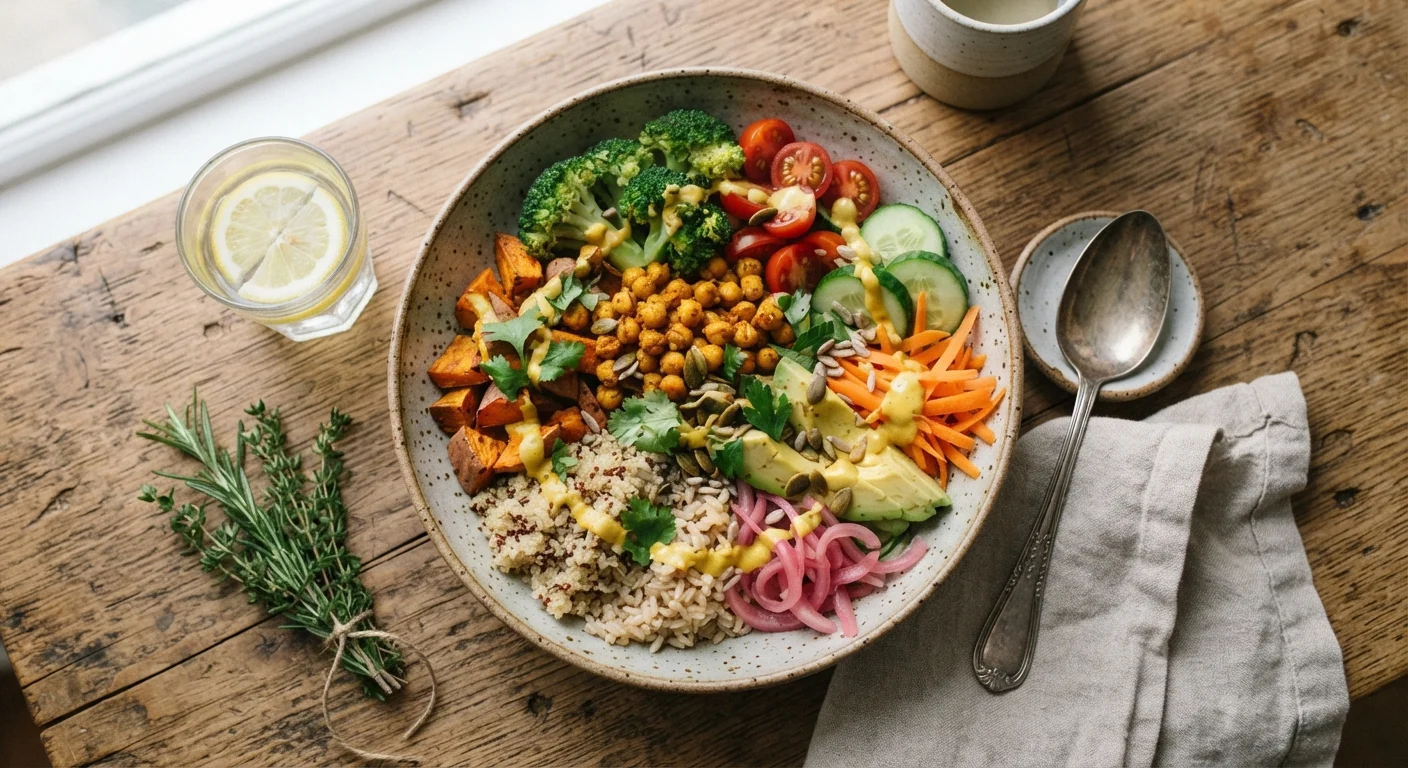
What does appear more established is the impact of overall dietary patterns on mental wellbeing. Studies - including the landmark SMILES trial, which examined the effect of dietary improvement on depression - suggest that diets emphasizing vegetables, legumes, whole grains, fish, and fermented foods are associated with lower rates of depressive symptoms compared to diets high in processed foods and refined sugar. Association, importantly, is not the same as cause-and-effect, and researchers continue to work through what that relationship truly means.
The Stress Loop: How Your Mood Affects Your Gut Right Back
The gut-brain axis is genuinely bidirectional, and this is where everyday experience becomes easy to recognize. Stress - whether from work pressure, relationship tension, or prolonged uncertainty - can slow gastric emptying, alter gut motility, and shift the balance of the microbiome. Many people notice this as nausea before a high-stakes event, appetite loss during grief, or digestive discomfort during periods of chronic anxiety.
This matters for how we think about eating for mental wellness. It's not only a question of what foods enter the gut and what signals they send upward. It's also about creating the conditions - lower chronic stress, adequate sleep, regular physical activity - in which the gut can function well. Stress and cortisol levels also shape eating patterns in ways that can ripple back into gut health, creating cycles that are easier to interrupt once you recognize them.
For a broader look at how emotional states intersect with physical health behaviors, the mind-body connection in weight management explores these overlapping dynamics without oversimplifying them.
What This Means for How You Eat Day to Day
The gut-brain research, taken together, doesn't deliver a simple prescription. It points instead toward a few durable principles worth holding onto:
- Dietary diversity likely matters. A varied diet - particularly one rich in fiber from different plant sources - tends to support microbiome diversity, which in turn appears linked to better gut-brain signaling.
- Fermented foods may help. Yogurt, kefir, sauerkraut, kimchi, and similar foods introduce live cultures into the gut. Small studies suggest benefits for mood-related outcomes, though this area needs more research before firm conclusions can be drawn.
- Reducing ultra-processed food is a reasonable goal. Highly processed diets are consistently associated with poorer mental health outcomes across large population studies, though researchers are still unpacking whether this is direct, indirect, or confounded by other lifestyle factors.
- Consistency beats perfection. The gut microbiome shifts in response to sustained dietary patterns, not single meals. An occasional dessert isn't meaningful; months of nutritional neglect may be.
If you're curious about approaching meals with more awareness, mindful eating practices offer a practical starting point that doesn't require overhauling your entire diet at once.
This article is for general informational purposes only and is not a substitute for professional medical or mental health advice. If you have concerns about your mood, digestion, or diet, please consult a qualified healthcare provider.