

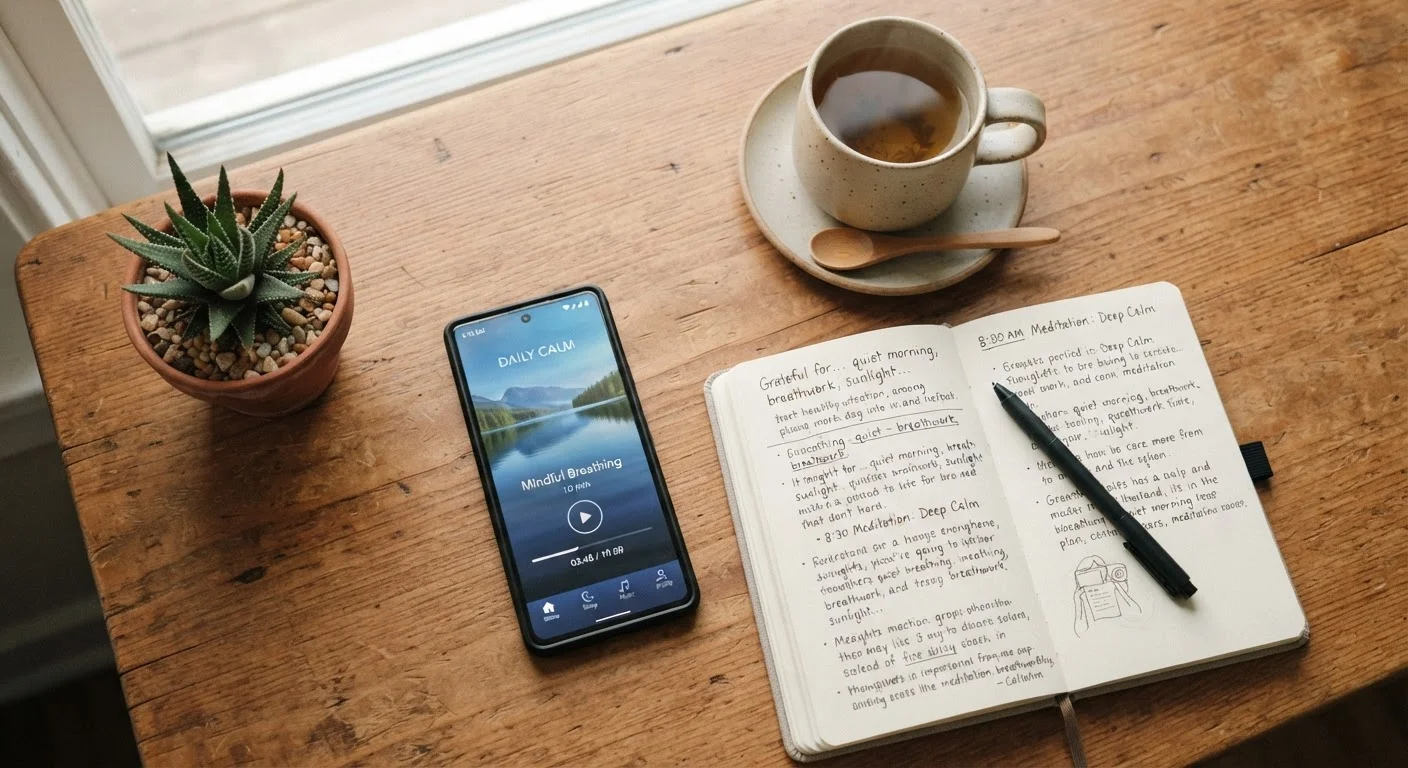
Key Takeaways
Accessible anytime, anywhere-no scheduling required
Apps remove the barrier of finding a class or teacher by delivering guided sessions on demand, making it easier to practice during a lunch break or before bed.
Structured guidance for complete beginners
Step-by-step audio instruction helps newcomers understand basic techniques like breath focus and body scanning without needing prior knowledge.
Low cost compared to in-person instruction
Many apps offer free tiers or modest subscription fees, making mindfulness more financially accessible than weekly classes or retreats.
Progress tracking supports early habit formation
Streak counters and session logs can provide a sense of momentum for users who respond well to measurable milestones.
Wide variety of session types and lengths
From two-minute breathing exercises to thirty-minute body scans, apps accommodate different schedules and goals within a single platform.
High dropout rates undermine long-term benefit
Studies on digital health interventions consistently find that a significant proportion of users disengage within the first few weeks, limiting real-world impact.
Screen context creates competing distractions
Opening a meditation app on the same device used for social media and work email can make it genuinely difficult to enter a focused, calm state.
Can foster reliance on external prompts
Repeated use of guided audio may reduce a person's confidence in their ability to practice independently, slowing the development of an internalized skill.
Lacks human connection and real-time responsiveness
A teacher or group can notice struggle, offer encouragement, and adapt guidance; an app cannot-a meaningful gap for people who learn better socially.
Not appropriate for acute mental health needs
Apps are general wellness tools, not clinical interventions. People experiencing significant anxiety, depression, or trauma deserve professional support, not an algorithm.
Our Verdict
Mindfulness apps are a genuinely useful entry point for many people, offering convenience and structure when life is busy. However, they're not a universal fit-notification fatigue, screen dependency, and a lack of human connection can undermine the very calm they're designed to cultivate. The right tool depends on your temperament, lifestyle, and what actually helps you feel grounded.
Apps tend to work best for self-motivated beginners who want a low-commitment starting point; low-tech alternatives suit those who feel drained by screens or need a more embodied, social, or intuitive practice.
The Appeal-and the Reality-of Mindfulness Apps
Over the past decade, mindfulness apps have moved from niche curiosity to mainstream wellness staple. The appeal is easy to understand: guided meditations available at any hour, gentle reminders to pause, and progress tracking that makes an abstract practice feel tangible. For many Americans juggling packed schedules, an app feels like the most realistic on-ramp to mindfulness.
And research does back up some of those claims. Studies have found that app-based mindfulness programs can reduce self-reported stress and improve sleep quality for some users. But dig a little deeper and a more complicated picture emerges. Engagement rates are notoriously low-many people download a wellness app and stop using it within the first month. If you've been there, you're in very good company, and there's nothing wrong with you.
For a broader look at how apps compare, see the pros and cons of using a guided mindfulness app.
Accessible anytime, anywhere-no scheduling required
Apps remove the barrier of finding a class or teacher by delivering guided sessions on demand, making it easier to practice during a lunch break or before bed.
Structured guidance for complete beginners
Step-by-step audio instruction helps newcomers understand basic techniques like breath focus and body scanning without needing prior knowledge.
Low cost compared to in-person instruction
Many apps offer free tiers or modest subscription fees, making mindfulness more financially accessible than weekly classes or retreats.
Progress tracking supports early habit formation
Streak counters and session logs can provide a sense of momentum for users who respond well to measurable milestones.
Wide variety of session types and lengths
From two-minute breathing exercises to thirty-minute body scans, apps accommodate different schedules and goals within a single platform.
Where Apps Fall Short
The limitations of app-based mindfulness aren't just about willpower or consistency. Some are structural. Apps are delivered through the same device that hosts your email, social media, and news feed-meaning the context itself can work against the practice. Research in behavioral psychology suggests that environment matters enormously for habit formation, and a phone is a complicated environment for cultivating stillness.
There's also the question of depth. Guided audio sessions are excellent for introducing technique, but they can create a kind of dependency where users feel they can't meditate without the prompt. Genuine mindfulness is about developing an internal capacity, not following external cues indefinitely. And for people dealing with significant anxiety or trauma, an app is rarely equipped to offer the nuanced, responsive support that a trained human teacher can provide.
High dropout rates undermine long-term benefit
Studies on digital health interventions consistently find that a significant proportion of users disengage within the first few weeks, limiting real-world impact.
Screen context creates competing distractions
Opening a meditation app on the same device used for social media and work email can make it genuinely difficult to enter a focused, calm state.
Can foster reliance on external prompts
Repeated use of guided audio may reduce a person's confidence in their ability to practice independently, slowing the development of an internalized skill.
Lacks human connection and real-time responsiveness
A teacher or group can notice struggle, offer encouragement, and adapt guidance; an app cannot-a meaningful gap for people who learn better socially.
Not appropriate for acute mental health needs
Apps are general wellness tools, not clinical interventions. People experiencing significant anxiety, depression, or trauma deserve professional support, not an algorithm.
~25%
Users still active after 30 days
Research on mobile health apps broadly finds that roughly one in four users continues engaging after the first month, a pattern observed across wellness app categories.
4-6 weeks
Typical duration for measurable stress reduction
Several controlled trials of app-based mindfulness programs found meaningful reductions in perceived stress after four to six weeks of consistent use.
Low-Tech Alternatives Worth Exploring
If apps haven't clicked for you, that doesn't mean mindfulness itself is the wrong fit. It may just mean a different format suits you better. Here are some approaches grounded in evidence and widely practiced without a screen:
- Mindful walking: Slow, deliberate attention to the sensations of each step, breath, and surrounding environment. Research supports walking as a mood-regulating activity, and adding a mindful element deepens that effect.
- Journaling: Writing about present-moment experiences or emotions engages reflective awareness-a core component of mindfulness-without requiring any particular posture or timer.
- Community-based practice: Local meditation groups, yoga classes, or even faith-based contemplative traditions offer structured practice alongside human accountability and connection, which apps simply cannot replicate.
- Body-based awareness: Progressive muscle relaxation and gentle stretching bring attention to physical sensation, offering an accessible entry point for people who find seated meditation frustrating.
If you're starting from scratch, this grounded starting point for busy people walks through core concepts without assuming you own any particular device or app.
A Note on Mindfulness Misconceptions
Many people abandon mindfulness-app or otherwise-because their expectations don't match reality. They expect a quiet mind and instead notice more thoughts. This is actually a sign the practice is working, not failing. If this resonates, common myths about mindfulness may help reframe your experience before you give up.
Finding What Actually Sticks
There's no single format that works for every nervous system, lifestyle, or personality. What matters most is sustainability. A two-minute breath-awareness practice you do every morning while your coffee brews is worth more than a premium app subscription you open twice a month with good intentions.
It can also help to examine why you're coming to mindfulness in the first place. If you're chasing a productivity boost or a measurable outcome, it's worth reading about how that framing can undermine the practice. And if a busy schedule is the main barrier, even a short session can be valuable when approached thoughtfully.
Apps are a tool, not the destination. Use them if they serve you-and feel free to set them down if they don't.
This article is for informational purposes only and is not a substitute for professional mental health advice. If you're experiencing significant distress, please reach out to a qualified healthcare provider.