

Key Takeaways
Mindfulness & the Brain
Mindfulness is the practice of paying deliberate, non-judgmental attention to the present moment. Neuroscience research suggests that practicing this regularly - even in short sessions - can produce measurable changes in brain structure and function over time. These changes are associated with improved focus, calmer stress responses, and better emotional regulation. It is not magic, but it is more than just relaxation.
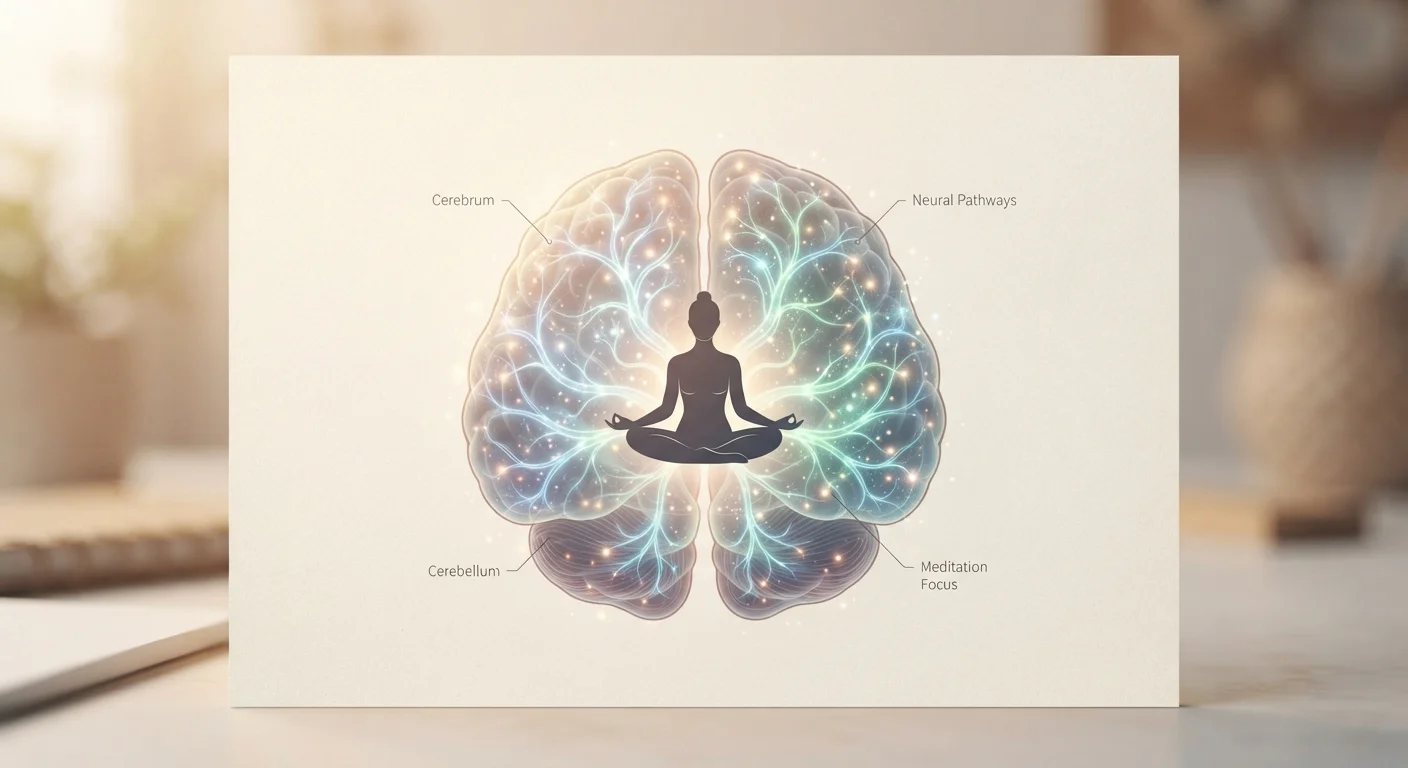
Researchers use neuroimaging tools like fMRI and EEG to study how mindfulness affects regions such as the prefrontal cortex, amygdala, and default mode network. Changes in gray matter density and functional connectivity have been observed in regular practitioners.
Your Brain Is Always Changing - Mindfulness May Shape How
One of neuroscience's most significant discoveries of the past few decades is that the adult brain is not fixed. It continues to reorganize itself in response to experience, learning, and repeated behavior - a property called neuroplasticity. Mindfulness practice appears to leverage this capacity in ways that support mental wellness.
Studies using brain imaging have found differences between long-term meditators and non-meditators in several key regions. These differences involve both the physical structure of the brain and how its regions communicate with each other. For an accessible overview of what the peer-reviewed literature actually says, see The Science Behind Mindfulness: What Research Actually Shows.
It is worth noting that most research in this area involves dedicated meditators. Results for casual or new practitioners tend to be more modest - which is realistic and still encouraging.
Three Brain Regions Where Mindfulness Leaves Its Mark
While the brain is a whole interconnected system, researchers have highlighted a few areas that show consistent patterns in mindfulness studies:
- The prefrontal cortex (PFC): This region sits just behind your forehead and plays a central role in attention, planning, and emotional regulation. Meditators tend to show greater activation and, in some studies, increased gray matter density here. A stronger PFC is associated with better self-control and a reduced tendency to react impulsively to stressors.
- The amygdala: Often described as the brain's threat-detection center, the amygdala triggers the fight-or-flight response. Research suggests that regular mindfulness practice is associated with reduced amygdala reactivity - meaning everyday stressors may feel less overwhelming over time. This connects closely to how controlled breathing also influences the stress response.
- The default mode network (DMN): This is the network active when your mind wanders - replaying past events or rehearsing worries. Mindfulness practice appears to quiet excessive DMN activity, which may explain why meditators often report feeling less caught in rumination.
8 weeks
Time linked to early measurable brain changes
A widely cited Harvard-affiliated study found increased gray matter density in the hippocampus after an eight-week Mindfulness-Based Stress Reduction (MBSR) program.
~10 min/day
Minimum daily practice studied for attention benefits
Several controlled studies have observed improvements in sustained attention with daily sessions of approximately ten minutes in novice meditators.
Reduced
Amygdala gray matter density in long-term meditators
Research published in journals including Social Cognitive and Affective Neuroscience has documented structural differences in the amygdala associated with years of regular meditation practice.
What This Means for Everyday Stress and Emotion
These neurological patterns translate into practical shifts that many people notice in daily life. Someone who meditates regularly may find they pause before reacting to frustration, recover more quickly after a tense moment, or simply notice their thoughts without being swept along by them.
This is sometimes called response flexibility - the ability to choose how you respond rather than automatically reacting. It is one reason mindfulness is increasingly integrated into evidence-based therapies for anxiety, depression, and chronic pain management, though it works best as part of a broader approach rather than a standalone cure.
Emotional regulation is deeply tied to overall mood and emotional wellbeing, and building mindfulness habits can be one thread in that larger fabric.
“The mind can be trained. Just as physical exercise reshapes the body, mental training through practices like mindfulness appears to reshape the brain's functional architecture over time.”
— Richard Davidson, Neuroscientist and founder of the Center for Healthy Minds, University of Wisconsin-Madison
Building the Habit: Small Steps, Real Results
The brain changes associated with mindfulness are not the product of a weekend retreat or an occasional session when stress peaks. They emerge from consistent, repeated practice - even in modest amounts. Research has examined structured programs of around eight weeks, but the underlying principle is straightforward: do it regularly.
For busy Americans, this might mean three to ten minutes in the morning before checking your phone, a mindful walk during lunch, or a brief body scan before sleep. The barrier to entry is genuinely low. If you're unsure how to work mindfulness into a packed schedule, Building a Mindfulness Habit Without Overhauling Your Routine offers concrete, practical strategies.
If you have held back because mindfulness sounds complicated or not suited to you, it may help to explore common misconceptions about mindfulness - many of the barriers people imagine aren't what the practice actually requires.
This article is for general informational and educational purposes only and is not a substitute for professional medical or mental health advice. If you are experiencing significant stress, anxiety, or other mental health concerns, please consult a qualified healthcare provider.