

Key Takeaways
Why Movement Patterns Are the Better Framework
Most beginners organize strength training by muscle group - chest day, leg day, back day. While that approach has its uses, it misses a more practical question: what does the body actually need to do? Movement patterns answer that question by grouping exercises according to the physical actions they train, not just the muscles they recruit.
This shift in perspective matters because real-world physical demands are movements, not muscles. Carrying groceries, rising from a chair, reaching overhead - these are patterns, and training them directly builds strength that transfers to daily life. For a deeper look at how this concept connects to everyday activity, see what functional strength really means.
The six categories below represent the movement patterns that exercise science broadly recognizes as foundational. Understanding them helps you identify gaps in your program before those gaps become injuries.
The Squat
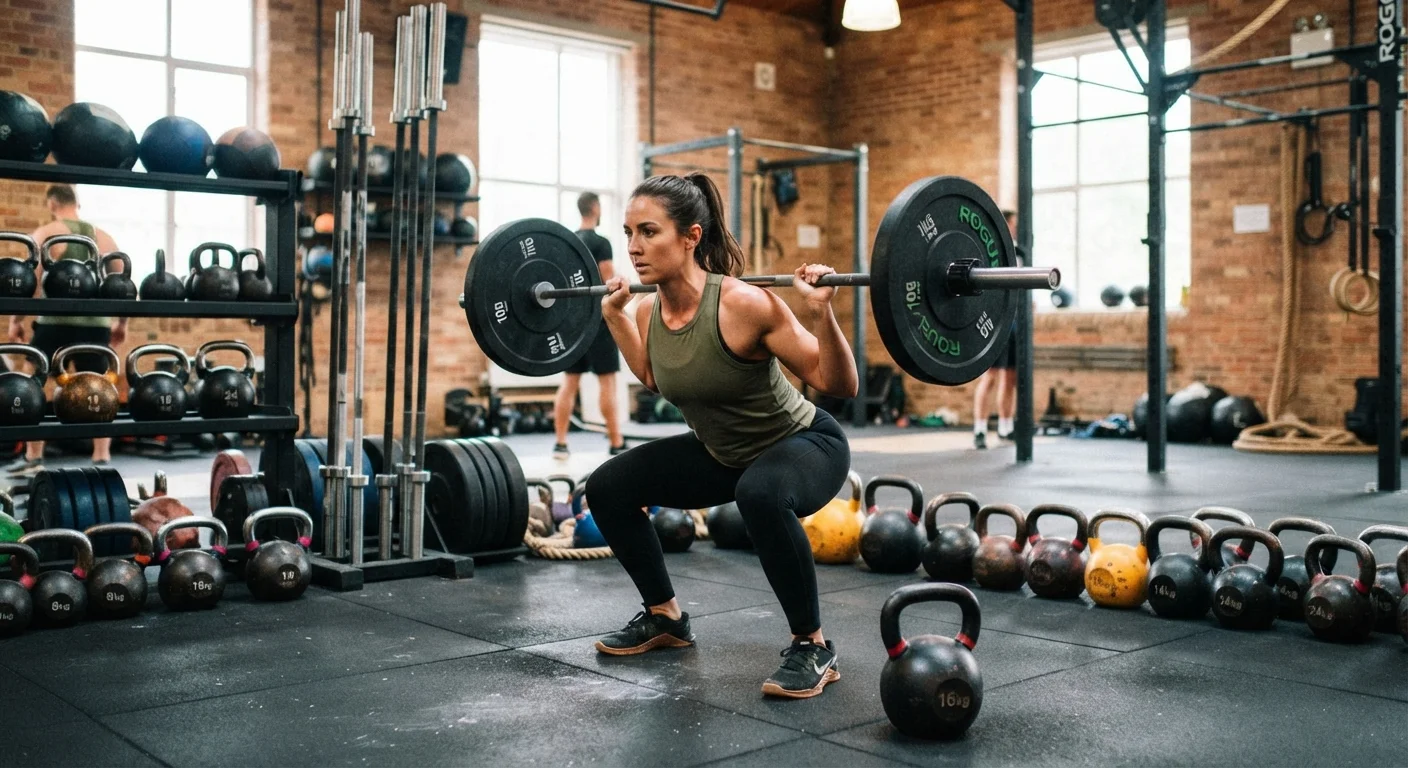
The squat pattern involves bending at both the hips and knees simultaneously while keeping the torso relatively upright. It trains the quadriceps, glutes, and core in a way that mirrors some of the most common movements in daily life - sitting down, standing up, climbing stairs.
Common squat variations include the bodyweight squat, goblet squat, front squat, and back squat. Each loads the pattern differently, but all develop the same fundamental capacity: controlled knee-and-hip flexion under load.
The squat pattern mirrors some of the most common movements in daily life, from sitting to climbing stairs.
The Hip Hinge
Where the squat bends both joints equally, the hinge emphasizes the hip joint while keeping the knees relatively stable. The spine stays long and neutral as the torso tips forward, loading the hamstrings, glutes, and lower back.
Deadlifts, Romanian deadlifts, kettlebell swings, and good mornings all train the hinge. This pattern is especially important for lower back health - a strong hip hinge teaches the body to lift heavy objects by driving through the hips rather than rounding the spine.
A strong hip hinge teaches the body to lift by driving through the hips, protecting the spine.
The Push
Push movements drive load away from the body - horizontally (as in a push-up or bench press) or vertically (as in an overhead press). They primarily develop the chest, shoulders, and triceps.
Balancing horizontal and vertical pushing is important. Many programs default to horizontal pushing and underemphasize overhead work, which can limit shoulder health and functional overhead reach over time. Including both directions ensures full development of the pushing pattern.
Balancing horizontal and vertical push exercises is key to complete shoulder health and strength.
The Pull
Pull movements draw load toward the body - again, either horizontally (rows) or vertically (pull-ups, lat pulldowns). They develop the upper back, rear shoulders, and biceps, and serve as the essential counterbalance to pushing movements.
In most general-population programs, pulling is underdone relative to pushing. A common guideline among coaches is to maintain at least a 1:1 push-to-pull ratio by volume - and many recommend pulling slightly more than pushing to support long-term posture and shoulder joint health.
Most programs underprioritize pulling; matching or exceeding push volume supports posture and joint health.
The Loaded Carry
Carries involve moving through space while holding load - farmer's carries, suitcase carries, rack carries, and similar variations. They develop grip strength, core stability, and full-body coordination in a way that few other exercises replicate.
Carries are often overlooked in structured programs, yet they train qualities that transfer directly to everyday tasks: carrying bags, moving furniture, navigating uneven terrain with load. They also reinforce good posture under fatigue, making them valuable for anyone who sits for long periods.
Loaded carries build grip, core stability, and postural endurance in ways few other exercises can match.
Rotation and Anti-Rotation
The rotational pattern covers two related capacities: producing rotation (as in a cable woodchop or medicine ball throw) and resisting rotation (as in a Pallof press or single-arm plank). Both are essential for a complete core training approach.
The spine and core are built to transfer and control rotational forces in nearly every athletic movement and many everyday ones. Programs that skip this pattern often leave the rotational capacity of the core underdeveloped, which can contribute to back discomfort when rotation is demanded suddenly and the body isn't prepared for it. A full breakdown of all six movement categories offers additional exercise examples across each pattern.
Training both rotational production and resistance builds a more complete, injury-resilient core.
Building a Balanced Routine from These Patterns
A well-designed program doesn't have to include every pattern in every session, but it should hit all six across the course of a week. Beginners often benefit from two or three full-body sessions that touch each pattern with one or two exercises each. More experienced lifters might dedicate separate days to lower-body patterns (squat and hinge) versus upper-body ones (push and pull), while weaving carries and rotation throughout.
Quick Pattern Audit for Your Routine
List every exercise in your current weekly plan and label each with its primary movement pattern. If any of the six patterns appears zero times across a full week, that's a gap worth addressing. You don't need to add volume - sometimes swapping one exercise for another that fills the missing pattern is enough to restore balance.
One practical audit: review your last week of training and count how many sessions included each pattern. If push appears five times and pull appears once, that imbalance in the shoulder joint is worth correcting. The same logic applies to squat-dominant programs that underemphasize the hinge, or routines that skip rotational work entirely.
Movement pattern training pairs naturally with progressive overload - gradually increasing demand over time to continue driving adaptation. How progressive overload works is worth understanding alongside these categories, since knowing what to train is only half the equation. You also need a plan for making it harder over time. And contrary to a common misconception, building strength through these patterns doesn't require sacrificing mobility - strength and flexibility work together when training is balanced.
This article is for general informational and educational purposes only and is not a substitute for professional medical or fitness advice. If you have any health conditions, injuries, or concerns, consult a qualified healthcare provider or certified fitness professional before beginning or modifying a strength program.