

Fitness & Movement

Before You Lift: A Pre-Training Readiness Checklist

Share
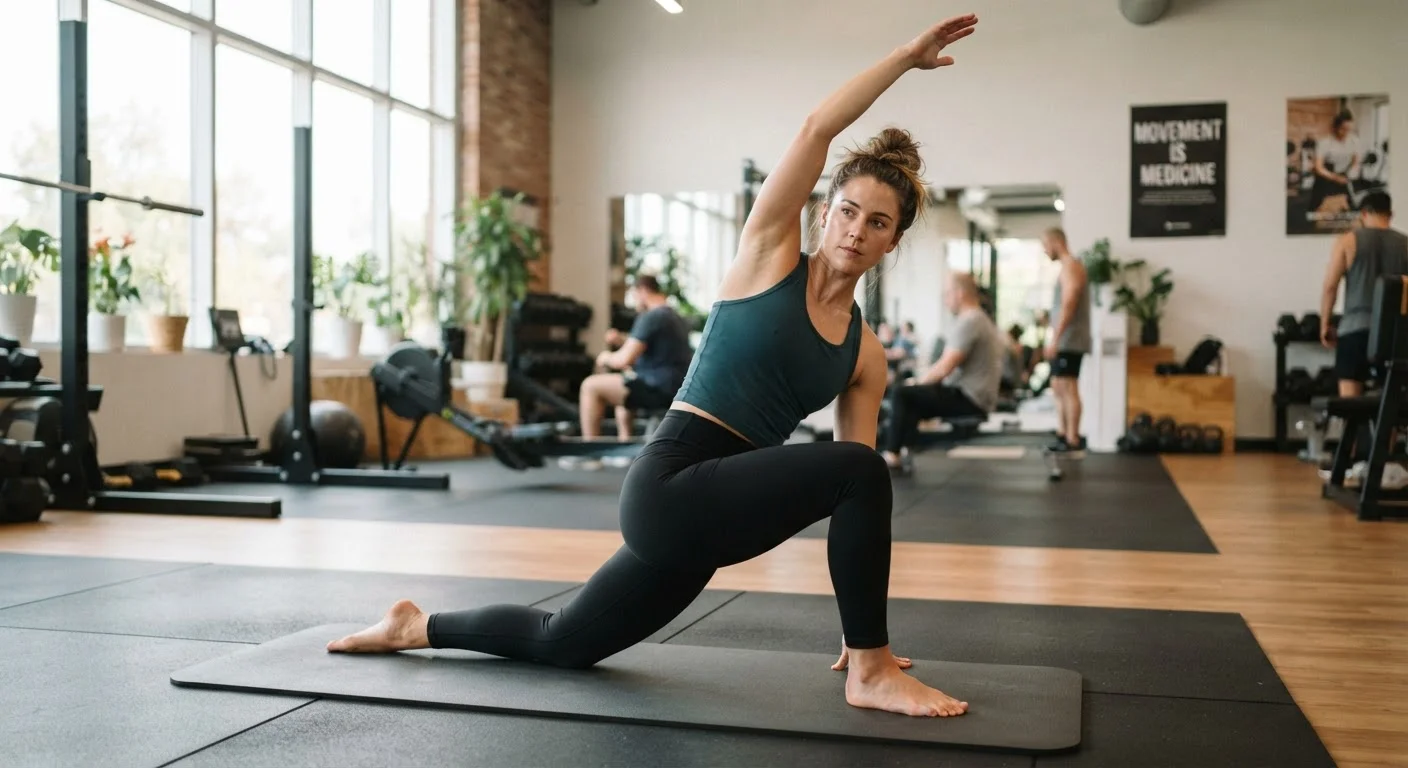
Person performing a pre-workout hip flexor stretch in a bright, minimalist gym space

Key Takeaways

Checking your physical and mental readiness before each session reduces injury risk and improves training quality.
Hydration, sleep quality, and prior soreness are measurable signals that should influence your session plan.
A structured warm-up — not just a few stretches — primes joints, muscles, and the nervous system for load.
Mobility screens help you catch restrictions before they become compensations under load.
Adjusting intensity based on readiness is a training skill, not a sign of weakness.
15–30 min

Summary

22 items · 15–30 minutes

Why a Pre-Training Readiness Check Matters

Most training injuries don't happen because of a single bad movement — they accumulate from repeated sessions where fatigue, poor preparation, or restricted mobility goes unaddressed. A structured readiness check before each strength or flexibility session helps you catch those warning signs early and adjust accordingly.

This checklist is designed for anyone working through a resistance training or flexibility program, from beginners building their first routine to more experienced lifters managing higher training loads. If you're still getting familiar with core training concepts, our strength and flexibility training glossary covers the foundational terminology referenced throughout this guide.

Think of this checklist as a brief pre-flight check. It takes 15 to 30 minutes, and the information you gather directly shapes how you approach that day's session — not whether you train, but how you train.

Sharp or Joint Pain Is a Stop Signal

This checklist is designed to optimize readiness, not override pain. If you experience sharp, stabbing, or joint-specific pain during any mobility screen or warm-up movement, stop and do not proceed with loading that pattern. Persistent or worsening pain during exercise is a reason to consult a qualified healthcare or sports medicine professional — not to push through.

What to Check — and How to Use This List

Work through the four groups below in order before you begin your warm-up sets or mobility work. Each item is assigned a priority level: must items are non-negotiable for safe training; should items are strongly recommended; and nice-to-have items can enhance your session when time and conditions allow.

If you find multiple "must" flags in the same session — significant sleep deficit, acute soreness in a target muscle group, and restricted joint mobility, for example — that's a signal to reduce load, substitute movements, or treat the session as active recovery. This is especially relevant if you're new to the gym environment; our first gym session checklist covers broader logistical preparation that complements this readiness protocol.

Recovery & Baseline Status

Assess sleep quality from the previous night — aim to identify whether you had at least 7 hours of reasonably uninterrupted sleep before a high-intensity session. Must
Rate your overall fatigue on a simple 1–10 scale before changing clothes; a score of 7 or higher is a signal to reduce planned volume or intensity. Must
Check for acute muscle soreness in any target muscle group — distinguish between mild delayed-onset muscle soreness (DOMS) and sharper, joint-specific pain. Must
Note your mood and stress level, as high psychological stress measurably affects motor control and perceived exertion during training. Should
Review your training log from the previous session to confirm you're not scheduling the same movement pattern on back-to-back days without adequate recovery. Should

Nutrition & Hydration

Confirm you've consumed a balanced meal or snack within an appropriate window before your session — typically 1 to 3 hours prior depending on meal size and individual tolerance. Must
Check urine color before you start — pale yellow indicates adequate hydration; dark yellow is a prompt to drink water before beginning your warm-up. Must
Have a water bottle within reach for the session to support consistent fluid intake between sets. Should
If training lasts longer than 60 minutes, plan for a small carbohydrate source to support sustained energy during the session. Nice to have

Mobility & Joint Readiness

Perform a brief overhead reach test — raise both arms straight overhead and note any asymmetry, restriction, or discomfort in the shoulders or thoracic spine. Must
Complete a bodyweight squat screen — lower slowly to comfortable depth and check for heel rise, knee cave, or forward torso lean that exceeds your baseline. Must
Check hip hinge mechanics with a hip hinge drill using a dowel or wall for feedback before loading deadlift or hinge-pattern exercises. Must
Assess ankle dorsiflexion (the ability to flex the foot upward) by performing a wall ankle mobility test — restriction here commonly contributes to squat compensations. Should
Perform a controlled spinal rotation check in a seated or standing position to confirm no acute stiffness or pain before spinal loading. Should

Warm-Up Execution

Begin with 5 minutes of low-intensity, continuous movement — walking, cycling, or light rowing — to raise core temperature and increase blood flow to working muscles. Must
Include dynamic stretching (controlled movement through range of motion) rather than static holds as the primary warm-up modality before strength work. Must
Perform 2–3 progressive warm-up sets with significantly reduced load before working sets on any compound lift such as a squat, press, or deadlift. Must
Activate target muscle groups with low-load isolation drills — for example, glute bridges before squats or band pull-aparts before pressing — to improve neuromuscular recruitment. Should
Include a brief breathing reset — 3 to 5 slow diaphragmatic breaths — to engage the core and calm the nervous system before your first working set. Should
Review your planned session cues or movement reminders to refresh technique focus points before loading. Nice to have
Use a foam roller or other self-myofascial release tool on areas flagged during your mobility screen to temporarily improve tissue quality before dynamic work. Nice to have

Tools That Support Your Readiness Routine

You don't need equipment to run through this checklist, but a few basic tools make some checks more reliable and the warm-up more effective.

Required

Training Log (paper or app)

Tracks previous session details so you can review recovery status, loading history, and progressive changes before today's session.

Required

Water Bottle

Keeps hydration accessible throughout the session to maintain fluid balance during rest periods.

Optional

Foam Roller or Massage Ball

Supports self-myofascial release on restricted areas identified during the mobility screen portion of your warm-up.

Optional

Resistance Band (light)

Used for targeted muscle activation drills — such as banded clamshells or pull-aparts — during the warm-up phase.

Optional

Dowel or Broomstick

Provides tactile feedback during overhead reach tests and hip hinge drills to help you identify form deviations before loading.

For sessions that include significant flexibility work — particularly if you practice yoga or similar disciplines — the preparation principles in our pre-yoga preparation guide are a useful companion to the mobility and breathing checks here.

This article is for general informational and educational purposes only and is not a substitute for professional medical advice, diagnosis, or treatment. Consult a qualified healthcare provider before beginning or significantly changing an exercise program, particularly if you have a pre-existing health condition, injury history, or are in a special population group such as pregnancy, older adulthood, or youth.

Fitness & Movement Editorial Team is the collective byline for our editorial team and contributor network. Articles published under this byline or an editorial pen name are researched, written, and reviewed according to our editorial standards for clarity, consistency, and independence before publication.

View all articles by Fitness & Movement Editorial Team →
Disclaimer: The content on this site is for informational purposes only and is not a substitute for professional advice. Always consult a qualified professional for guidance specific to your situation.