

Key Takeaways
Why Calcium Matters and How Much You Need
Calcium is the most abundant mineral in the human body. It plays a central role in building and maintaining bone density, enabling muscle contractions, supporting nerve signaling, and assisting with blood clotting. Approximately 99% of the body's calcium is stored in bones and teeth, while the remaining 1% circulates in the bloodstream performing these critical functions.
The Recommended Dietary Allowance (RDA) for most American adults is 1,000 mg of calcium per day, rising to 1,200 mg for women over 50 and adults over 70, according to the National Institutes of Health Office of Dietary Supplements. Many Americans fall short of this target — and the assumption that dairy is required to close that gap is simply not accurate.
This article is for general informational purposes only and is not a substitute for personalized medical or nutritional advice. Consult a qualified healthcare professional for guidance specific to your health needs.
Understanding Calcium Absorption
Not all dietary calcium is absorbed equally. The body typically absorbs between 25% and 35% of calcium from most food sources, but this figure shifts based on several key factors:
- Vitamin D: Without adequate vitamin D, the intestines cannot efficiently absorb calcium. These two nutrients work as a team.
- Oxalates and phytates: Naturally occurring compounds in foods like spinach, beet greens, and wheat bran bind to calcium and limit absorption. Spinach is high in calcium but low in bioavailability for this reason.
- Meal distribution: The body absorbs calcium more effectively in smaller amounts — ideally no more than 500 mg at one time. Spreading intake across meals is more effective than a single large dose.
- Age and digestive health: Absorption efficiency decreases with age, making consistent dietary intake increasingly important over time.
Low-Oxalate Greens Are Your Best Bet
When choosing leafy greens for calcium, prioritize kale, bok choy, collard greens, and broccoli over spinach or beet greens. The lower oxalate content in these vegetables means a meaningfully higher percentage of their calcium reaches your bloodstream. Lightly cooking them can further reduce oxalate levels.
Best Non-Dairy Food Sources of Calcium
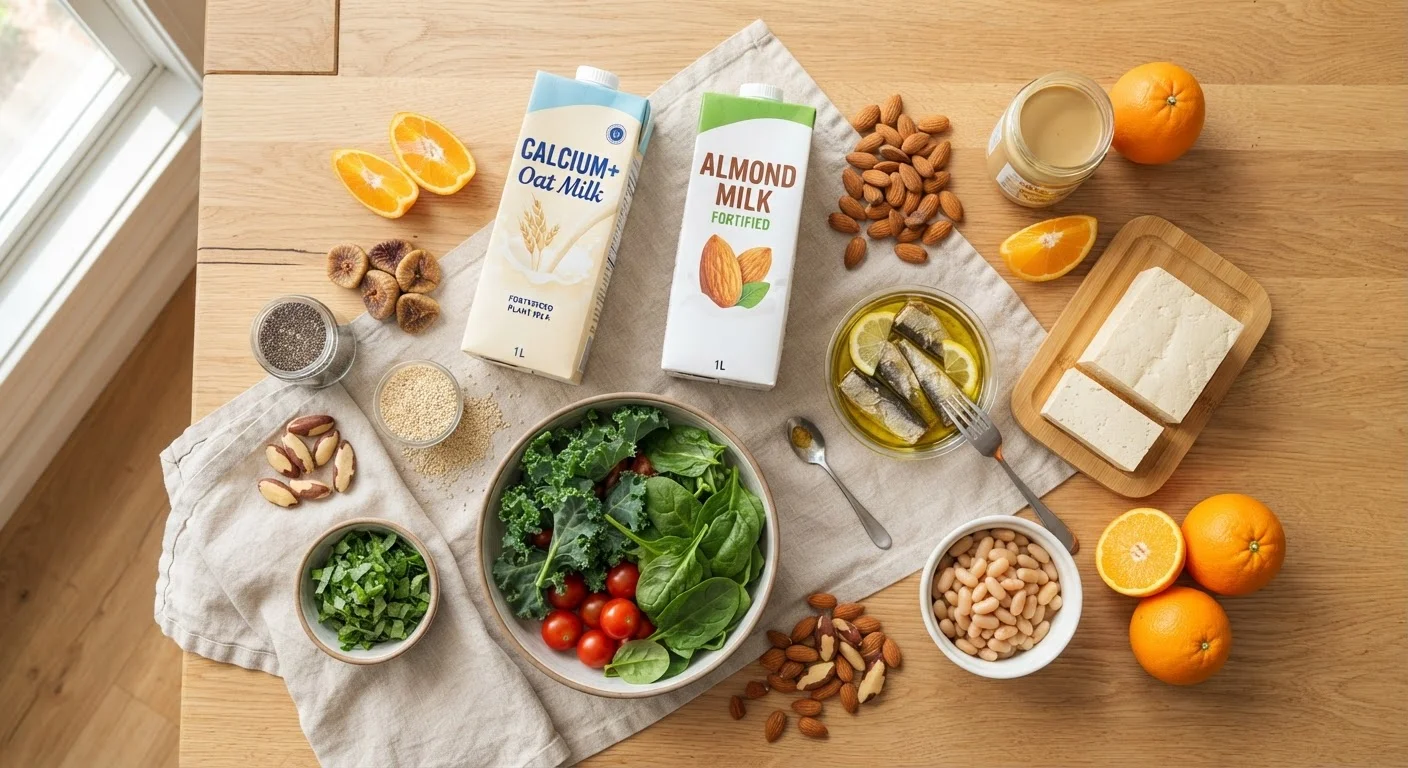
A wide range of foods provide substantial, bioavailable calcium without any dairy required. Here are the most impactful categories:
- Fortified plant-based milks
- Soy, oat, almond, and rice milks are commonly fortified to match or exceed the calcium in cow's milk — typically 300–350 mg per cup. Shake the carton before pouring, as calcium can settle.
- Canned fish with soft bones
- Canned sardines and canned salmon with bones are among the richest non-dairy calcium sources, providing roughly 350 mg and 180–210 mg per 3-oz serving, respectively.
- Tofu (calcium-set)
- Tofu made with calcium sulfate can deliver 200–400 mg per half-cup. Check the label — not all tofu is calcium-set.
- Low-oxalate leafy greens
- Kale, bok choy, broccoli, and collard greens have relatively high calcium bioavailability compared to high-oxalate greens like spinach. Collard greens provide approximately 265 mg per cooked cup.
- Legumes and seeds
- White beans (~130 mg per half-cup), edamame (~98 mg per half-cup), and sesame seeds (~88 mg per tablespoon of tahini) contribute meaningfully to daily totals.
- Fortified cereals and orange juice
- Many ready-to-eat cereals and some orange juice varieties are fortified with 100–1,000 mg of calcium per serving. Check nutrition labels carefully for actual amounts.
Step-by-Step: Building a Dairy-Free Calcium Plan
Use the following steps to systematically build calcium into your daily eating pattern without relying on dairy products.
Estimate your current calcium intake
Before making changes, get a rough baseline. For two to three typical days, note the calcium-containing foods you already eat. Use nutrition labels or a general food reference (such as the USDA FoodData Central database) to estimate milligrams per serving. Compare your total to the RDA for your age and sex group.
Identify two or three anchor calcium sources that fit your diet
Choose foods you genuinely enjoy and already eat, or are willing to eat regularly. A fortified plant milk used daily in coffee and cereal, combined with canned sardines twice a week and regular servings of cooked bok choy or kale, can cover a substantial portion of daily calcium needs. Anchor foods are the backbone of your plan.
Distribute calcium across at least two to three meals
Plan your food choices so calcium sources appear at breakfast, lunch, and dinner rather than all in one sitting. This takes advantage of the body's absorption limits — roughly 500 mg at a time — and results in more calcium actually being used by your body over the course of the day.
Support absorption with adequate vitamin D
Review your vitamin D intake. Fatty fish (salmon, mackerel), fortified plant milks, and fortified cereals provide dietary vitamin D. Safe sun exposure also contributes. If you are unsure of your vitamin D status, a blood test ordered by your healthcare provider can offer clarity before considering any supplementation.
Reassess and adjust after two to three weeks
After following your plan for a few weeks, revisit your food log estimate. Are your anchor foods appearing consistently? Are you meeting your general calcium target across most days? Adjust portion sizes or add a new source if gaps remain. Small, sustainable changes are more effective than dramatic short-term overhauls.
If you have a medical condition affecting calcium metabolism — such as kidney disease, celiac disease, or hypoparathyroidism — work directly with your healthcare provider before making significant dietary changes.
What to Watch Out For
A few common pitfalls can undermine an otherwise solid dairy-free calcium strategy:
Supplements Are Not a Simple Substitute
Calcium supplements are not equivalent to food sources and should not be the first line of strategy for most healthy adults. Some research has raised questions about very high supplemental calcium intake and cardiovascular health, though findings are still debated. Always consult a healthcare professional before beginning any calcium supplement regimen.
- Relying solely on spinach: Despite popular belief, spinach is a poor practical source of calcium due to its high oxalate content, which blocks absorption significantly.
- Ignoring vitamin D status: Calcium without sufficient vitamin D is far less effective. Sun exposure and vitamin D-rich foods (fatty fish, fortified foods) support absorption.
- Over-supplementing: Calcium supplements may be appropriate for some individuals, but taking very high doses — particularly from supplements — has been associated with potential health concerns in some research. Discuss supplement use with a healthcare provider before starting.
- Not reading labels on plant milks: Brands vary widely in their calcium fortification levels. Always verify the label rather than assuming equivalence to dairy milk.