

Key Takeaways
Option A
Folate
The naturally occurring form found in whole foods.
Best for: People who prioritize getting their B-vitamin intake from a varied, whole-food diet rich in vegetables and legumes.
Option B
Folic Acid
The synthetic form used in supplements and fortified foods.
Best for: People with increased B9 requirements — particularly those who are pregnant or planning to become pregnant — who may need reliable, consistent intake beyond diet alone.
If you eat a varied, vegetable-rich diet and have no identified genetic variants
Folate
Whole-food sources provide folate alongside other nutrients and fiber, making dietary intake a naturally balanced approach for most healthy adults.
If you are pregnant or planning to become pregnant
Folic Acid
Most public health guidelines recommend supplemental folic acid before and during early pregnancy due to its well-established role in reducing neural tube defect risk. Consult your healthcare provider for personalized guidance.
If you carry an MTHFR gene variant affecting folic acid conversion
Folate
Methylated folate (5-MTHF) supplements bypass the conversion step that MTHFR variants impair — speak with a healthcare professional before making changes to your supplement routine.
If you rely heavily on processed or refined grain products
Folic Acid
Mandatory fortification of enriched grains with folic acid means these foods provide consistent, measurable B9, supplementing what may be a diet low in whole-food folate sources.
What Exactly Is Vitamin B9?
Folate and folic acid are both forms of vitamin B9, an essential water-soluble nutrient your body cannot produce on its own. B9 plays a central role in DNA synthesis and repair, red blood cell formation, and the metabolism of amino acids. Because it is water-soluble, the body does not store large reserves, making regular dietary intake important.
The terms are often used interchangeably in everyday conversation, but they describe chemically distinct compounds that behave differently once inside the body. Understanding the distinction helps you make more informed choices about diet and supplementation — particularly during life stages when B9 needs are elevated.
| Criterion | Folate | Folic Acid |
|---|---|---|
| Origin | Naturally occurring in food | Synthetic, manufactured form |
| Primary sources | Leafy greens, legumes, citrus | Supplements, fortified grains |
| Chemical form | Polyglutamate (reduced) | Fully oxidized monoglutamate |
| Bioavailability | Variable; ~50–80% absorbed | Generally higher when fasted |
| Conversion to active form | Direct pathway to 5-MTHF | Multiple enzymatic steps required |
| MTHFR gene sensitivity | Less affected by variant | Conversion impaired in some people |
| Pregnancy recommendation | Beneficial but may be insufficient alone | Widely recommended in supplement form |
How Each Form Is Processed by the Body
Folate from food arrives in a polyglutamate form that requires enzymatic breakdown in the small intestine before absorption. Once absorbed, it is rapidly converted into 5-methyltetrahydrofolate (5-MTHF) — the biologically active form circulating in the blood.
Folic acid, the synthetic version, is a fully oxidized compound that the body must convert into 5-MTHF through a series of enzymatic steps. This process is generally efficient, but it depends on the enzyme dihydrofolate reductase (DHFR). High doses of folic acid can temporarily exceed the enzyme's capacity, leading to unmetabolized folic acid appearing in the bloodstream. Researchers are still studying what, if any, long-term implications this may have.
Importantly, some individuals carry variants of the MTHFR gene that reduce their ability to complete the final conversion step. For these individuals, a pre-methylated supplement form (5-MTHF) may be more appropriate — though anyone considering this change should first discuss it with a qualified healthcare professional.
Dietary Sources and Fortification
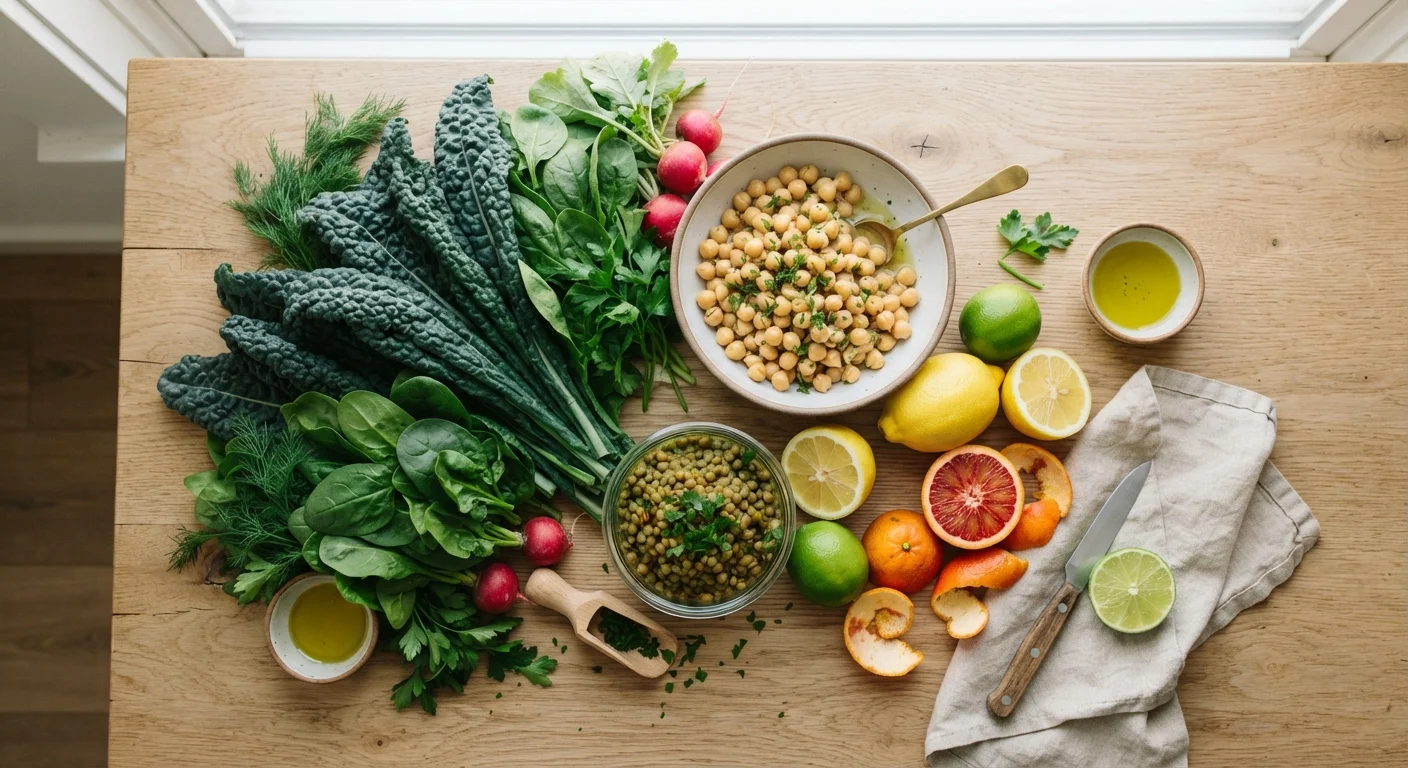
Natural folate is abundant in dark leafy greens such as spinach and romaine lettuce, legumes including lentils and black beans, asparagus, broccoli, avocado, and citrus fruits. Liver is also among the richest animal-source contributors, though it is eaten infrequently in most American households.
Folic acid enters the American diet primarily through fortified foods. Since 1998, the U.S. Food and Drug Administration has required folic acid fortification of enriched grain products — including bread, pasta, rice, and breakfast cereals — to help reduce the prevalence of neural tube defects in newborns. This public health intervention has been widely credited with meaningful reductions in those birth defect rates.
For many Americans, daily B9 intake comes from a combination of both sources simultaneously, without deliberate effort.
Why the Difference Matters for Everyday Decisions
For most healthy adults eating a reasonably varied diet, the body handles both forms adequately. However, several situations call for closer attention:
- Pregnancy planning: Major health organizations, including the Centers for Disease Control and Prevention, recommend that people who could become pregnant consume adequate folic acid daily to reduce the risk of neural tube defects. Supplementation is typically advised because dietary folate alone may not consistently reach target levels during the critical early weeks of fetal development.
- MTHFR variants: Individuals with reduced enzyme activity may benefit from methylated folate supplements rather than standard folic acid. A healthcare provider can order genetic testing and interpret results in context.
- Certain medications: Some drugs, including methotrexate and certain anticonvulsants, interfere with folate metabolism and may require medical management of B9 status.
This article is for general informational and educational purposes only and does not constitute medical advice. Always consult a qualified healthcare professional before making changes to your diet, supplementation routine, or medication regimen — especially during pregnancy or if you have an existing health condition.