

Key Takeaways
Why Macronutrient Myths Persist
Nutrition headlines tend to oversimplify complex science, turning nuanced research findings into sweeping rules: avoid fat, cut carbs, eat more protein. These messages spread quickly and stick around long after the evidence has moved on. Understanding the actual roles that carbohydrates, proteins, and fats play — and how they interact — makes it easier to evaluate the next wave of dietary claims before acting on them.
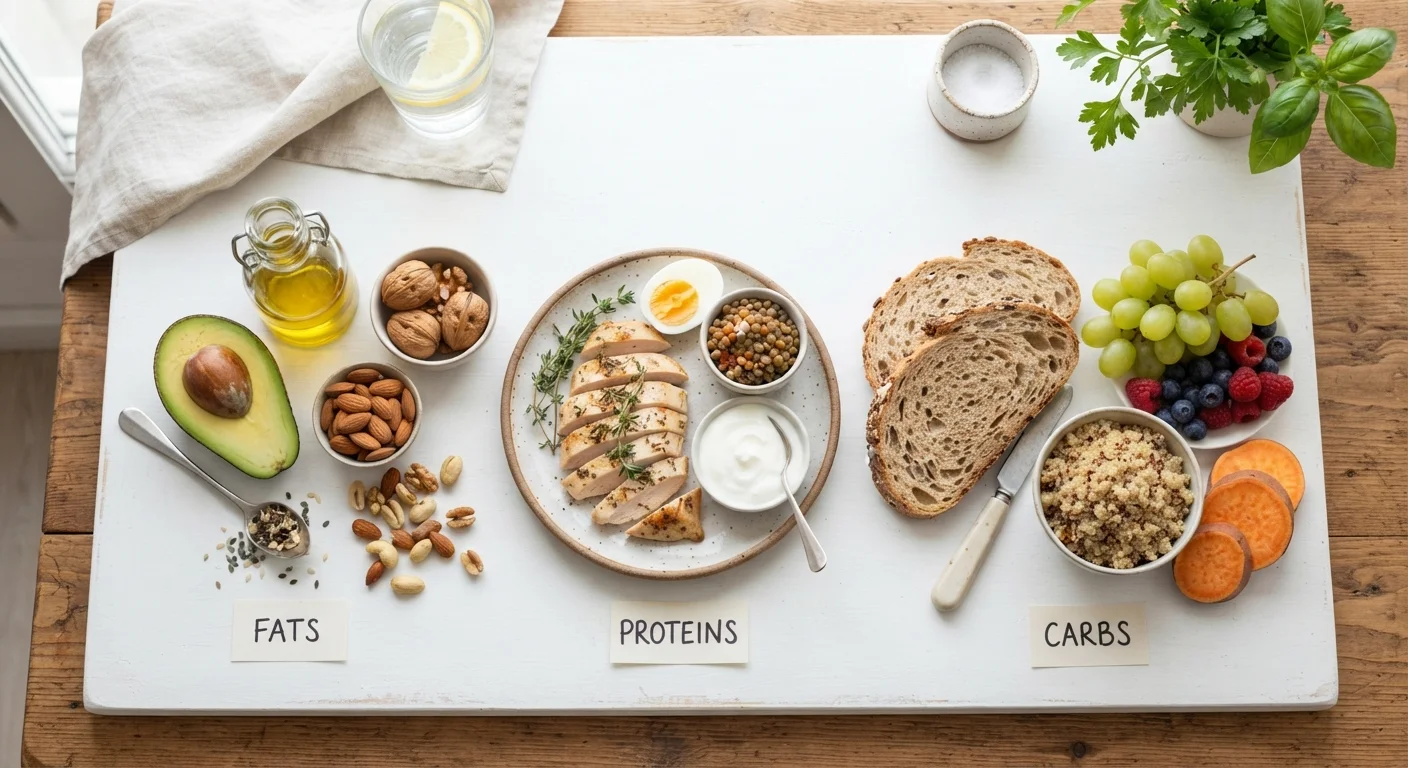
The three macronutrients are each required for normal body function. None is a villain, and none is a cure-all. Similar patterns of oversimplification show up in how people think about body weight and health more broadly. Breaking down the most common macro myths is a practical starting point for building a more accurate nutritional foundation.
Myth
Eating fat makes you fat.
Fact
Dietary fat does not directly convert into body fat. Weight change is primarily driven by overall calorie balance, not fat intake alone.
The idea that eating fat makes you gain fat became widespread during the low-fat diet era of the 1980s and 1990s. In reality, all macronutrients — carbohydrates, protein, and fat — contribute calories, and consuming more calories than the body uses over time is what leads to fat storage, regardless of the source.
Fat is also essential for absorbing fat-soluble vitamins (A, D, E, and K), supporting hormone production, and maintaining cell membrane integrity. What matters more than total fat intake is the type of fat consumed. Unsaturated fats found in foods like olive oil, avocados, and nuts are associated with favorable health outcomes, while heavily processed trans fats have been widely linked to cardiovascular risk. For a deeper look, see our guide to dietary fat.
Myth
Carbohydrates are inherently fattening and should be avoided.
Fact
Carbohydrates are the body's primary fuel source. Their effect on weight and health depends heavily on type, quantity, and overall dietary context.
Carbohydrates became a popular target after the rise of low-carb diets, but lumping all carbs together misrepresents the science. Refined carbohydrates — such as white bread, sugary beverages, and many ultra-processed snacks — are digested rapidly and offer little nutritional value beyond calories. Whole-food carbohydrate sources like legumes, vegetables, fruit, and whole grains supply fiber, vitamins, and minerals alongside their energy.
Fiber, technically a carbohydrate, supports digestive health and helps regulate blood sugar. Cutting carbohydrates entirely can mean losing these benefits. As noted in our article on eliminating macronutrients, extreme restriction often creates new dietary challenges without delivering the expected long-term results.
Myth
More protein always means more muscle.
Fact
Protein supports muscle repair and growth, but consuming far beyond what the body can use does not translate into additional muscle — it simply adds calories.
Protein is critical for tissue repair, enzyme function, immune support, and — when paired with resistance exercise — muscle protein synthesis. However, the body can only utilize a certain amount of protein for muscle-building purposes at a given time. Excess protein is broken down and either used for energy or stored, like any other caloric surplus.
Individual protein needs vary based on age, activity level, body size, and overall health. Rather than chasing very high protein targets, most people benefit more from consistent intake spread across meals paired with regular physical activity. For a full overview of how the three macronutrients work together, see The Complete Guide to Understanding Macronutrients.
Myth
All calories are identical regardless of which macronutrient they come from.
Fact
While a calorie is a unit of energy, different macronutrients affect hunger hormones, digestion speed, and metabolic processes differently.
The concept that "a calorie is a calorie" is a useful simplification but misses important metabolic nuance. Protein, for instance, has a higher thermic effect — the body uses more energy to digest and process it compared to fat or carbohydrates. Protein and fiber-rich carbohydrates also tend to promote greater satiety, meaning they help people feel full longer.
Fat slows gastric emptying, which can moderate blood sugar spikes when eaten alongside carbohydrates. These differences don't mean any single macronutrient is superior, but they do explain why the composition of a diet influences hunger, energy levels, and overall food intake — not just the total calorie count. These distinctions are also worth keeping in mind when reading a nutrition label.
Myth
Protein is only important for athletes and bodybuilders.
Fact
Protein is essential for everyone — it supports immune function, enzyme production, wound healing, and healthy aging across all life stages.
While athletes do have higher protein needs to support training and recovery, protein plays fundamental roles in everyday bodily functions for all people. Enzymes and many hormones are made from protein. Antibodies that fight infection are proteins. Skin, hair, and connective tissue all require ongoing protein for maintenance and repair.
Older adults in particular may benefit from paying attention to protein intake, as muscle mass naturally decreases with age — a process called sarcopenia. General dietary guidance suggests that protein needs increase slightly with age and activity level, reinforcing that this macronutrient matters well beyond the gym.
Putting the Evidence Into Everyday Practice
Correcting these myths is useful, but the more important question is what to do with more accurate information. A few practical principles follow from the evidence:
- Include all three macronutrients in regular meals rather than eliminating any one group. Each serves roles the others cannot fully replace.
- Focus on food quality within each macronutrient category. Whole grains over refined grains, unsaturated fats over heavily processed ones, and varied protein sources that also provide fiber and micronutrients.
- Be skeptical of dramatic claims about any single nutrient being responsible for weight gain, disease, or miraculous health benefits. Nutrition science rarely works that cleanly.
Individual needs vary based on age, health status, activity level, and other factors. If you have specific dietary concerns or health conditions, a registered dietitian can provide personalized, evidence-based guidance. General information like this article is a starting point — not a substitute for professional care.
This Is General Information, Not Medical Advice
The information in this article is intended for general educational purposes only. It does not constitute medical or dietary advice. Individuals with specific health conditions, dietary restrictions, or nutritional concerns should consult a qualified healthcare professional or registered dietitian before making significant changes to their diet.
This article is for informational purposes only and does not constitute medical or dietary advice. Consult a qualified healthcare professional for personalized guidance.