

Key Takeaways
Start here
Why Most Eating Plans Fall Apart
Next
The Basic Plate Framework
Then
Applying the Framework to Real Meals
Finally
Making It Stick Over Time
Why Most Eating Plans Fall Apart
The appeal of a structured diet plan is understandable: clear rules feel manageable at the start. The problem is that most structured plans are built around restriction — entire food groups eliminated, specific numbers to hit every day, or foods ranked as "good" versus "bad." That framing creates a compliance trap. One meal that deviates from the rules can feel like failure, and perceived failure often leads to abandoning the plan entirely.
Research in behavioral nutrition consistently points to the same culprit: rigidity. When eating habits are built around what you can't have rather than what you can build, they're fragile. A sustainable approach works the other way — it starts with a flexible structure you can apply to almost any meal, in any setting, without tracking apps or special foods.
If you'd like to explore the mindset side of this further, reframing food as nourishment rather than moral performance is a useful companion read.
The Basic Plate Framework
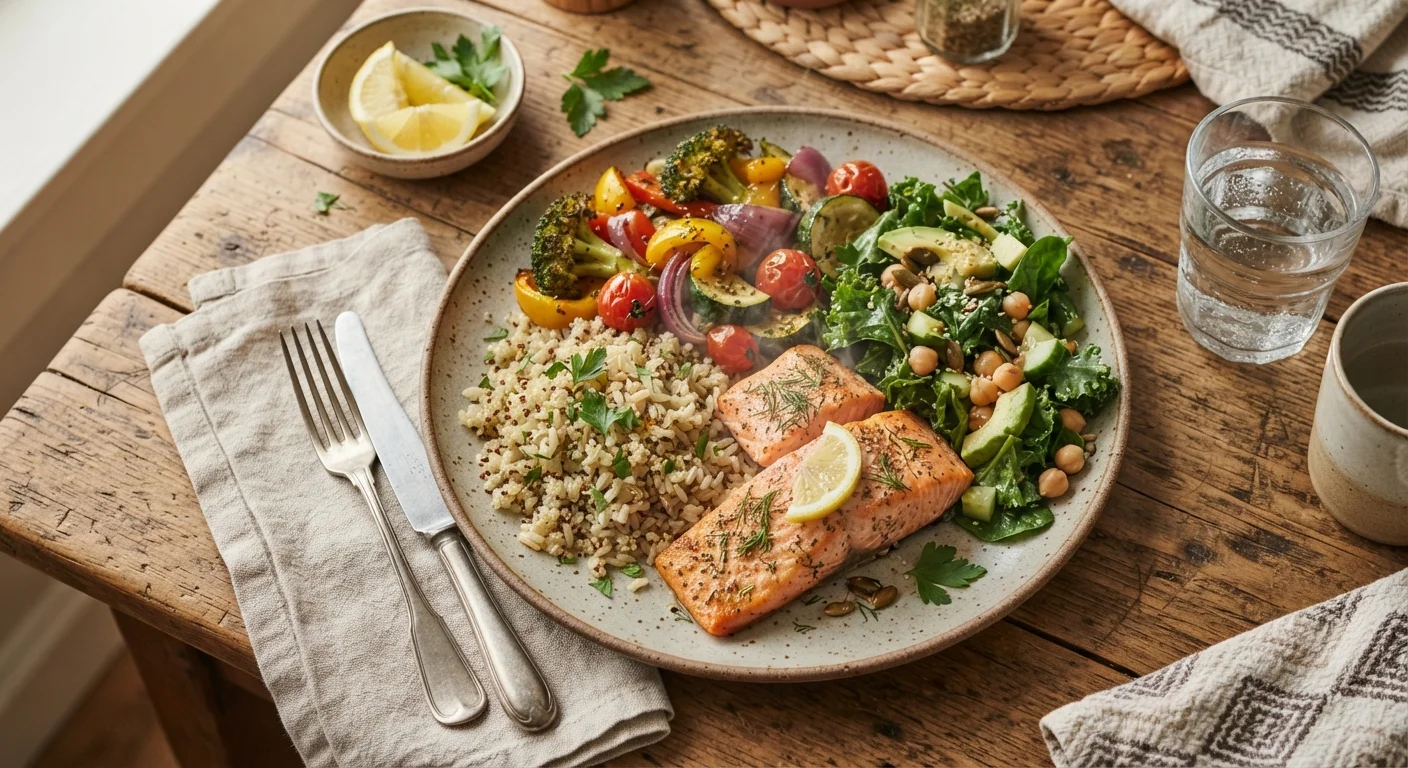
A practical plate doesn't require a nutrition degree. One widely used approach divides a standard dinner plate into rough proportions:
- Half the plate: non-starchy vegetables and fruits (leafy greens, broccoli, carrots, berries, tomatoes)
- One quarter: lean protein sources (poultry, fish, eggs, beans, tofu, low-fat dairy)
- One quarter: whole or minimally processed grains and starches (brown rice, whole wheat bread, potatoes, oats)
This isn't a rigid prescription — it's a visual anchor. The goal is proportion, not perfection. A meal that's 40% vegetables instead of exactly 50% is still a good meal. Healthy fat (olive oil used for cooking, avocado, a small handful of nuts) can be folded in naturally without designating a specific zone.
Non-starchy vegetables
Vegetables that are relatively low in carbohydrates and high in fiber and water, such as leafy greens, broccoli, peppers, and cucumbers. They form the bulk of a balanced plate without contributing large amounts of calories.
Lean protein
Protein sources that provide a significant amount of protein with relatively little saturated fat, including chicken breast, fish, eggs, legumes, and low-fat dairy.
Whole grains
Grains that retain their outer bran and germ layers, making them higher in fiber and nutrients than refined grains. Examples include whole wheat bread, brown rice, oats, and quinoa.
Dietary fiber
A type of carbohydrate found in plant foods that the body cannot fully digest. Fiber supports digestive health and helps you feel full after eating.
Healthy fats
Unsaturated fats found in foods like olive oil, avocados, nuts, and fatty fish. These fats support heart health and help the body absorb certain vitamins.
Portion proportion
The relative amount of each food group on your plate compared to the others. Focusing on proportion — rather than exact weights or calorie counts — is a practical way to balance meals.
For readers who want to understand how the three macronutrient groups — protein, carbohydrates, and fat — fit together without obsessive tracking, balancing macros at every meal without tracking every gram covers the underlying logic clearly.
Applying the Framework to Real Meals
The plate framework earns its usefulness when applied to meals you already make — not idealized versions of eating you'd see on a recipe blog. Consider a few common examples:
- Pasta night
- Reduce the pasta portion slightly and load half the bowl with a vegetable-based marinara, sautéed greens, or a side salad. Add a lean protein like ground turkey or white beans directly to the sauce.
- Takeout
- Order a protein-forward entrée, swap fries for a vegetable side when available, and eat slowly enough to notice fullness before finishing the entire portion.
- Breakfast
- A plate framework applies here too: eggs or Greek yogurt for protein, fruit or vegetables for fiber, and a modest amount of whole-grain toast or oats for sustained energy.
You don't need new recipes or exotic ingredients. The framework is a lens you apply to what you already cook and eat. For specific strategies on closing common vitamin and mineral gaps within this kind of everyday eating, see building a micronutrient-rich plate.
Start With One Meal, Not Your Whole Diet
Trying to overhaul every meal at once is one of the fastest routes to burnout. Instead, pick one meal per day — often lunch works well — and practice the plate framework there first. Once that feels natural, extend it to a second meal. Small wins compound into lasting habits.
Making It Stick Over Time
Consistency over weeks and months matters far more than any single perfect meal. A few principles help translate a good framework into a durable habit:
- Anchor to existing routines. If you eat lunch at the same time each day, that's your first opportunity to apply the plate framework — not a new meal you have to invent.
- Expect variability. Some days will be heavier in carbohydrates; others will be lighter in vegetables. A week-long view of realistic eating shows that occasional imbalances don't erase overall progress.
- Use hunger as feedback, not an obstacle. If you're consistently hungry after balanced meals, that's information — not a sign the approach is wrong. Portion sizes, protein content, and meal timing can all be adjusted. Mindful eating practices can help you tune into these signals more reliably.
Building a plate you'll actually stick with isn't about finding the perfect diet. It's about creating a default that's good enough, flexible enough, and genuinely yours. Consulting a registered dietitian is a practical next step if you have specific health conditions or nutritional goals that need personalized guidance.
This article is for general informational and educational purposes only and is not a substitute for professional medical or dietary advice. Always consult a qualified healthcare provider for guidance specific to your health needs.