

Key Takeaways
Why Start With the Breath?
Of all the entry points into mindfulness, the breath may be the most accessible. It's always with you, it requires nothing to set up, and it gives the wandering mind something concrete to return to. If you're new to the practice, our beginner's guide to mindfulness offers helpful context on what mindfulness actually is and why it resonates with so many people.
From a physiological standpoint, intentional slow breathing stimulates the vagus nerve and activates the parasympathetic nervous system — your body's built-in rest-and-digest mode. This is why a few deliberate breaths can soften tension you didn't even know you were holding. It's not mystical; it's biology. For a deeper look at what consistent practice can build over time, see our piece on breathwork and stress resilience.
What You'll Need Before You Begin
The beauty of mindful breathing is its simplicity. Still, a few light preparations can make your first session noticeably smoother.
What you will need
Not sure whether you're ready to start a mindfulness routine? Our personal readiness checklist can help you assess your starting point before diving in.
Step-by-Step: Your First Mindful Breathing Session
Follow these steps at your own pace. There's no timer to beat and no perfect outcome to achieve. The only goal is to practice paying attention — gently, without judgment. If you encounter unfamiliar terms along the way, our mindfulness glossary covers the key language simply and clearly.
Choose your position and settle in
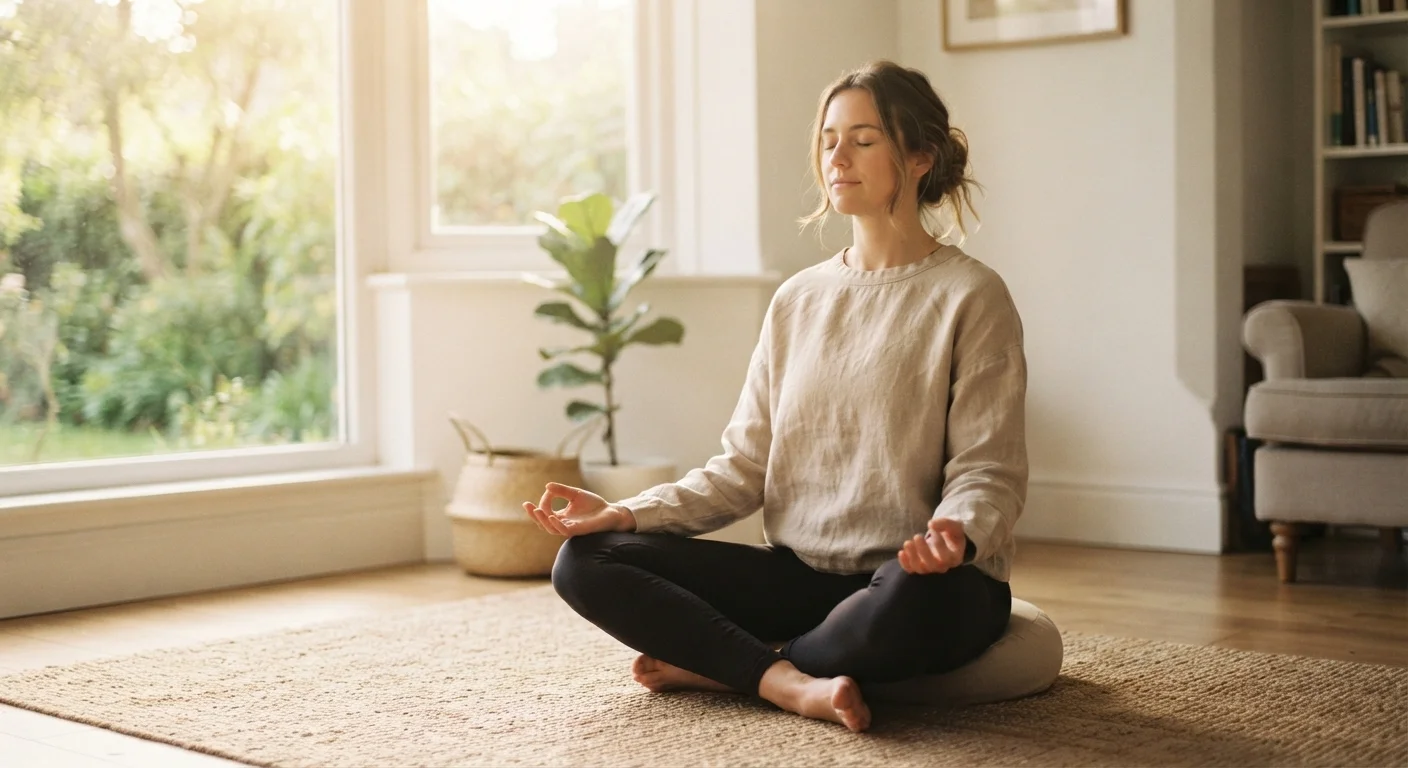
Sit in a chair with your feet flat on the floor, or cross-legged on a cushion — whichever feels stable. Rest your hands on your thighs or in your lap. You don't need to sit rigidly straight; aim for a posture that's upright but relaxed, as if a thread were gently lifting the crown of your head.
Set a simple intention — and a timer
Before you close your eyes, decide how long you'll practice. Five minutes is plenty for a first session; ten is fine if you feel ready. Set a gentle alarm so you're not checking the clock. Your intention doesn't need to be elaborate — something as simple as "I'll stay with my breath for these five minutes" is enough.
Close your eyes and take three easy breaths
Gently close your eyes. Without forcing anything, take three natural breaths — inhale through your nose, exhale through your nose or mouth. Don't try to breathe deeply yet; just let the body do what it does. These opening breaths signal to your nervous system that it's safe to downshift.
Find your anchor point in the breath
Choose one physical sensation to focus on: the cool air entering your nostrils, the slight rise of your chest or belly, or the pause between inhale and exhale. This is your anchor — the place your attention will return to whenever it wanders. There's no right answer; pick whichever feels most noticeable to you right now.
Breathe naturally and observe without control
Allow your breath to find its own rhythm. You don't need to slow it down or deepen it — just observe it as it is. Notice the qualities: Is it shallow or full? Smooth or slightly uneven? You're not grading it; you're simply watching. If thoughts arise (and they will), acknowledge them without engaging, and return your attention to the anchor sensation.
Gently redirect whenever your mind wanders
At some point — probably within seconds — your mind will drift to a to-do list, a memory, or a random thought. This is not a failure; it's the moment the practice actually begins. When you notice the drift, simply note it (some people mentally say "thinking" or "wandering") and guide your attention back to the breath. Each redirection builds the same mental muscle that mindfulness practice is designed to strengthen.
Close the session slowly and with intention
When your timer sounds, don't immediately jump up. Take two or three deliberate breaths, gently wiggle your fingers and toes, and open your eyes slowly. Pause for a moment before reaching for your phone or resuming activity. This brief transition helps you carry a thread of the calm you've cultivated into whatever comes next.
Common Stumbling Blocks — and How to Meet Them
Almost everyone who tries mindful breathing for the first time runs into the same few challenges. Knowing what to expect helps you stay with the practice instead of concluding it "isn't working."
- "My mind won't stop racing." This is normal and expected. The point of the practice isn't to empty your mind; it's to notice when attention has drifted and bring it back. Each return is a small mental rep.
- "I can't find a comfortable position." Adjust freely. Mindful breathing works in a chair, on a couch, or even lying down. Physical ease supports focus.
- "I fell asleep." That can happen, especially if you're chronically tired. Try sitting slightly more upright, or practice at a time of day when you're more alert.
- "I don't feel calmer afterward." Effects vary. Some people notice an immediate shift; others feel subtler benefits over repeated sessions. Give it time before drawing conclusions.
If mindful breathing feels like the right fit but you're curious about other foundational techniques, body scan meditation is a complementary practice worth exploring next.
Making It a Habit That Sticks
The single most reliable way to build a mindful breathing practice is to attach it to something you already do consistently — morning coffee, the few minutes before a work call, or the transition from work to home. Even two to three sessions per week will produce more benefit than a single long session done occasionally. If you're also exploring movement-based mindfulness, our guide on what to expect before your first yoga class pairs well with this practice.
This article is for general informational and educational purposes only and does not constitute medical advice. If you have a health condition affecting your breathing, anxiety, or nervous system, please consult a qualified healthcare professional before beginning any new wellness practice.