

Key Takeaways
What Metabolism Actually Means
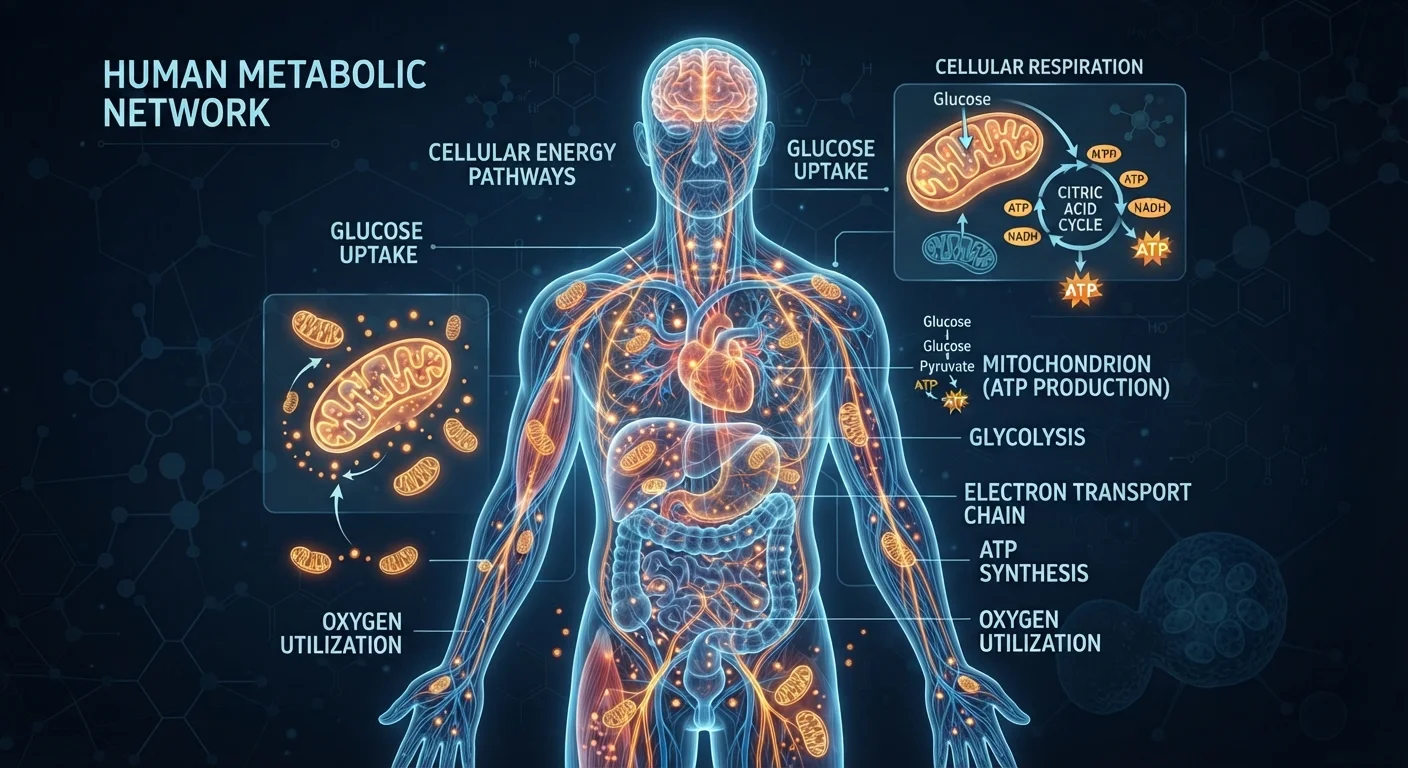
The word "metabolism" gets used loosely - often as a shorthand for why someone's body responds to food the way it does. In precise terms, metabolism refers to the entire set of chemical reactions in the body that convert nutrients into energy and building blocks for cellular function. It encompasses everything from breaking down glucose to synthesize ATP, to building proteins, to regulating hormones.
A more practical way to think about it: your body is constantly spending energy even when you're completely still. The energy required to maintain basic physiological functions - breathing, circulation, cell repair, temperature regulation - is called your basal metabolic rate (BMR). BMR typically accounts for 60-70% of total daily energy expenditure in sedentary individuals. Physical activity adds to that, and digesting food contributes a smaller fraction known as the thermic effect of food.
Understanding this foundation helps clarify why simple narratives about "fast" or "slow" metabolism are incomplete. Metabolism isn't a single dial - it's a system shaped by body size, composition, age, genetics, hormones, and behavior all at once.
Common Myths, Corrected
Misconceptions about metabolism circulate widely, often rooted in a kernel of truth that gets overstretched. The myth-and-fact pairs below address the most persistent ones, drawing on current research to offer clearer, more accurate framing.
Myth
Some people are just born with a fast metabolism that lets them eat anything without gaining weight.
Fact
While genetic variation in metabolic rate exists, the differences between individuals are smaller than popular belief suggests, and many other factors - including activity level, muscle mass, and behavior - play equally significant roles.
The idea of a metabolic "lottery" is culturally compelling, but research consistently shows that total daily energy expenditure varies far less between people of similar size than most assume. A landmark study published in Science in 2021 found that when body composition is controlled for, metabolic rates cluster within a fairly predictable range across adulthood. What genuinely varies is how people move throughout the day - including non-exercise activity like fidgeting and standing - which can account for hundreds of calories in daily difference.
Myth
Eating small, frequent meals "keeps your metabolism running" and burns more calories throughout the day.
Fact
Meal frequency has no meaningful effect on total metabolic rate. The thermic effect of food - energy spent digesting - is proportional to total calories consumed, not how those calories are distributed across meals.
The notion that eating every two to three hours "stokes the metabolic fire" has been widely popularized in fitness culture, but clinical evidence does not support it. Multiple controlled trials comparing meal frequency find no significant difference in total energy expenditure between three meals and six meals when calorie and macronutrient content is equal. Meal timing and frequency may affect satiety and energy levels for some individuals, but these are personal responses - not metabolic mechanisms.
Myth
A slow metabolism is the main reason most people gain weight.
Fact
Clinically significant metabolic disorders, such as hypothyroidism, are relatively uncommon. For most people, weight changes reflect a complex interplay of energy intake, physical activity, sleep, stress, medications, and environment - not a faulty metabolic engine.
Attributing weight gain to a slow metabolism can feel validating, and in some cases a metabolic condition genuinely is a contributing factor. However, research suggests that people who gain weight often experience a mild increase in metabolic rate as body mass rises, because larger bodies require more energy to maintain. The more common drivers of weight change are behavioral and environmental: changes in diet quality, reduced movement, disrupted sleep, and chronic stress all influence energy balance in ways that accumulate over time. See our explainer on energy balance for a fuller picture of what drives weight change.
Myth
Certain "metabolism-boosting" foods and supplements can significantly increase fat burning.
Fact
Substances like caffeine and capsaicin produce small, transient increases in metabolic rate, but no food or supplement has demonstrated a clinically meaningful long-term effect on weight through metabolic stimulation alone.
Green tea extract, cayenne pepper, and various thermogenic supplements are frequently marketed as metabolism boosters. While some ingredients do produce measurable short-term effects - caffeine, for instance, can modestly raise metabolic rate for a few hours - the magnitude is small and the effect diminishes with regular use as the body adapts. No regulatory body has approved any supplement as a proven weight-loss treatment based on metabolic enhancement, and several heavily marketed products carry real safety concerns. Whole dietary patterns, adequate sleep, and regular physical activity have far stronger and more durable effects on metabolic health.
Myth
Metabolism slows dramatically after age 40, making weight management nearly impossible.
Fact
Research published in 2021 indicates that metabolic rate remains relatively stable from roughly ages 20 to 60, then declines modestly. Changes in body composition - particularly loss of muscle mass - account for much of the perceived metabolic slowdown with age.
A large cross-sectional study analyzing data from over 6,400 people across 29 countries found that, after adjusting for body size and composition, metabolic rate was stable through middle age. The gradual muscle loss (sarcopenia) that often occurs with aging does reduce basal metabolic rate, since muscle tissue is more metabolically active than fat tissue. This distinction matters because muscle mass is modifiable through resistance training and adequate protein intake - meaning the age-related metabolic shift is not entirely fixed. Other widely-held beliefs about weight and age are worth examining with the same critical lens.
This article is for informational purposes only and is not a substitute for professional medical advice. Speak with a qualified healthcare provider about any personal health concerns.
What You Can Realistically Influence
While you cannot override your genetics or stop the clock, several evidence-based behaviors support healthy metabolic function over time. Resistance training - even at modest volumes - helps preserve or build muscle mass, which sustains a higher resting metabolic rate. Adequate sleep (typically seven to nine hours for adults) supports hormones that regulate hunger and energy use. Chronic stress elevates cortisol, which can affect fat storage and energy regulation, making stress management relevant beyond mental health alone.
Dietary patterns also matter, though not through the "boosting" mechanisms often advertised. Diets adequate in protein support muscle maintenance, and sufficient overall calorie intake prevents the adaptive metabolic suppression that can accompany severe restriction.
Metabolism intersects with mindset and behavior in ways that are easy to overlook. For perspective on how attentiveness to bodily signals fits into overall wellness, the plain-language explainer on mindfulness offers useful framing. The broader point is that metabolic health is supported by sustainable, whole-pattern behaviors - not any single food, supplement, or trick.
This Is General Information, Not Medical Advice
Metabolism-related concerns - including unexpected weight changes, fatigue, or difficulty managing weight despite lifestyle efforts - can have underlying medical causes. If you're experiencing these symptoms, consult a qualified healthcare provider rather than self-diagnosing or self-treating. This article is intended for general educational purposes only.