

Key Takeaways
Hormonal Weight Regulation
Hormonal weight regulation refers to the way chemical messengers produced by glands and organs throughout the body influence appetite, energy use, and fat storage. Hormones such as insulin, leptin, ghrelin, and cortisol signal the brain and tissues to adjust hunger, metabolism, and where the body stores energy. These signals work together in a dynamic system rather than acting in isolation.
Disruptions to hormonal signaling - such as leptin resistance or insulin resistance - can alter the body's ability to accurately interpret energy status, making weight regulation more complex than simple caloric arithmetic.
Why Weight Isn't Just About Calories In and Calories Out
Body weight is regulated by a sophisticated biological system, not simply a math equation. While energy intake and expenditure matter, the body continuously monitors and adjusts both sides of that equation using a network of hormones. These chemical messengers communicate between the gut, brain, fat tissue, and other organs - coordinating hunger, satiety, metabolism, and energy storage in real time.
Understanding this system doesn't replace the importance of nutrition or physical activity, but it does help explain why body weight can be resistant to change, and why two people eating the same foods in the same quantities may have very different physiological responses. It also offers a more compassionate frame: weight is, in large part, a biological outcome shaped by systems largely outside conscious control.
The Key Hormones and What They Do
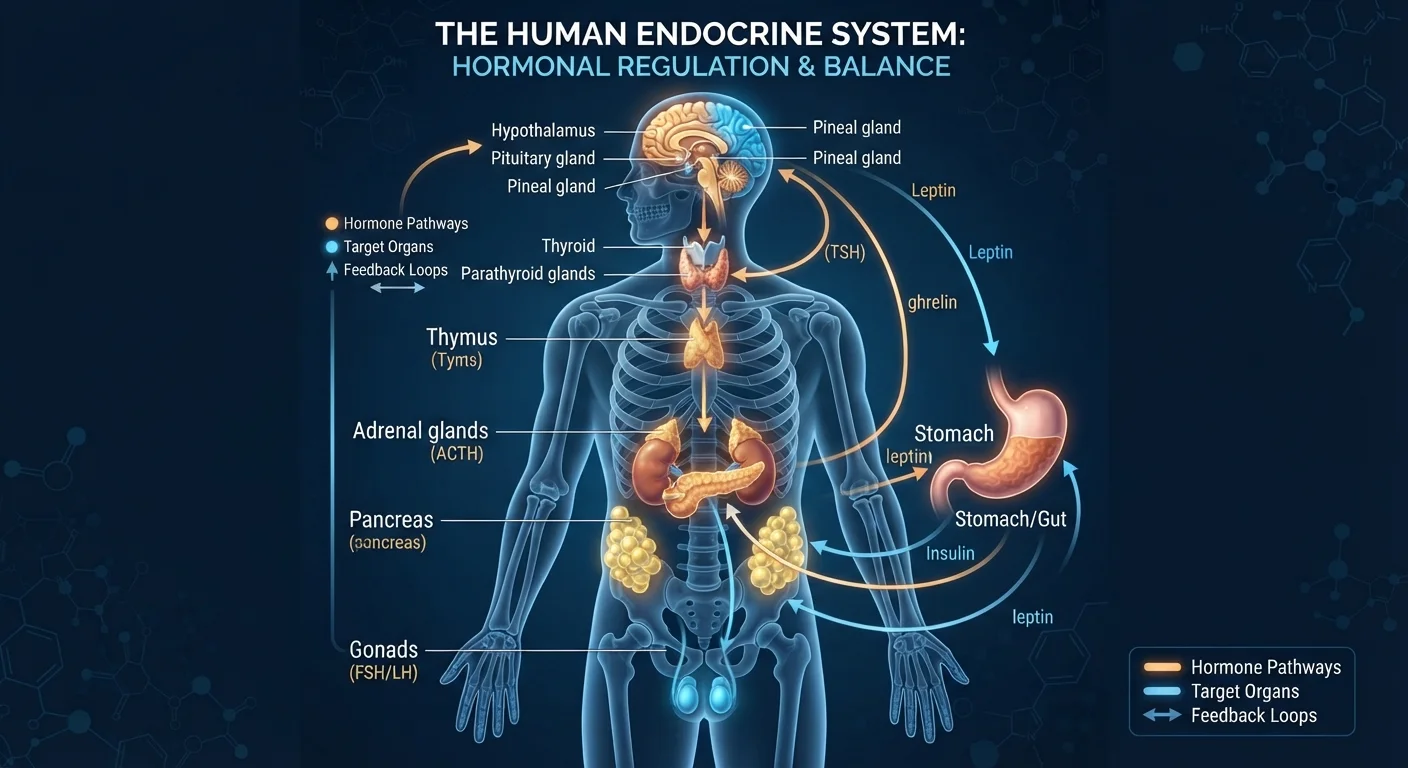
Leptin is often called the "satiety hormone." Produced by fat (adipose) cells, it travels to the hypothalamus in the brain to signal that the body has adequate energy stored and that appetite can be reduced. When fat stores decrease - as during weight loss - leptin levels drop, increasing hunger. Crucially, some individuals develop leptin resistance, in which the brain stops responding normally to leptin signals, meaning fullness cues become blunted even when leptin levels are elevated.
Ghrelin works in near-opposite fashion. Produced primarily in the stomach, ghrelin rises before meals and falls after eating, functioning as the body's primary hunger trigger. Research has shown that ghrelin levels tend to increase after weight loss, which may partially explain why maintaining a lower weight can feel physiologically challenging over time.
Insulin, secreted by the pancreas, manages blood sugar by helping cells absorb glucose. It also plays a central role in fat storage: when insulin is elevated, the body is in a storage state rather than a fat-burning one. Chronically high insulin levels - often associated with diets high in refined carbohydrates and with insulin resistance - can tip the body's energy balance toward accumulation.
Cortisol, released by the adrenal glands in response to stress, has wide-ranging metabolic effects. Sustained elevated cortisol can increase appetite, particularly for calorie-dense and palatable foods, and is associated with greater visceral (abdominal) fat deposition. Explore how chronic stress and cortisol interact with eating behavior in more depth.
~30%
Rise in ghrelin after significant weight loss
Research published in the New England Journal of Medicine found ghrelin levels rose substantially one year after weight loss, contributing to increased hunger.
2x
Higher obesity risk with short sleep duration
Multiple epidemiological studies have associated habitual sleep of fewer than 6 hours per night with roughly double the risk of obesity compared to adequate sleepers.
~20%
Of U.S. adults estimated to have insulin resistance
The CDC estimates that a substantial portion of American adults have some degree of insulin resistance, a key factor in metabolic weight regulation.
How These Hormones Interact as a System
None of these hormones operates in isolation. They form an interconnected feedback network, and disruptions in one area can ripple through others. For example, poor sleep - even just a few nights of insufficient rest - measurably lowers leptin and raises ghrelin, increasing overall hunger the next day. Understand how sleep quality directly shapes hunger hormones and metabolism.
Similarly, chronic stress elevates cortisol, which can raise blood sugar, promote insulin secretion, and reduce the body's sensitivity to leptin - creating a chain of effects that makes appetite regulation harder. These interactions explain why lifestyle factors such as sleep, stress management, and eating patterns are biologically - not merely behaviorally - linked to weight.
Thyroid hormones also deserve mention: the thyroid gland regulates the body's basal metabolic rate, and underactive thyroid function (hypothyroidism) can meaningfully slow calorie use, contributing to weight gain even without changes in diet or activity. Any concern about thyroid function warrants evaluation by a healthcare professional.
What This Means for Everyday Health Decisions
Recognizing the hormonal dimensions of weight regulation shifts the conversation away from blame and toward biology. It clarifies that hunger is not a character flaw - it is a hormonal signal. It explains why weight loss can become harder to sustain over time, and why individual variation in weight is expected and physiologically grounded.
This understanding supports more realistic and compassionate expectations. Supporting hormonal health doesn't require extreme measures; consistent sleep, stress-reduction practices, and balanced nutrition patterns all influence these systems in meaningful ways. For anyone managing a condition linked to hormonal disruption - such as PCOS, type 2 diabetes, or thyroid disease - working closely with a qualified healthcare provider is essential.
This article is for general informational purposes only and does not constitute medical advice. For personalized guidance about hormones, metabolism, or weight-related health concerns, consult a qualified healthcare professional.