

Key Takeaways
Lifespan Weight Shift
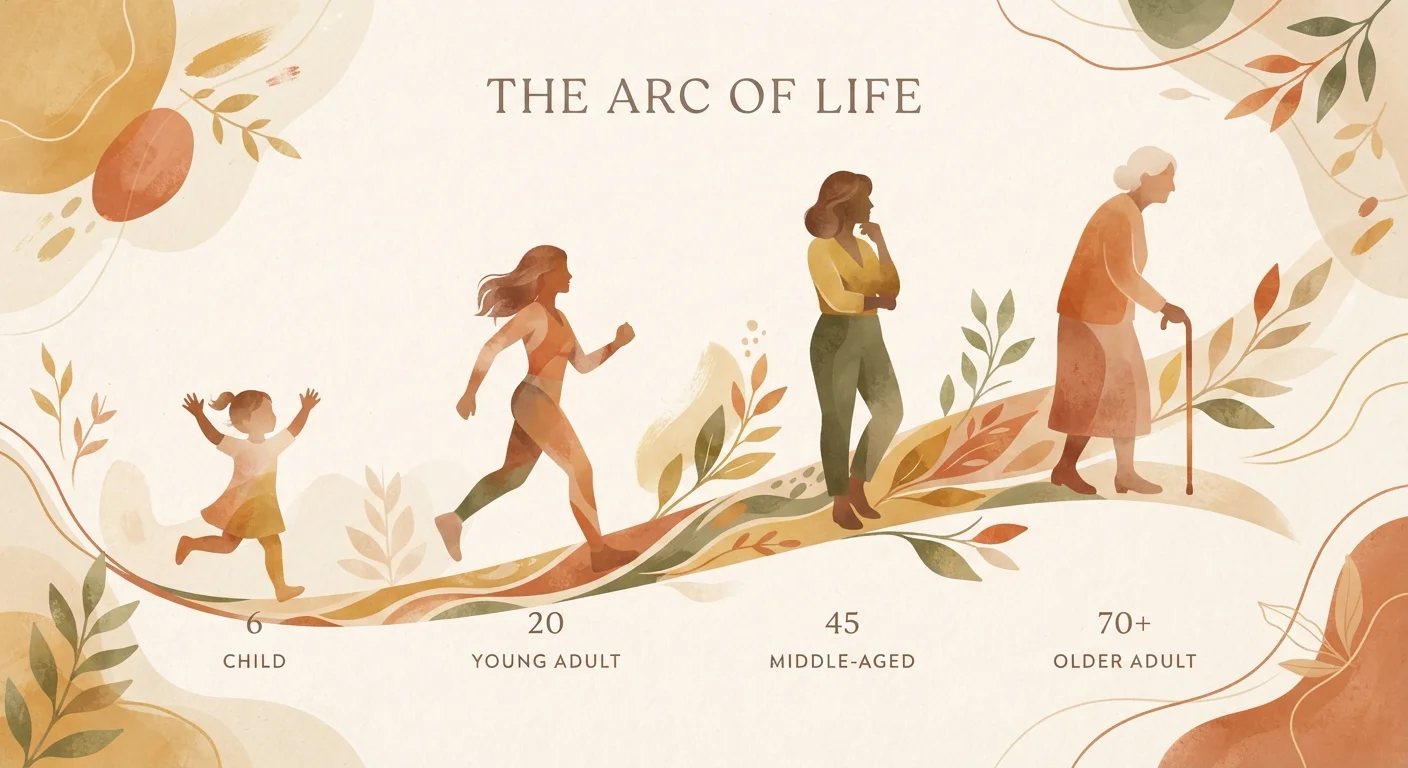
"Lifespan weight shift" refers to the natural, biologically driven changes in body weight and body composition that occur as people age from infancy through older adulthood. These shifts are influenced by hormones, muscle mass, bone density, metabolism, and major life events such as puberty, pregnancy, and menopause. They are a normal feature of human development rather than a sign that something has gone wrong.
Researchers distinguish between changes in total body weight and changes in body composition - particularly the ratio of lean mass (muscle and bone) to fat mass - which can diverge significantly with age even when the number on the scale stays relatively stable.
From Infancy to Adolescence: Rapid Growth and Development
In the earliest years of life, body weight is almost entirely driven by growth - the rapid accumulation of bone, organ tissue, and fat reserves needed to support development. Infants triple their birth weight in roughly the first year, and children follow predictable growth curves that pediatricians track at routine checkups.
Puberty introduces the first major hormonal reshaping of body composition. In adolescent girls, rising estrogen drives an increase in fat mass, particularly around the hips and thighs, as the body prepares physiologically for potential reproduction. In adolescent boys, rising testosterone promotes lean muscle development and a relative reduction in body fat percentage. Both patterns are normal, though they are often the source of confusion and distress when young people compare themselves to peers developing on different timelines.
For families and young people alike, understanding that these changes are hormonally orchestrated - rather than the result of diet or lifestyle alone - can reduce unnecessary anxiety. Factors beyond food and exercise, including genetics and hormonal timing, determine a great deal of what happens during these years.
Early and Middle Adulthood: Peak Mass and the Metabolic Middle
Most people reach their peak muscle mass and bone density sometime in their late twenties or early thirties. After that, a gradual process begins: lean mass declines slowly, fat mass tends to creep upward, and the body's total energy needs shift accordingly.
By middle adulthood - roughly the forties and fifties - many people notice that weight management requires more deliberate effort than it once did. This is partially explained by the slow decline in muscle tissue, which is metabolically active and burns more calories at rest than fat tissue does. Reduced physical activity, often driven by career and family demands, compounds the effect.
~1-2%
Annual muscle mass loss after age 30
Research published in journals of gerontology suggests adults lose roughly 1-2% of skeletal muscle mass per year from the fourth decade onward, accelerating after age 60.
~10-15%
Decline in resting metabolic rate from age 20 to 60
Studies on aging metabolism estimate a modest but cumulative drop in resting energy expenditure across four decades, with muscle loss accounting for a significant portion of that change.
3x
Infant weight gain in the first year
According to the American Academy of Pediatrics, most healthy infants triple their birth weight by approximately 12 months of age, reflecting the rapid growth phase of early life.
For women, perimenopause and menopause bring a distinct hormonal transition. Declining estrogen levels are associated with a redistribution of fat from peripheral areas toward the abdomen, a shift that occurs independently of changes in calorie intake. Men experience more gradual hormonal changes, including a slow decline in testosterone, which contributes to decreased muscle mass over time. These patterns are explored in more depth alongside the broader factors shaping body weight.
Older Adulthood: Composition Over Number
In the decades after 60, the most clinically significant weight-related change is not usually the number on the scale but what's happening underneath it. Sarcopenia - the age-related loss of skeletal muscle mass and strength - accelerates, and bone density continues to decline. Meanwhile, fat mass may increase or redistribute even when total body weight remains stable.
This means that older adults can be at a healthy weight by conventional measures while still carrying a higher proportion of fat to muscle than is optimal for functional independence and metabolic health. Strength and flexibility across the lifespan shift in ways that are more manageable than often assumed, and resistance exercise remains one of the most evidence-supported strategies for preserving muscle function at any age.
Clinical guidance for older adults acknowledges that modest weight above the ranges recommended for younger adults does not carry the same health risks, and that unintentional weight loss in this population can itself be a warning sign worth investigating with a healthcare provider.
Nutrition needs also evolve: protein requirements, in particular, may increase relative to earlier life stages to support muscle maintenance. See how macronutrient needs shift across life stages for a closer look at those changes.
This article is for general informational and educational purposes only and is not a substitute for professional medical advice, diagnosis, or treatment. Consult a qualified healthcare provider with questions about your individual health, weight, or nutrition needs.