

Key Takeaways
Why Your Environment Outpaces Willpower
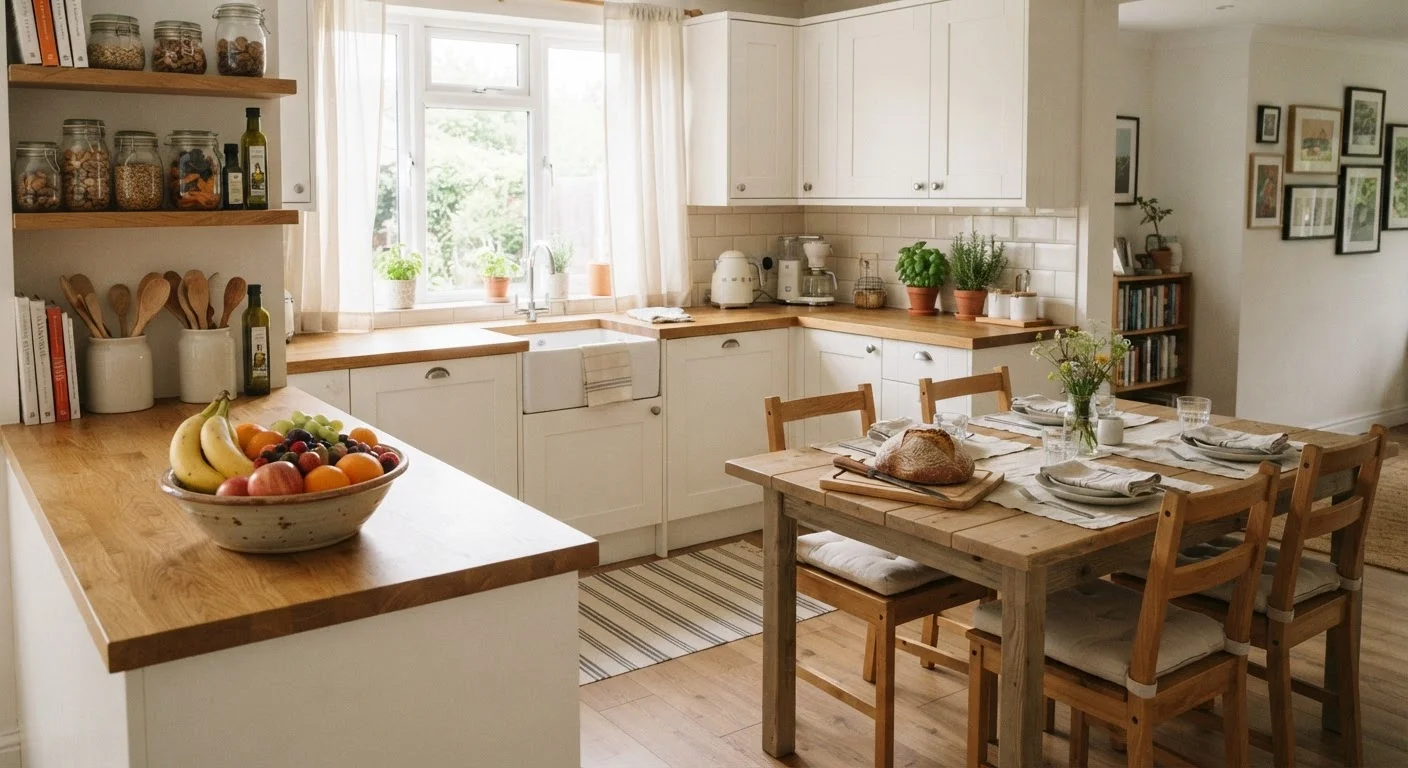
Most eating and movement decisions happen automatically, shaped by the cues immediately around us rather than deliberate reasoning. Research in behavioral science consistently shows that people respond strongly to what is convenient, visible, and socially normal in their surroundings-often without realizing it. A bowl of fruit on the counter gets eaten; the same fruit hidden in a crisper drawer frequently doesn't.
This matters for long-term healthy weight management because diets and motivation-based approaches often fade. Environmental design, by contrast, works passively. When your space makes the healthier choice the path of least resistance, you don't have to decide repeatedly-the default does the work for you. This is sometimes called "choice architecture": arranging options so that better ones are easier to reach.
Understanding this principle is a first step toward building sustainable daily habits that outlast any short-term diet plan.
Best Practices for Designing a Health-Supportive Space
The following evidence-informed practices address the environments where most food and movement decisions are made: the kitchen, dining area, and broader home layout.
Place ready-to-eat produce at eye level in your refrigerator and on your counter.
Visibility is one of the strongest predictors of food selection. When healthier foods are immediately visible and require no preparation, people choose them more often. Keeping less nutritious items in opaque containers or lower shelves reduces their salience without eliminating them.
Use smaller plates and serving bowls for everyday meals.
Portion size is heavily influenced by the size of the vessel food is served in. Smaller plates create a visual sense of fullness with less food, which can reduce automatic over-serving without requiring calorie counting. This works because our visual system-not just hunger signals-guides how much we put on a plate.
Keep ultra-processed snack foods out of direct sight and convenient reach.
The research is clear that proximity and visibility of less nutritious foods increases how often they're eaten, regardless of intent. This isn't about shame or prohibition-it's about reducing the automatic reach triggered by seeing a food. You can still keep those foods in your home; simply store them less accessibly.
Designate one eating area and minimize eating in front of screens.
Eating while distracted-especially by screens-reliably reduces awareness of satiety cues and increases overall intake. A consistent eating location also helps create a behavioral association between that space and mindful attention to the meal. This pairs well with practices covered in mindful eating approaches.
Stock your kitchen with ingredients that require minimal prep for nutritious meals.
Cooking frequency is linked to better diet quality, but only when the kitchen is set up to make cooking easy. Having canned legumes, frozen vegetables, whole grains, and simple proteins on hand removes the friction that leads to defaulting to less nutritious convenience options. See how cooking frequency relates to diet quality for more context.
These practices don't require a renovation or a significant budget. Most are rearrangements of what you already have.
Movement Cues Built Into Everyday Spaces
Environmental design isn't limited to food. Physical spaces can either encourage or discourage incidental movement throughout the day. Leaving a yoga mat unrolled in a visible corner, placing walking shoes near the front door, or positioning a resistance band on your desk chair are all low-effort prompts that make it easier to move without scheduling a formal workout.
Research on sedentary behavior suggests that breaking up long sitting periods-even briefly-has measurable health benefits. Arranging your home or workspace so that standing, stretching, or short walks become natural interruptions supports this. For more strategies, see building an active daily life without a gym.
This article is for general informational purposes only and does not constitute medical or nutritional advice. Consult a qualified healthcare professional for guidance specific to your health needs.