

Key Takeaways
Reps, Sets, and Rest
A rep (repetition) is one complete movement of an exercise. A set is a group of consecutive reps performed without stopping. Rest is the recovery period you take between sets. Together, these three variables form the structure of almost every resistance and conditioning workout.
Manipulating rep ranges, set volume, and rest intervals is the primary mechanism behind progressive overload-the gradual increase in training stimulus that drives adaptation over time.
What Reps Actually Mean
A repetition, almost universally shortened to rep, is one complete cycle of an exercise - moving through the full range of motion and returning to the starting position. For a squat, that's descending until your thighs are roughly parallel to the floor and then standing back up. For a bicep curl, it's lifting the weight up and lowering it back down with control.
Rep count is the first lever you can adjust to shift what your body adapts to. Higher rep ranges (generally 15 or more) at lighter loads challenge muscular endurance - the ability to sustain effort over time. Moderate ranges (roughly 8-12) are commonly associated with hypertrophy, or muscle size development. Lower ranges (1-5) with heavier loads tend to emphasize maximal strength. These are general patterns from exercise science, not rigid rules, and individual responses vary.
For a broader look at the vocabulary you'll encounter in training, see our beginner fitness glossary.
What Sets Are and Why They Matter
A set is a group of consecutive reps performed without a meaningful break. When a program says 3×10, it means three sets of ten repetitions each, with rest in between. That notation is a shorthand you'll see constantly - learning to read it is half the battle of following any structured program.
The total number of sets you perform for a given muscle group across a workout (or a week) is called your training volume. Volume is a key driver of adaptation: too little and your body has little reason to change; too much without recovery can lead to excessive fatigue or overuse. Most evidence-informed guidelines suggest building volume gradually rather than jumping to high numbers immediately.
10-20
Recommended weekly sets per muscle group
Exercise science literature commonly cites this range as effective for muscle development in trained individuals, with beginners often responding well to the lower end.
2-3 min
Optimal rest for strength-focused training
Research published in exercise physiology journals consistently supports longer inter-set rest when the goal is maximal force output with heavy loads.
8-12
Rep range most associated with hypertrophy
This moderate rep range is widely cited in resistance training guidelines as effective for stimulating muscle size gains at a challenging but manageable load.
Need help decoding how sets appear in written programs? How to Read a Basic Workout Plan Without Getting Overwhelmed walks through common notation step by step.
How Rest Periods Shape Your Training
Rest is not wasted time - it is when your muscles and energy systems partially recover before the next set. The length of your rest period changes which energy system your body relies on and how much fatigue you carry into each subsequent effort.
- Short rest (30-60 seconds): Keeps heart rate elevated, challenges cardiovascular endurance, and is common in circuit or metabolic conditioning formats.
- Moderate rest (60-90 seconds): A middle ground often used in hypertrophy-focused programs.
- Long rest (2-3+ minutes): Allows greater phosphocreatine replenishment, supporting heavier lifts in strength-focused training.
Skipping rest to save time when lifting heavy loads can reduce performance on subsequent sets and elevate injury risk. If time is genuinely limited, alternating between non-competing muscle groups - a format called supersets - lets one area recover while the other works.
Recovery doesn't stop when your workout ends, either. The Role of Rest Days in a Sustainable Fitness Routine explains how off-day recovery drives the adaptations you're training for.
Putting It All Together in a Workout
Most structured workout plans express these variables together. A simple beginner strength session might look like: Squat - 3 sets × 8 reps - 2 min rest. That single line tells you everything you need to execute the movement effectively.
When you're new to structured training, starting conservatively on both load and volume lets you build a foundation of consistent practice. As you grow comfortable, you can gradually increase reps, add sets, or reduce rest - the principle of progressive overload in action.
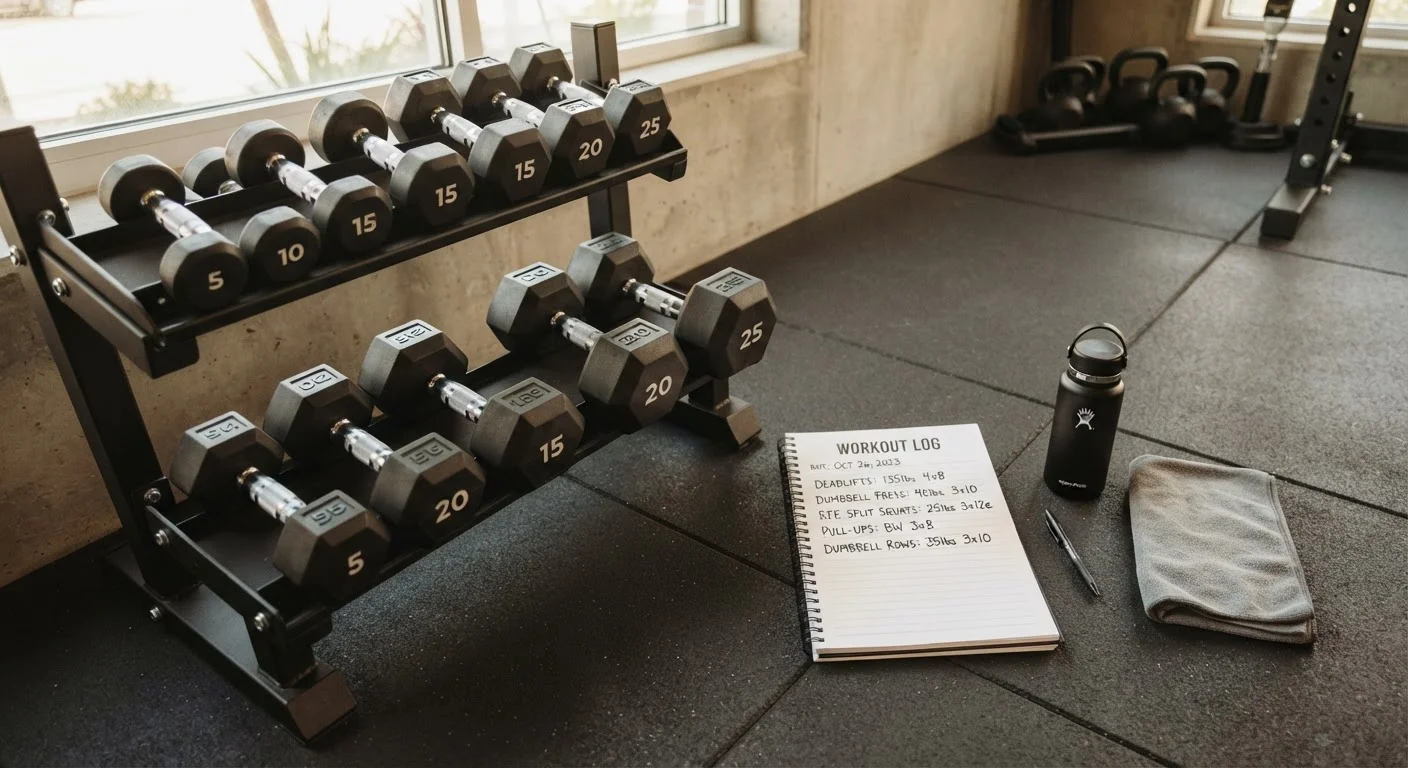
Tracking what you do each session - even in a simple notes app - makes it far easier to identify when you're ready to progress. Seeing that you completed all reps with good form is a reliable signal to nudge the challenge slightly upward next time.
For a deeper look at how reps, sets, and rest connect to broader training concepts like periodization and range of motion, our strength and flexibility reference guide covers the full picture.
This article is for general informational purposes only and is not a substitute for personalized guidance from a qualified fitness or healthcare professional. If you have any health conditions or concerns, consult a professional before beginning a new exercise program.