

Key Takeaways
Progressive Overload
Progressive overload is the practice of gradually increasing the demands placed on your body during exercise over time. By consistently challenging your muscles, cardiovascular system, or joints just a little more than they're used to, your body adapts and becomes stronger, more endurance-capable, or more flexible. Without this incremental challenge, the body has no reason to change.
In exercise science, progressive overload works by creating controlled stress on muscle fibers, prompting the body's repair processes to build back slightly more capable tissue - a process known as neuromuscular adaptation and hypertrophy.
Why Your Body Needs a Reason to Change
Your body is remarkably efficient. When you repeat the same physical task over and over, it gets better at that exact task - and then stops expending extra effort. That's a survival advantage, but it's a challenge when you're trying to get fitter.
Progressive overload solves this problem by giving your body a reason to keep adapting. When you push slightly beyond what you've already mastered - whether that's one more rep, a slightly heavier load, or a longer run - your body responds by rebuilding itself to handle that new demand. Each cycle of stress and recovery nudges your capacity upward.
This principle sits at the foundation of virtually every evidence-based fitness program, from beginner bodyweight routines to competitive endurance training. Understanding it means you can train with intention rather than just habit. For a broader look at how strength development supports everyday life, see our guide on functional strength.
The Variables You Can Actually Adjust
Progressive overload doesn't always mean lifting heavier. There are several levers you can pull to increase training demand, and smart programming typically rotates among them:
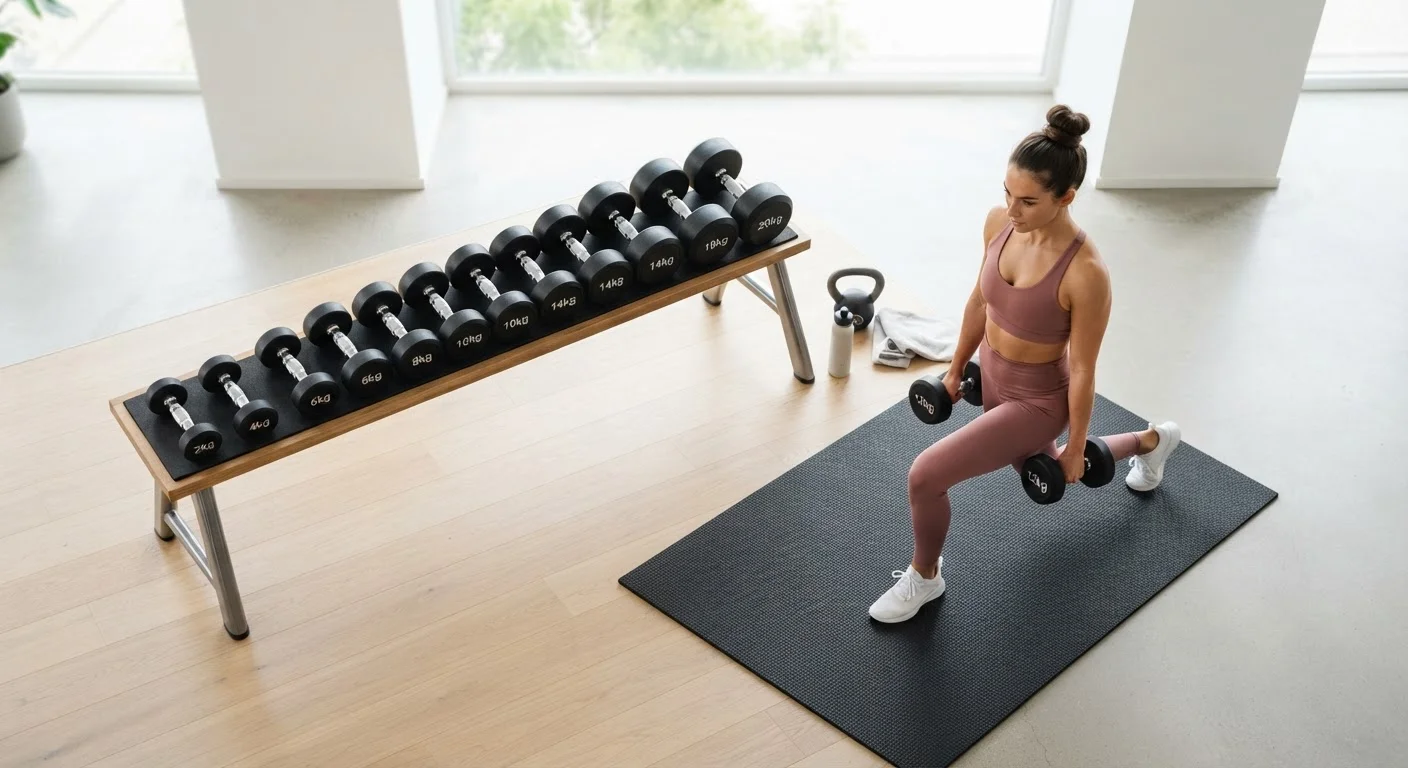
- Load: Adding weight to an exercise is the most familiar form - for example, moving from 15-pound to 20-pound dumbbells.
- Repetitions: Performing more reps at the same weight increases total volume and work done.
- Sets: Adding an extra set to a given exercise increases overall training stress.
- Rest intervals: Shortening rest periods between sets makes the same workout more demanding on your cardiovascular system.
- Movement complexity: Progressing from a two-leg squat to a single-leg squat challenges balance and stability without adding external weight.
- Frequency: Training a muscle group or skill more times per week increases cumulative exposure.
The right variable to adjust depends on your goal and where you are in your training. Beginners often make rapid gains by simply adding reps or improving technique before increasing load at all.
2-4 weeks
Time for early neural adaptations to occur
Exercise physiology research consistently shows that initial strength gains in beginners are driven primarily by neuromuscular adaptations before significant muscle growth occurs.
~10%
Recommended max weekly volume increase
Many certified running and strength coaches reference a guideline of increasing weekly training load by no more than 10% to reduce overuse injury risk.
48-72 hrs
Recovery window for worked muscle groups
Sports medicine and exercise science sources generally recommend allowing 48 to 72 hours of recovery before training the same muscle group at high intensity again.
Applying It Safely: Small Steps, Lasting Results
One of the most common mistakes people make is trying to accelerate progress by jumping ahead too fast. Increasing weight by 20% in a single week, or doubling workout volume overnight, puts the body under more stress than it can adapt to - raising the risk of injury and burnout.
A widely used rule of thumb among fitness educators is the 10% guideline: avoid increasing total weekly training volume by more than roughly 10% from one week to the next. While this isn't a rigid prescription, it reflects the spirit of gradual, sustainable progression.
Recovery is just as important as the overload itself. Your body doesn't grow stronger during the workout - it does so during rest and sleep, when repair processes rebuild tissues at a higher capacity. Skipping recovery undermines the entire cycle.
This connects closely to a broader principle: consistency beats intensity over the long run. A modest but steady progression practiced week after week will outperform any aggressive short-term push followed by injury or dropout.
This article is for general informational purposes only and is not medical or personal training advice. Consult a qualified healthcare provider or certified fitness professional before beginning a new exercise program, especially if you have existing health conditions or injuries.