

Key Takeaways
Why Movement Patterns Matter More Than Muscle Groups
Most people organize their workouts around body parts - chest day, leg day, arm day. It's a familiar structure, but it has a significant blind spot: it focuses on what is moving rather than how your body moves. Movement pattern training flips that perspective, grouping exercises by the mechanical action they require rather than the muscle they isolate.
This approach has roots in functional fitness and physical therapy, and it's increasingly adopted by coaches across all training styles. The core idea is straightforward: your body has a limited set of fundamental movement strategies, and every exercise is essentially a variation of one of them. Train those patterns deliberately, and you build strength that transfers to real life - lifting groceries, climbing stairs, or recovering balance after a stumble.
Understanding these six categories also makes program design easier to evaluate. If your current routine is heavy on pushing but light on pulling, or never includes loaded carries, you can spot those gaps and address them. See our guide to functional strength for a deeper look at why this kind of balanced training matters for daily life.
Push
Pushing movements involve pressing force away from your body. They primarily develop the chest, shoulders, and triceps, and they show up in daily life whenever you open a heavy door, push a stroller, or rise from the floor.
Common examples include push-ups, overhead press, chest press, and dips. Pushing can be horizontal (chest press) or vertical (overhead press), and both directions deserve attention. Many people naturally gravitate toward pushing exercises, which makes the next pattern all the more important.
Pushing exercises train the muscles you use every time you press, lift, or rise from the floor.
Pull
Pulling movements draw resistance toward the body and train the back, biceps, and rear shoulders. They directly counterbalance pushing exercises, helping maintain good posture and shoulder health - two things that matter especially for people who sit at desks for long hours.
Pull-ups, rows, lat pulldowns, and face pulls all fall into this category. Like pushing, pulling can be horizontal (rows) or vertical (pull-ups). Most fitness professionals recommend pulling at least as much as you push - many suggest a slightly higher pull volume to offset the effects of prolonged sitting and forward-leaning posture.
Pulling exercises build the back strength that counteracts poor posture from long hours of sitting.
Hinge
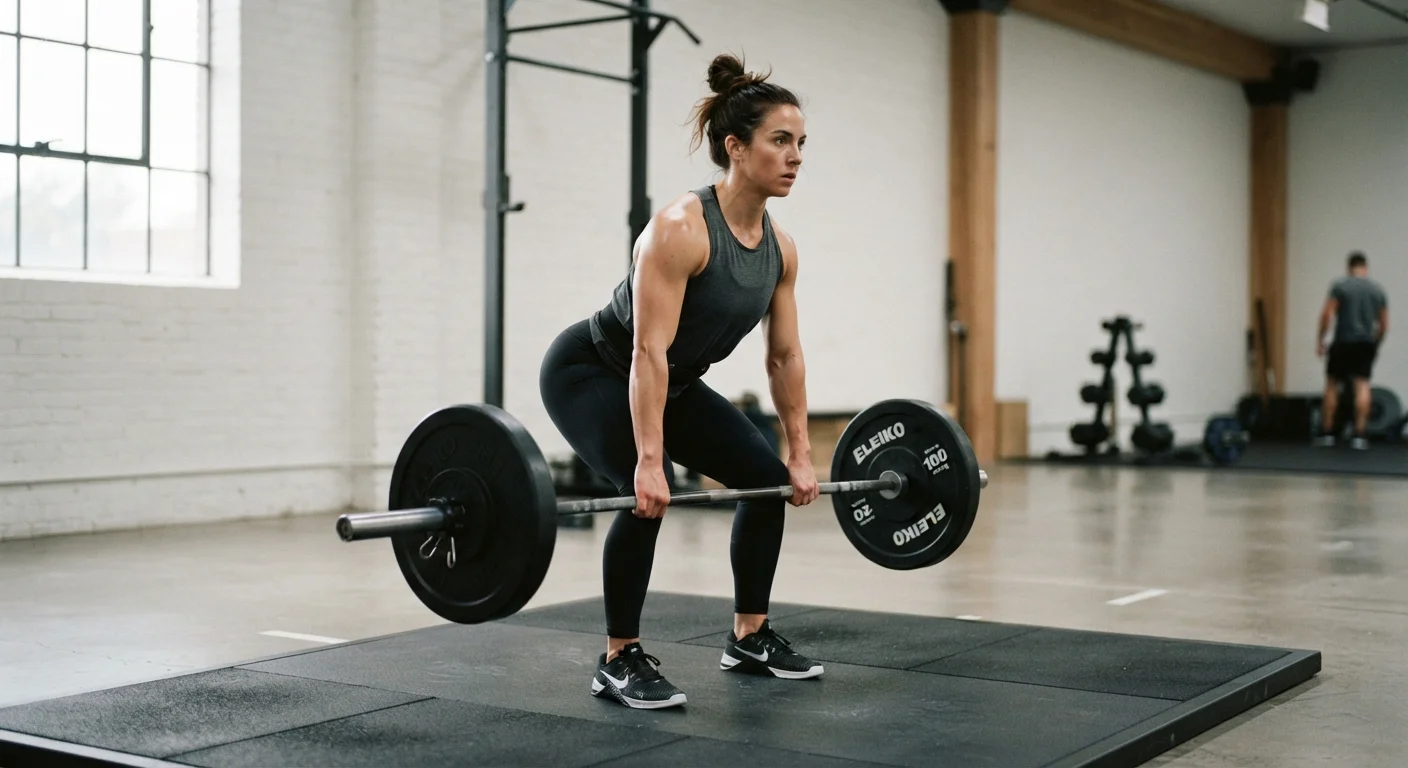
The hip hinge is one of the most important - and most misunderstood - movement patterns. It involves bending at the hips while maintaining a relatively neutral spine, loading the hamstrings, glutes, and lower back. In everyday life, picking something up off the ground is a hinge. Done poorly, that same motion is a common source of back injury.
Deadlifts, kettlebell swings, Romanian deadlifts, and good mornings are classic hinge exercises. Building proficiency in this pattern has direct protective value: people with strong hip hinge mechanics tend to be less vulnerable to low back strain during routine lifting tasks.
A strong hip hinge pattern directly reduces your risk of low back strain during everyday lifting.
Squat
Squatting means lowering the body by bending at both the hips and knees simultaneously, then returning to standing. It trains the quadriceps, glutes, hamstrings, and core, and it mirrors one of the most fundamental human actions - sitting down and standing up.
Bodyweight squats, goblet squats, barbell back squats, and split squats are all squat-pattern variations. While the hinge and squat both involve the lower body and hips, they differ in where the primary load falls: hinges emphasize the posterior chain (back of the body), while squats distribute load more to the front of the legs.
Squatting trains the exact muscles and mechanics you use every time you sit down or stand up.
Carry
Loaded carries are deceptively simple: you pick something up and walk with it. Yet this pattern builds total-body stability, grip strength, core endurance, and even cardiovascular conditioning in a way few other exercises replicate. It's also about as functional as fitness gets - nearly everyone carries something heavy at some point.
Farmer's carries (one weight in each hand), suitcase carries (one side loaded), and overhead carries each create slightly different stability demands. This pattern is often undertrained in traditional gym programs, yet physical therapists frequently use it as a rehabilitation tool because of how effectively it reinforces upright posture and spinal stability under load.
Loaded carries build grip strength, core stability, and upright posture all in one simple movement.
Rotate
Rotational movement involves twisting or resisting twist through the torso, engaging the core - particularly the obliques - along with the hips and spine. It's arguably the most overlooked of the six patterns in standard fitness routines, yet rotation is present in almost every sport and many common activities: swinging a golf club, throwing a ball, or turning to check your blind spot while driving.
Pallof presses (anti-rotation), cable rotations, medicine ball rotational throws, and woodchoppers are common examples. Some coaches distinguish between creating rotation and resisting it - both are worth training, as the core's job is often to prevent unwanted movement rather than produce it.
Rotational training strengthens the core's ability to both create and resist twisting forces.
Putting All Six Patterns Together
A well-rounded program doesn't require you to train all six patterns in every session, but it should address each one across the course of a week. A simple approach: pair a push with a pull in one session, a hinge with a squat in another, and sprinkle carries and rotation work throughout. This structure keeps volume balanced and prevents any single pattern from dominating at the expense of others.
Start With a Movement Audit
Before redesigning your program, spend one week tracking which patterns appear in your workouts. Most people discover they have two or three dominant patterns and one or two they rarely touch. Once you identify the gaps, you can add one targeted exercise per missing pattern rather than overhauling everything at once. Small, consistent additions tend to stick better than wholesale program changes.
If you're returning to exercise after a break or building a program from scratch, movement patterns give you a reliable framework - one that's used by personal trainers, physical therapists, and strength coaches alike. For more on applying these principles, explore our everyday movement hub for practical, accessible ways to stay active. As always, if you have existing injuries or health concerns, consult a qualified healthcare professional before beginning or significantly changing a fitness routine.
This article is for general informational and educational purposes only and does not constitute medical advice. Always consult a qualified healthcare professional for guidance specific to your health situation.