

Key Takeaways
Why Ordinary Days Are the Best Fitness Opportunity Families Have
Gym memberships, youth sports leagues, and structured workout schedules all have their place - but for most American families, the most reliable source of daily movement isn't a planned program. It's the time already happening between school drop-off, dinner prep, and bedtime routines.
Research consistently shows that children and adults alike benefit from movement spread throughout the day, not just concentrated in a single session. That makes the ordinary family day - with its errands, chores, outdoor time, and commuting - an underused fitness asset. The trick is learning to see it that way.
This article offers practical, low-barrier strategies that fit naturally into busy household rhythms. None of them require a schedule overhaul or special gear. For broader ideas on weaving movement into daily life, the guide to building an active daily life without a gym offers a comprehensive starting point.
Turn the after-dinner window into a walking ritual
The 20 to 30 minutes after an evening meal is one of the easiest windows for family movement. A neighborhood walk requires no preparation, fits children of nearly any age, and serves double duty - light post-meal movement is associated with better blood sugar regulation and improved sleep onset, according to general exercise science literature.
Start short. Even a 10-minute loop around the block establishes the habit. Once it becomes expected, kids often become the ones who initiate it.
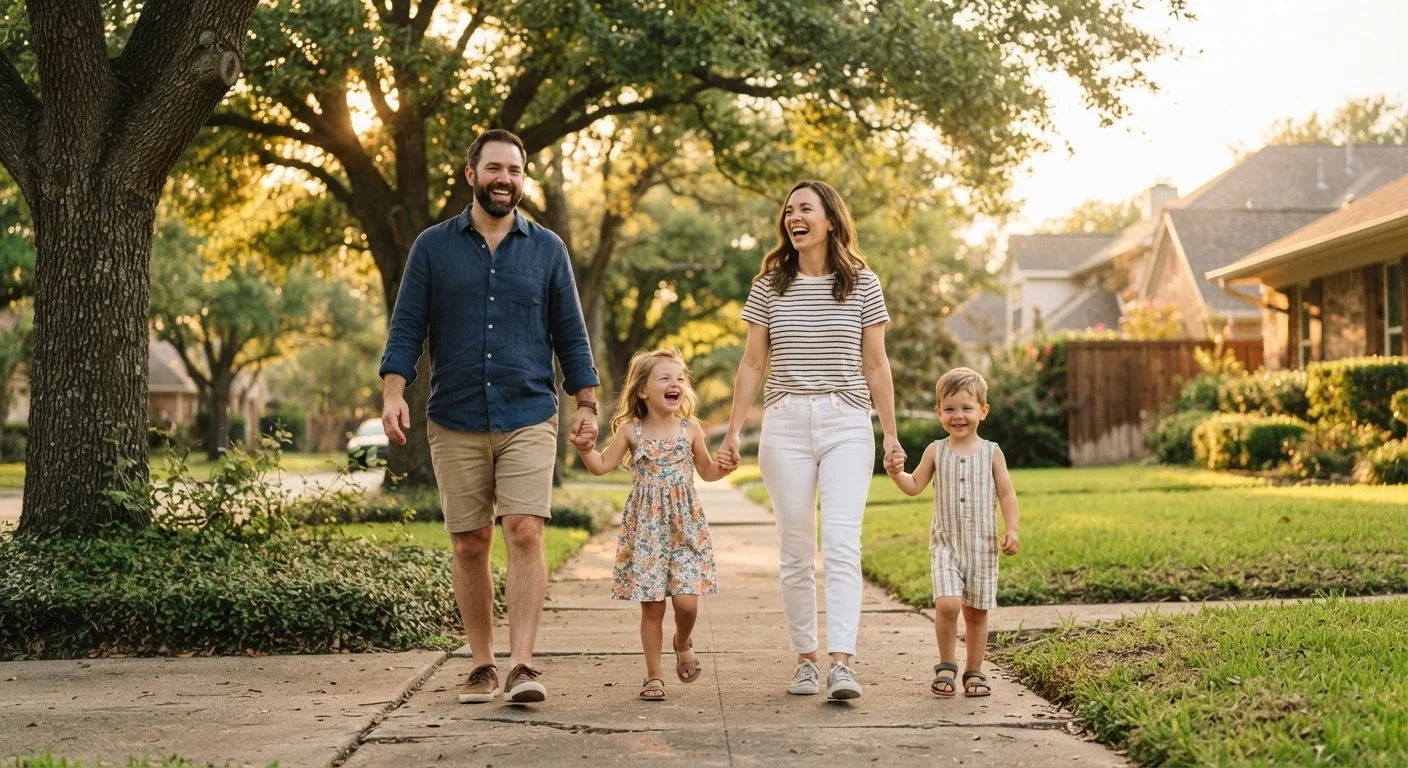
Evening walks require no gear, no planning, and work for kids of almost any age.
Make errands active when the distance allows
Driving to a store two blocks away is a habit many families don't question. Walking or biking those short distances instead adds movement without adding time - the errand still gets done. Bring a child along with a backpack or bike basket and it becomes a shared task with built-in physical activity.
This also builds a practical understanding in children that movement is a tool for getting things done, not just something that happens in a gym. For adults, the hidden movement opportunities in a typical day article covers this idea in more depth.
Walking short errands turns necessary tasks into shared movement without extra time.
Let outdoor play count - and join in occasionally
Unstructured outdoor play - running around a yard, shooting hoops, kicking a ball - is legitimate physical activity for children. Parents don't need to organize it, but occasionally joining in makes a meaningful difference. Even 10 minutes of shooting hoops together is a movement snack for adults and signals to children that play has value at any age.
Resist the urge to always supervise from a seated position. Standing, walking around, or participating keeps adults moving too.
Joining kids in unstructured outdoor play is a movement snack for adults too.
Assign active chores that the whole family shares
Raking leaves, sweeping the porch, washing the car by hand, or carrying groceries from the car are all moderate physical activities. Assigning age-appropriate versions to children normalizes movement as part of household contribution - not as punishment, but as expected participation.
A Saturday morning chore block done together can accumulate 30 to 45 minutes of light movement for everyone involved, without a single planned workout.
Shared household chores accumulate meaningful movement without any structured exercise.
Build movement into transitions already in your schedule
School pick-up, weekend trips to the library, or visits to a local park all involve transit that can include walking. Parking farther away, choosing a transit stop that requires a longer walk, or walking to a nearby destination instead of driving are transitions that cost almost nothing extra.
These micro-decisions are the backbone of what exercise scientists sometimes call lifestyle activity - movement embedded in daily function rather than added on top of it. The everyday movement for desk workers guide explores similar strategies for parents who work sedentary jobs.
Parking farther and walking to destinations are micro-decisions that quietly add up.
Use weekend mornings before schedules fill up
Weekend mornings are often the least scheduled part of a family's week - which makes them the most available time for movement. A family bike ride, a trail walk, or even a backyard obstacle course for younger kids can be done before weekend commitments take over.
Anchoring active time to weekend mornings rather than afternoons reduces the chance it gets displaced by other plans. Keeping it low-effort (no equipment to haul, no reservation needed) makes it easier to repeat week after week.
Weekend mornings - before plans pile up - are the easiest time to anchor family activity.
Making It Stick for the Whole Household
The strategies above work best when they're treated as defaults rather than additions. That means building movement into the structure of the day - a walk that always follows dinner, a bike ride that replaces a Saturday car trip - rather than fitting it in when time allows.
Start With One Anchor Habit
Rather than trying to add movement everywhere at once, pick a single daily anchor - an after-dinner walk, a Saturday morning bike ride - and protect it for a few weeks. Once that habit feels automatic, layering in a second one becomes much easier. Consistency in one area tends to build momentum across others.
Kids who see parents move regularly tend to internalize physical activity as a normal part of life, not something that requires motivation or a special occasion. That modeling effect is one of the most durable benefits of family movement habits. If your own schedule keeps you desk-bound for much of the week, the movement snacks approach can help you stay active even on the busiest workdays - so you have more energy to move with your kids when it counts.
This article is for general informational purposes only and does not constitute medical or professional fitness advice. Consult a qualified healthcare provider before starting a new physical activity routine, especially for children with health conditions or adults returning from injury or illness.